Category Archives: Strategic Nonviolent Action

Day 5 of 16 Days of Activism: Mexico

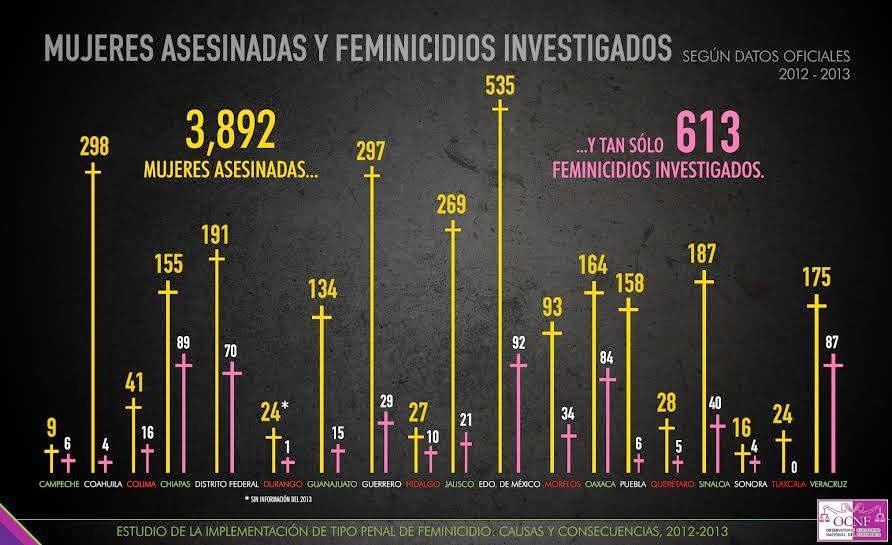
#Day5 de los #16Days of Activism es sobre nuestro vecino al sur, México. Sabemos que la violencia contra mujeres allá es una vergüenza, pero el país no es sin recursos.

Infografia-Violencia-Mujer

El Instituto Nacional de Mujeres, del gobierno, tiene esta pagina con líneas telefónicas para casi todo el país, estado por estado, porque tod@s merecen una vida sin violencia. La Portal Víctimas de Maltrato Abuso y Hostigamiento Sexual también tiene muchas números de teléfono donde puede conseguir ayuda. Una de las organizaciones más importantes en la lucha contra el feminicidio es Nuestras Hijas de Regreso a Casa, que lucha para todas las hijas y mujeres desaparecidas y asesinadas de Juárez, y todo el país. Sus objetivos incluyen:

  • Acompañar y orientar a las familias cuyas hijas han desaparecido.
  • Reclamar la justicia jurídica y social para las familias afectadas, a través de diferentes acciones.
  • Promover programas de rehabilitación ocupacional para atender la salud física y afectiva de integrantes de las familias que lo soliciten.
  • Impulsar la modificación, elaboración y revisión de artículos de la ley contenidos en el Código Penal del Estado de Chihuahua que permiten estos y otros hechos violentos.
  • Informar oportunamente a la comunidad nacional e internacional acerca de los asesinatos, desapariciones y violaciones a los derechos humanos de mujeres en el Estado de Chihuahua.
  • Promover entre ciudadanos y ciudadanas de cualquier país, organismos internacionales, los gobiernos y las ONG´s, que se pronuncien en contra de los asesinatos y desapariciones de mujeres y a favor de un alto a la impunidad de que gozan actualmente estos crímenes.
  • Demandar que desde la comunidad nacional e internacional se obligue a las autoridades locales, estatales y federales de México, a que destinen las personas y los recursos materiales necesarios para la búsqueda de la solución a esta problemática.
  • Difundir pronunciamientos, informes y diagnósticos que organizaciones e instituciones nacionales e internacionales hagan en relación con la situación que viven las mujeres en el Estado de Chihuahua.

mujeres asesinadas

Otras organizaciones en México incluyen Ya Basta de Violencia Contra la MujerEl Centro de Orientación y Prevención de la Agresión Sexual, El Centro Virtual de Derechos Humanos, El Dirección General de Igualidad y Diversidad Social, La Comisión Nacional de los Derechos Humanos, CONAM y La Unidad de Asuntos Internacionales de la Mujer. Hay mucha violencia en México, contra las mujeres, contra l@s hij@s, contra el medio ambiente, y contra derechos humanos en general, pero también hay muchas personas en México trabajando día por día, para hacer el país más seguro por tod@s.


Day 4 of 16 Days of Activism: Aotearoa/New Zealand

#Day4 of #16Days takes us to Australia’s Pacific neighbor, New Zealand, Aotearoa in the native Maori language. In 1893 New Zealand’s women earned the right to vote, the first in the world to earn national suffrage, and Aotearoa is considered the fourth most peaceful country in the world, but as recently as 2011 New Zealand had the shame of landing near the bottom of the UN’s list–near the USA–when it came to the number of women suffering from intimate partner violence as well as the rate of maternal mortality. According to the organization Women’s Refuge police are called to a domestic violence scene every seven minutes, and yet the police estimate that only 18% of domestic violence incidents are reported. What that means is that like the US and Australia, one in three women in New Zealand will face abuse in her lifetime.

Womens Refuge

Aside from helpful statistics Women’s Refuge also provides education to survivors of violence, support for their family and friends, and operate a youth site with the message that real love doesn’t hurt. Their crisis line can be reached at 0800 REFUGE.

As an independent community organisation we work at many levels. From our contact with individuals and families through to involvement with local community and government agencies, we strive to help prevent and stop domestic violence.

Shine–Safer Homes in New Zealand Everyday–te kakano tumanako, also operates a confidential domestic abuse helpline at 0508 744 633. They outline their values and their mission as follows:

Integrity / Rangatiratanga The koru unfolds – symbolising honesty, transparency and accountability

Excellence / Manaakitanga The koru reaches towards the light – striving for growth and better outcomes

Innovation / Whakatupuranga The koru adapts to its environment – symbolising creativity and openness to new ideas

Optimism / Whakapono The koru symbolises hope, growth and encouragement for the future

Unity / Kotahitanga The koru’s strength depends on sun and water — many elements working as one — symbolising the need for us to work as one team

Support / Tautoko victims to be safe and perpetrators to change

Learn / Akoranga from our clients, research and others

Act / Whakamahia to implement change

Reflect / Maumahara on our experience and develop our practice

Share / Mahitahi what we learn with others

helplinecardpage1

Te Ohaakii a Hine– National Network Ending Sexual Violence Together is another organization in Aotearoa designed to help victims, perpetrators and family and friends of anyone affected by sexual violence. They are available 24/7 at 0800 883300 and their services include:

  • Primary prevention: Promoting healthy and respectful social norms in whanau/families, hapu, iwi and communities
  • Early intervention: Crisis support for victim/survivors, including support in the criminal justice system, forensic medical services for victim/survivors and support for children displaying inappropriate sexualised behaviours
  • Recovery and support for victim/survivors
  • Longer term treatment for victim/survivors with high and complex needs
  • Harmful sexual behaviour services for people who have perpetrated sexual abuse or harm on others.
  • Specialist advice and training for government agencies and for professionals working with sexual violence e.g. psychologists, counsellors, GPs, nurses, health workers, teachers, social workers
  • Promotion of law reform to increase the accountability of offenders.

ltsarahcampbell

It’s Not OK is a great example of an organization that encourages the entire community to act together to end violence. “Its goal is to change attitudes and behaviour that tolerate any kind of family violence. The campaign’s vision is a community where each person believes there is something they can do to help and is likely to act when they know violence is happening.” In addition to their very interactive website they operate the Family Violence Information Line (0800 456 450).  “It provides self-help information and connects people to services where appropriate. It is available seven days a week, from 9am to 11pm.”

New Zealand, despite it’s small island size and population under 5 million, also has a ton of other great resources like Shakti, specializing in helping families of Asian, African and Middle Eastern origin, 0800 Whats Up, for kids and teens to talk about anything at all, Rape Prevention Education– Whakatu Mauri, working to prevent sexual violence through education, Te Kupenga – the National Network of Stopping Violence, a network or ‘he kupenga’ of 42 independent community-based organisations, the government-run Family Services Directory, and the New Zealand Family Violence Clearinghouse. That’s a lot of resources all with the same goal: safer lives for everyone in their community. 


Day 3 of 16 Days of Activism: Australia

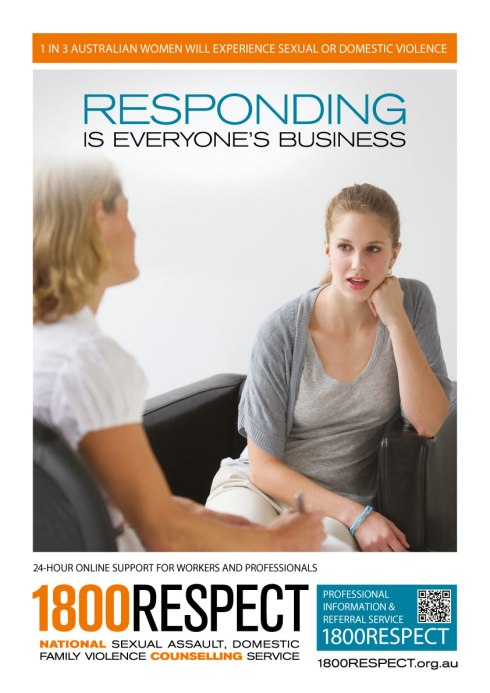
#Day3 of #16Days explores another English-speaking country with a history of English subjugation and genocide against Native people. Just like in the United States 1 of every 3 women in Australia will experience sexual or domestic violence. Available in 28 spoken languages as well as Auslan–Australian Sign Language, 1800RESPECT is the Australian National Sexual Assault, Family Violence Counselling Service. They offer free help to survivors of violence and their friends and family by phone and through chat 24/7. You can learn more about the work they do from their YouTube Page. They also have a map of organizations throughout the country that provide help to Aboriginal and Torre Strait Islander women, children and families. Additionally they provide help to service providers from dealing with vicarious trauma to webinars on cultural issues to working with people with disabilities. From their website:

While living free from violence is everyone’s right, reducing violence is everyone’s responsibility. Reducing all violence in our community is a priority. All forms of violence are unacceptable, in any community and in any culture.

Domestic or family violence and sexual assault are the more pervasive forms of violence experienced by women; they can also happen to men. These forms of violence cause significant personal, social and economic costs for all in our community.

1800RESPECT-Poster
The Australian Government Department of Social Services website has crisis line numbers for each territory, as well as the national Mensline Australia–1300 789 978– (a professional telephone and online support and information service for Australian men) and explains domestic violence and sexual assault this way:

Domestic or family violence can include any behaviours used by one person to establish and maintain power and control over their partner or another person in his/her family, including:

  • physical abuse – including direct assaults on the body, use of weapons, driving dangerously, destruction of property, abuse of pets in front of family members, assault of children, locking the victim out of the house, and sleep deprivation.
  • sexual abuse – any form of forced sex or sexual degradation, such as sexual activity without consent, causing pain during sex, assaulting genitals, coercive sex without protection against pregnancy or sexually transmitted disease, making the victim perform sexual acts unwillingly, criticising, or using sexually degrading insults.
  • emotional abuse – blaming the victim for all problems in the relationship, constantly comparing the victim with others to undermine self-esteem and self-worth, sporadic sulking, withdrawing all interest and engagement (e.g. weeks of silence).
  • verbal abuse – continual ‘put downs’ and humiliation, either privately or publicly, with attacks following clear themes that focus on intelligence, sexuality, body image and capacity as a parent and spouse.
  • social abuse – systematic isolation from family and friends through techniques such as ongoing rudeness to family and friends, moving to locations where the victim knows nobody, and forbidding or physically preventing the victim from going out and meeting people.
  • economic abuse – complete control of all monies, no access to bank accounts, providing only an inadequate ‘allowance’, using any wages earned by the victim for household expenses.
  • spiritual abuse – denying access to ceremonies, land or family, preventing religious observance, forcing victims to do things against their beliefs, denigration of cultural background, or using religious teachings or cultural tradition as a reason for violence.

Sexual violence is any behaviour of a sexual nature which is unwanted or occurs without consent. It includes sexual harassment, sexual assault, childhood sexual abuse and rape. Sexual violence is an abuse of power which may involve the use of physical force, threat or coercion.

Some Australians still feel that violence against women is condoned in their country and their culture, much as many Americans do,  and reporting rates are similar as well: 64% of Australian women who experienced physical assault and 81.1% of women who experienced sexual assault still did not report it to police. While progress is being made it’s clear that Australia still has a long way to go.


Day 2 of 16 Days of Activism: USA

#Day2 of #16Days of Activism Against Gender Based Violence showcases resources available in the United States to survivors of domestic violence, sexual assault and human trafficking. We are fortunate in the US to have many, many local programs dedicated to helping survivors of these human rights atrocities, and these national organizations can help you locate them if needed.

ndvh_bubble

The National Domestic Violence Hotline has been highlighted here many times before. From their website:

Operating around the clock, seven days a week, confidential and free of cost, the National Domestic Violence Hotline provides lifesaving tools and immediate support to enable victims to find safety and live lives free of abuse. Callers to the Hotline at 1-800-799-SAFE (7233) can expect highly trained experienced advocates to offer compassionate support, crisis intervention information and referral services in over 170 languages.  Visitors to this site can find information about domestic violence, safety planning, local resources and ways to support the organization.

The Hotline is part of the largest nationwide network of programs and expert resources and regularly shares insight about domestic violence with government officials, law enforcement agencies, media and the general public. The National Domestic Violence Hotline is a non-profit organization established in 1996 as a component of the Violence Against Women Act (VAWA).

300x250_every2B

The Rape, Abuse and Incest National Network has been highlighted here as well. They describe themselves as:

the nation’s largest anti-sexual violence organization and was named one of “America’s 100 Best Charities” by Worth magazine. RAINN created and operates the National Sexual Assault Hotline (800.656.HOPE and online.rainn.org) in partnership with more than 1,100 local rape crisis centers across the country and operates the DoD Safe Helpline for the Department of Defense. RAINN also carries out programs to prevent sexual violence, help victims and ensure that rapists are brought to justice.

and

Polaris Project

The Polaris Project which I have not had the pleasure of writing about before.

Polaris, named after the North Star that guided slaves to freedom in the U.S., disrupts the conditions that allow human trafficking to thrive in our society. From working with government leaders to protect victims’ rights, to building partnerships with the world’s leading technology corporations, we spark long-term change that focuses communities on identifying, reporting and eliminating trafficking networks. Our comprehensive model puts victims at the center of all that we do — helping survivors restore their freedom, preventing more victims, and gathering the data to pursue traffickers wherever they operate.

Unparalleled expertise. Relentlessness. And an innovative spirit. This is how Polaris eradicates the slavery networks that rob human beings of their lives and their independence.

Freedom happens now.

DV in the US

The United States is also privileged to host such amazing organizations as ADWAS– The Abused Deaf Women’s Advocacy Project, The Shalom Task Force, The National Human Trafficking Resource Center and Love Is Respect, plus hotlines for every state in the nation, plus many territories like Puerto Rico. While we still have a long way to go before we’re rid of this scourge, the ever-growing number of resources available to help survivors live free from violence is definitely something to be thankful for.


Day 1 of 16 Days of Activism: The Pixel Project

Today kicks off #Day1 of 16 Days of Activism Against Gender-Based Violence! Everyday I’ll be showcasing resources in different countries that help people live lives free from violence. The Pixel Project has a fantastic running library of Tweets with the contact information for various domestic violence and sexual assault hotlines around the world. Follow them @PixelProject, use #16DaysofActivism or just #16Days, get ready to #OrangeUrHood, and like them on Facebook.

Pixel Project

They have some awesome posts about ways you can participate in stopping the epidemic that is domestic violence, like:
16 Ways to Stop Domestic Violence in Your Community
16 Ways You Can Support a Survivor of Domestic Violence
16 Films About Violence Against Women
16 Ways Men Can Help Stop Online Violence Against Women
16 Ways to Help Your Local Domestic Violence Shelter
and
16 Tech Innovations That Help the Movement to Prevent and Stop Violence Against Women.


Eight Ways to Support Awareness of Gender-Based Violence

Really

So much has happened this year, even this month, it’s difficult to see Domestic Violence Awareness Month come to a close and be satisfied with the public’s level of awareness until next year. From Ray Rice and other athletes to Gamergate, violence against women is seeping out of every corner of our culture. And it’s got to stop.

Anyone, of any gender, can be a perpetrator or a victim of violence. But women and LGBTQAI folks (compounded of course by race, ability, language, immigration status, class, age, etc.) experience harassment, sexual assault, stalking, dehumanization, intimate-partner violence, and structural violence at an astoundingly higher rate than men. Women can’t be in public without being subjected to street harassment and violence.

Until we take violence against women seriously, whether that’s on the street, or on the internet, or in their own home, our society will not grow, will not be equal and will not benefit from the full strength of its members. What can you do about it? Here are eight simple things:

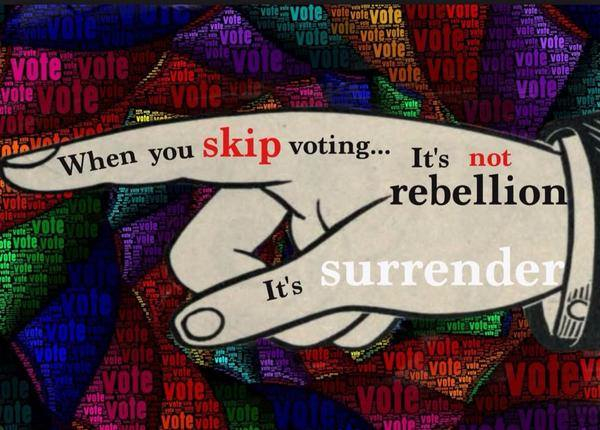
1) VOTE. Mid-term elections are crucial to electing members of our democracy who represent our interests at the local and state levels. If you fail to vote you are letting those who are most vocal speak for you. I live in Texas, I know how dangerous that is.

Surrender

2) Encourage your employer to partner with Safe Horizon to help survivors of domestic violence get the help they need, and not lose their jobs in the process.

3) Demand that all survivors of sexual assault and rape who have a uterus have the option to take emergency contraception if they so choose. I truly don’t understand how this is even up for conversation. Along the same lines, contact your representatives about the backlog of rape kits in your area.

Molly Ivins

4) Give to your local sexual assault and/or domestic violence shelter, or national organizations like No More, RAINN and Love Is Respect. You can also text WNYPASSTHEPEACE to 41444 to donate to putting an end to domestic violence.

5) Remove language from your vocabulary that suggests, makes light of, or condones sexual or domestic violence. Replace excuses with conversations, like how come Michael Vick (who served jail time) was more vilified than Ray Rice? I think that warrants a new hashtag- #AintThatSomeVictimBlaming? If you don’t follow my train of thought let me know in the comments and I’ll clarify it for you.

6) Fight for affordable housing. Not only does it help your community in general, it helps survivors of domestic violence in particular.

7) Speak up in social media.
-Follow @SayNO_UNiTE, @PixelProject, @StopStHarassmnt, @Hollaback, @GlobalFundWomen, @WomensLaw, @BreaktheCycleDV, @RAINN01, @NuestrasHijas, @NDVH, @loveisrespect and others like them on Twitter, Tumblr, Pinterest, and Instagram.
-Give 669-221-6251 to the person who will not stop asking for your phone number.
-Take on violence, threats, stalking and general misogyny on the Internet with hashtags like:
#trollslose
#stalkingisnogame
#stopcyberviolence
-Others can be used to call for an end to sexual violence, victim blaming, and general awareness of DV like
#carrythatweight
#beenrapedneverreported
#rapeculture
#humantrafficking
#heforshe
#DVAM
#SeeDV
#SafeHelpline
#VOWtoEndIt
#NoMore
#violenceagainstwomen

8) Take your battle into the streets.

violence-against-women-thumbnail_54523ab491680


Earning a Living Making a Life

do-what-you-love

As longtime readers will know, for the past two years I have worked for two different causes I am equally passionate about. People who aren’t my co-workers are often surprised by how much I love the work I do. I believe everyone should have the opportunity to pour themselves into doing what they love, and fighting for something they believe in, so with that in mind I’ve compiled a list of not-for-profit organizations, both in Austin and elsewhere, so that any of you, dear readers, who want to commit yourselves to working for change, can have a starting block from which to do so. Keep in mind a lot of non-profits or non-governmental organizations may only have volunteer positions or internships, but it’s a great way to gain experience and get your proverbial “foot in the door.” Don’t forget to check your local Craigslist and Idealist listings too. In no particular order, here’s a partial list (come back soon for more!) of organizations I have bookmarked on my computer to get you started:

Survival International– The global movement for tribal peoples’ rights

Native Planet– Preserving Cultures, Empowering People.

Minority Rights Group International– Working to secure the rights of minorities and indigenous peoples.

International Women’s Tribune Center– Connecting women globally for social change

Population Action International– Healthy Families, Healthy Planet

PeopleFund– Creating economic opportunity and financial stability for underserved people

Equality Texas– Envisioning a state where all Texans are treated equally, with dignity and respect

The Michael & Susan Dell Foundation– Transforming the lives of urban children living in poverty through better health and education

Foundation Communities– Creating housing where families succeed in Austin and North Texas

Guttmacher Institute– Advancing sexual and reproductive health worldwide through research, policy analysis and public education

Fellowship of Reconciliation– Working for peace, justice and nonviolence since 1915

CARE– A leading humanitarian organization fighting global poverty

Court Appointed Special Advocates (CASA) of Travis County– Speaking up for children who have been abused or neglected

Open Democracy– Free thinking for the world

Transcending Boundaries– Providing education, activism and support for persons whose sexuality, gender, sex, or relationship style do not fit within conventional categories

National Network to End Domestic Violence– Dedicated to creating a social, political and economic environment in which violence against women no longer exists

Colorlines– News for action

Women’s Information Network– Democratic. Pro-choice. Women.

World Pulse– Connecting women’s voices to transform our world

Mama Cash– Giving grants to women’s girls’ and trans rights groups that are working to change the world

The Peace & Collaborative Development Job Board– one of the premier sites in the world focused on international development, peacebuilding, humanitarian relief, social entrepreneurship, international affairs and more

The Center for Health and Gender Equality (CHANGE)

The Association for Women’s Rights in Development– an international, multi-generational, feminist, creative, future-orientated membership organization committed to achieving gender equality, sustainable development and women’s human rights

The Texas Association Against Sexual Assault– to create a Texas free from sexual violence

The National Domestic Violence Hotline– Over 17 years of advocacy, safety planning, resources, and hope

national-domestic-violence-hotline-logo


Global Reflections on Street Harassment

Since January I and other bloggers from around the world have been writing for the Stop Street Harassment Blog. For me participating in the conversation about street harassment has been a cathartic experience, allowing me to reflect on how I deal with being harassed and how I view the men in my community who are harassing me and others. To bring Sexual Assault Awareness Month to a close, I’d like to leave you now with an overview of the past four months of the Stop Street Harassment Blog.

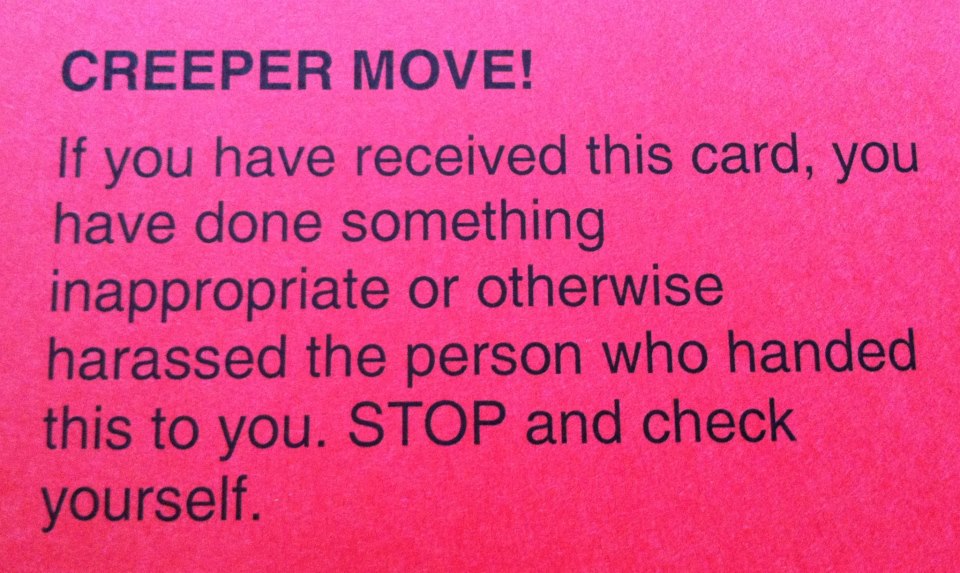
CreeperMove-HollabackDesMoinesIn April I wrote about the clash of sexism and racism when someone is harassed by a member of a different race. Ultimately no matter how many people of any given race harass you, they are still acting alone, and it is crucial that their sexism does not fuel our racism. Rocio Andrés of Spain also explored the individualism of harassers, but delved more into their humanity than I. She reminds us that they too are products of the society that we create, so we must try to continue to view them as human. She urges that understanding street harassers is not excusing them, but it is crucial to learning how we can prevent harassment to begin with.

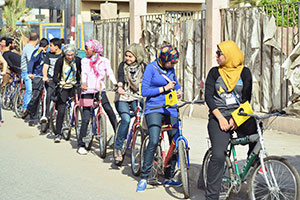
In March I explained why self-care after being harassed is so important. Joe Samalin of New York listed TWENTY-NINE THINGS men can do to stop street harassment. 29! Katie Monroe of Philadelphia gave a shout out to HollabackPHILLY’s dance party and fundraiser put on by Get Lucid! which took place on April 5th. Also in March Rocio wrote about a missed opportunity to travel to Cairo as sexual assault and bombings stood in her way of exploring street harassment in the motherland. Pallavi Kamat of India wrote about the underlying causes of street harassment in Mumbai. Kriti Khatri of Nepal explained how street harassment can escalate to other, more severe forms of sexual violence. Brittany Oliver of Baltimore interviewed a woman in her community about street harassment and how it affects her. Joe also wrote in March how men’s silence in the face of harassment makes them allies to the harasser, not women. Brittany also wrote about Hollaback! Baltimore and their efforts to utilize local businesses to fight street harassment. And early on in March Katie explored how street harassment affects women cyclists in Philly.

bike womenThough February is a short month a lot was written by the Stop Street Harassment Blog cohort. Kriti looked at how using public transportation contributes to women being harassed in Nepal. Rocio contrasted the realities of sexual violence in places like Rwanda and Bosnia-Herzegovina to the good things that are happening to combat street harassment in other places. She wrote about violence in war stating, “We love durings. As if there were neither after nor before.” Powerful stuff that! Pallavi highlighted some of the successful community engagement projects of Blank Noise in India. I dove into the link between street harassment and teen dating violence for Teen Dating Violence Awareness Month. Sandria Washington of Chicago challenged the idea that more crossing guards would reduce girls being harassed on their way to school. Jeanette R. of California talked about racial profiling of men as a form of street harassment.  Joe explored how men can start to realize just how pervasive street harassment against women really is. February started with Andrea Ayres-Deets of San Francisco tearing open the ever-important idea that street harassment limits women’s political participation and participation in strategic nonviolent action.

In January Brittany encouraged everyone from Baltimore to Cairo to Meet Us on the Streets and give voice to the harassment that overruns society. Kriti highlighted the organization Astitwa and its success in changing how Nepali police address street harassment. Katie contrasted the differences between gender-based street harassment and bicycle-based harassment. For the anniversary of Roe v. Wade I wrote about the harassment of women seeking abortions and abortion care providers as a form of street harassment. Rocio explored how things like Scotland’s “Single Woman Policy” are just band-aid solutions to the gaping wound that is sexualized gender-based violence. Finally, back at the beginning, Pallavi reminded us that the streets are not only full of harassment, but in India they are far too often where young women go to die.

I’d like to thank the Founder/Executive Director of Stop Street Harassment, Holly Kearl, for giving me this opportunity to learn and share and grow.


Facebook and Twitter and Tumblr, oh my!

Dear readers I thank you for your loyalty, even when I’m not churning out Pulitzer-prize-winning blog posts you still come back regularly and show your support. I can’t tell you how much I appreciate that! Because it can take so much out of me to really pour myself into a blog, I’ve tried to do smaller things to involve you, the community, in advancing equality.

If you’re not already a fan you should go, right now, and “Like” Feminist Activism on Facebook. There’s even a handy button for it right up there! arrow-diagonal-up

Do you know the email address to send ideas/requests for blog posts, or submit Guest Posts? It’s FeministSNVA@gmail.com. You could also stay involved by following us on Twitter @FeministSNVA #feminism #StrategicNonviolentAction #activism. And since I’ve been blogging over at Stop Street Harassment since January, you can also check out #EndSH @StopStHarassmnt, and the ever-lovely folks at @NDVH and @loveisrespect.

And much like the tweets I send out that are weeks apart and then all of a sudden appear in a flurry for an hour or so only to disappear again, Feminist Activism is also on Tumblr @FeministSNVA. Below is a smattering of what’s gone up on Tumblr in the past month.

bi awareness


Giving Thanks


Not Your Asian Sidekick

Stop Islamophobia

Trans WHM

Women's History

Join us in using social media for good!


MASKulinity: An Uncomfortable Act, Even for a Tomboy

victor-victoria-julie-andrews_lI’ve been un-ladylike most of my life. My mother grew up with five older brothers and as a single mother her tomboyish upbringing rubbed off on me. Some of my first baby pictures are in overalls and I never took issue with dirt or bugs, but at the same time for special occasions my mother would spend hours trying to get my stick-straight hair to curl and do her utmost to keep bows in it, even when under layers of church-dress-ruffles my knees were skinned. As I grew older I became more accustomed to performing femininity as was expected of my assigned gender.

Junior high school definitely stands out as a period of intense change, and desperately trying to figure out what I was or wasn’t comfortable with as far as my appearance was concerned. It didn’t help that in our “health class” the school nurse had me read aloud to the group of girls the dictionary definitions of woman vs. lady, so that we would behave like ladies now that we had hit puberty. Sixth grade revolved around grunge: Nirvana, Soundgarden, oversized flannel shirts, baggy jeans and Airwalks because I was in love with skateboarders, and my best girl friend…. Seventh grade was punctuated by really short shorts and trashy blue eye shadow and pink lipstick. By eighth grade though my best friend’s influence was strong, and I was wearing spaghetti strap tank tops with bell bottom jeans and barrel curl bangs (my best friend at the time was Mexican).

As my bangs grew out and my wannabe-skater-girl style became more comfortable I grew into my role as the brainy tomboy once again. It’s a role I’ve been comfortable with ever since. Even now, as a full-fledged adult it truly depends on the day whether I wear jeans and a T-shirt or a pencil skirt and heels. To be quite honest I’m more comfortable in jeans because it feels less like a performance and more like …existing. Too bad the androgynous look doesn’t work on everyone! So I guess I’m not the best at performing femininity either, but I have a hell of a lot more practice at it. Presenting as male or solely masculine–not just as a tomboy–not so much.

event-poster-2306937

Last week some brave male friends of mine joined me at a drag show and gender swap. They looked beautiful in their skirts, leggings, shimmery eye shadow and bold lipstick. I felt so grungy in my masculine garb. Even though the clothes I was wearing I am intimately familiar with (they are my partner’s so I have seen and felt and washed and folded them numerous times) I was flat-out uncomfortable in them. Since I needed men’s clothes that could hide my curves they were baggy on me, and felt colorless. Stripping myself of my daily routine of earrings and mascara I felt exposed and vulnerable, which only added to the poor façade I was putting up.

While the boys were seeking help in applying their makeup, figuring out how to line their eyes and which blush to wear, I was… bored. Men’s clothing, men’s fashion and style are no fun. They don’t get to play with color, they have little to no accessories and their face is what they get. And if men want to dress up they have to spend a lot of money (think three-piece suit) to look formal/fashionable. While I hate that women are expected to hide their faces with make up, I also hate that men don’t have the opportunity to play with color and shape and lighting.

20140213_220448

You may be wondering what my venture into “cross-dressing” has to do with activism but the personal is political, so even my friend and I choosing to rebel against socially constructed gender roles through our physical presentation is a political act. Most of the evening I was checking in with my friends to see if my machismo was holding up, if I was “passing.” The boys didn’t seem so concerned but for good measure I regularly reminded them that “ladies” keep their knees together and take up less space.

The whole experience was exhausting. I felt like my presentation was fairly convincing, that unless someone looked very closely they would not know I am a woman/usually present as female. Because of this I felt a huge burden to continuously “prove” my masculinity, walking with an uncomfortably exaggerated gait, standing with my shoulders back and chest out, sitting with my legs spread and staring menacingly with my lips and jaws tightened in a half-scowl. Whether or not I was actually passing… I don’t know.

I felt like I couldn’t smile, because my face, when content-looking, would reveal my usual identity. Later in the night as politics and alcohol flowed together to liven up our trio I know that I was smiling, but I never saw my own face do so while in my façade, so I don’t know if my smile did, in fact, erase all the masculinity I was trying to layer onto my decades-deep layers of femininity. I was reminded that night though that masculinity can be an uncomfortable mask for people who identify as men as well.

Whenever I would complain about my discomfort within my get-up my friend would commiserate and regale me with coming-of-age tales of small town Texas, and my heart would ache for all the boys in the world who don’t really want to be girls, but really would love to be able to wear a skirt, or lipstick every once in a while, just because they felt like it. There’s nothing wrong, at all, with men in skirts. So this is my call to action, dear readers: WEAR WHAT YOU WANT! And send me pictures of you flaunting non-traditional clothes for the gender you usually present as. I love you for who you are.


men in skirts