Tag Archives: Violence against women

Day 20- RAINN & NDVH

I love acronyms. I think they’re immensely useful. Two of my favorite acronyms are RAINN and NDVH.
RAINN is the Rape, Abuse and Incest National Network, and NDVH is the National Domestic Violence Hotline, both of which are primarily US organizations. I have posted their contact information at least twice in the past week but wanted today to focus on their work and explain how they help to combat violence against women. There is also a free NDVH in the UK.

RAINN provides startling statistics as to the nature of sexual violence in the US: every 2 minutes someone in the US is sexually assaulted, 44% of victims are under age 18 and 80% are under 30, 60% of sexual assaults are not reported to the police, roughly 2/3 of sexual assaults are committed by someone the victim knows, and 15 out of 16 rapists will never spend a day in jail.

For more information regarding sexual assault statistics, victims, offenders, and reporting, go to the respective links. RAINN offers information on different types of sexual assault including rape, incest, child sexual abuse, stalking and many other violent crimes. There is also advice for what to do in the aftermath of sexual assault, how to recover from sexual assault, information about the possible effects of sexual assault, and tips for computer safety.

RAINN has many high-profile supporters, including Rachel Bilson, Tori Amos, Blythe Danner, Cybill Shepherd, Law & Order:SVU’s Mariska Hargitay, and national spokesperson Christina Ricci, who lend their faces and voices to Public Service Announcements.

This organization also works to adjust public policyThese links offer information and support for various issues surrounding sexual assault such as drugs and rape, male rape, mental health, military resources, and international resources, and here is a list of resources by state. You can search for a local rape crisis center here or call the National Sexual Assault Hotline toll-free at 1.800.656.HOPE (4673) for live help.

To show your commitment to ending sexual violence, get involved by contacting your representatives about public policy or volunteering, shop at one (or all!) of these many retailers or support RAINN through their numerous donation options. RAINN also offers 5 different internships in Washington D.C.

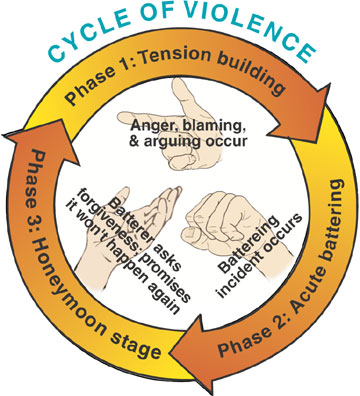
The National Domestic Violence Hotline here gives information on signs of various types of domestic violence, including emotional, physical and sexual abuse. NDVH also offers information for abusers and witnesses to abuse as to how to help end the violence. Teen dating abuse is explored here and this information specifically addresses the unique situation of immigrant women in dealing with DV. Women with hearing disabilities can find useful information here.
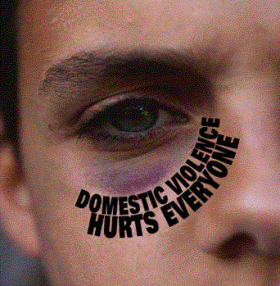
NDVH offers these resources and advice for safety planning. To find help in your area, such as shelters and coalitions, go here. You can contact the hotline here or by calling toll-free 1−800−799−SAFE (7233) or TTY 1−800−787−3224. También hay información sobre la violencia contra mujeres en español.
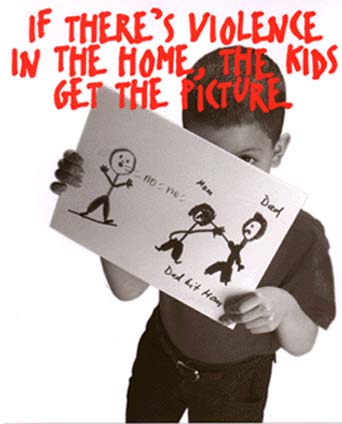
 

You can support the hotline and its work by volunteering, shopping here or making a donation. You are also encouraged to share your voice in hopes that others might see themselves in your story and find a way out of an abusive situation. Numerous celebrities also support NDVH and appear in their PSAs including Salma Hayek, Martina McBride and Marlee Matlin.

Day 18- V-Day Movement

All over the United States, and throughout much of the world, The Vagina Monologues make people blush, laugh, cry, get angry, and feel hope on an annual basis. This mixed up rush of emotions takes place within a 90 minute performance where amateur (and sometimes professional) actresses bring to life the intimate confessions of other women’s vaginas.

But playwright Eve Ensler’s The Vagina Monologues is no longer simply a theatrical production, the VMons (as many of the women who have participated in them come to call them) have transformed into the V-Day Movement, a movement that will continue “Until the Violence Stops.” 

From their website: “V-Day is a global activist movement to stop violence against women and girls. V-Day is a catalyst that promotes creative events to increase awareness, raise money and revitalize the spirit of existing anti-violence organizations. V-Day generates broader attention for the fight to stop violence against women and girls, including rape, battery, incest, female genital mutilation (FGM) and sex slavery.”

The V-Day Movement is comprised of much more than just The Vagina Monologues: at least five other annual events take place under the V-Day umbrella including two other performances, two film screenings, and a workshop, in addition to teaching events surrounding the Spotlight Campaign.

A Memory, A Monologue, A Rant and A Prayer is a performance piece that encourages men to get involved and perform monologues to help stop violence against women. “The volume features such authors and topics as: Edward Albee on S&M; Maya Angelou on women’s work; Michael Cunningham on self-mutilation; Dave Eggers on a Sudanese abduction; Edwidge Danticat on a border crossing; Carol Gilligan on a daughter witnessing her mother being hit; Susan Miller on raising a son as a single mother; Sharon Olds on a bra; Patricia Bosworth on her own physically abusive relationship; Jane Fonda on reclaiming our Mojo; and many more.”

Any One of Us: Words From Prison is another performance piece. It chronicles the experiences of women in the prison system in the United States, and explores how violence shaped women prisoners’ lives even before they broke any laws. “Together these writings reveal the deep connection between women in prison and the violence that often brings them there.”

Until the Violence Stops is a film screening that gets its name from the mission of V-Day- to continue to combat violence against women and girls until there is no more violence. This film is a documentary of the experiences of women around the world who have worked in the V-Day Movement.

What I Want My Words To Do To You is a film that documents Eve Ensler’s conversations with women inmates. “The film culminates in an emotionally charged prison performance of the women’s writing (the first edition of “Any One of Us”) by acclaimed actors Mary Alice, Glenn Close, Hazelle Goodman, Rosie Perez and Marisa Tomei. The film documents both the wrenching personal journeys undertaken by the inmates to find the words that tell their own stories, and the power of those words to move the outside world.”

Finally, V-Men is a powerpoint presentation and teaching workshop for men only. It is a safe space for men to discuss their own feelings (and sometimes their own actions) surrounding violence against women, and ways they can help end violence.

Some of these events require an admission fee, most don’t, but all of the events, whether they raise money or not, help end the silence surrounding violence against women, and help survivors heal. Ninety percent of proceeds from any events held are to be donated to a local organization that is working to stop violence against women and girls, while the other ten percent is given to the V-Day Foundation to be donated to the women of the Spotlight Campaign. This year V-Day has been focusing on the women and girls of Haiti and the unbelievable amount of physical and sexual violence they face on a regular basis. V-Day also operates a scholarship program and numerous safe houses around the world.

“Since the Campaigns’ inception in 1998, participation has grown exponentially. In 2010, over 5,400 V-Day benefit events took place in 1,800 locations, including all 50 U.S. states and 55 countries. That is 400 more communities than were reached as recently as 2009.

The proceeds generated from these events have also grown. College and community activists raise an annual average of $4 million for local groups such as domestic violence shelters and rape crises centers. Also, ten percent of each event’s proceeds are channeled back to V-Day’s Spotlight Campaign.”

Any and all information regarding the V-Day Movement is available at vday.org and I encourage you, if there is not yet a production of The Vagina Monologues planned for your town, do it yourself. You won’t be disappointed. The V-Day website is also a wonderful resource.


Day 17- Take Back the Night

In the past two days we have seen how ordinary articles of clothing can be catalysts for change, and can help break down barriers by promoting people to ask questions. Any conversation that educates someone as to the gender inequality in a given society or the dangers of gender-based violence is a good one, and Take Back the Night (also known as Reclaim the Night) has been promoting survivors of violence to break the suffocating silence since at least 1975. These events are held all over the world in recognition that women’s rights are still in jeopardy.

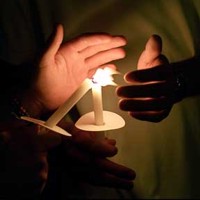
The idea behind this life-changing event is for women (and men) to gather together after dark, share their stories of violence, literally light up the night (with candles), and reclaim their right to be in public at night. You can find the history of the event here. TBTN is also a forum for survivors to realize that they are not alone in facing violence. 

As an undergrad at SDSU I had witnessed (and marched and chanted slogans in) one TBTN event before I had the courage to take the mic at the second event my sophomore year. I, oddly, have no fear whatsoever of public speaking but standing up and telling the microphone and everyone who was on the other end of it the hell I faced as a survivor of child sexual abuse and incest was terrifying. I felt exposed, like a gaping wound. I tried to fight back tears but as my mother says, sometimes tears are the necessary lubricant for painful words.

Once my story had been told and all of these people, these strangers, now knew that I was a survivor, I felt like a huge weight had been lifted off me, I felt liberated. And everyone at the event touched a caring hand to my shoulder, or hugged me through a layer of their own tears, telling me they felt the same way, and thanking me for telling their story.

Take Back the Night changed my life. It was the first time I ever identified myself as a survivor of incest; a word which still makes my stomach flip and my skin crawl. I participated in the subsequent events on campus throughout my college career but never again felt the need to speak up. Of course, I raised my voice as we marched around campus and “Our bodies, our lives, our right to decide!” has served me well in pro-choice rallies too.

The cornerstone of TBTN is local events where ordinary citizens have the courage to speak up and show that they are sick and tired of being fearful. The TBTN Foundation welcomes submissions of local events and will add them to its national calendar. Normally these rallies are held near the end of April, which is Sexual Assault Awareness Month (and Child Abuse Prevention Month). They are often held in conjunction with a number of other activities including Denim Day and the Clothesline Project.

Many groups and organizations participate in Take Back the Night, including universities, women’s groups, LGBTQAI associations, local shelters, religious organizations, and men’s groups who speak out against violence against women. If you are interested in finding a local event to participate in or volunteer for, or if you want to create an event, go here. If you need help dealing with a violence experience, here are some useful resources.


Day 16- Denim Day Movement

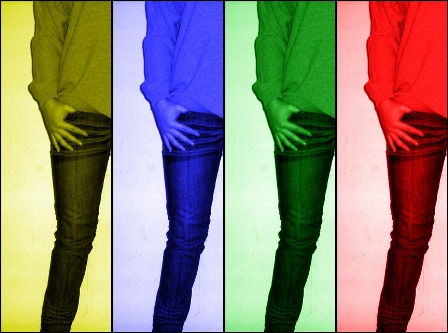
Yesterday we saw how The Clothesline Project uses T-shirts to raise awareness of and combat the acceptability of violence against women. Today we will explore how another ordinary article of clothing, jeans, can spread a message of hope, courage, support, and most of all, that “Yes means yes, no means no: whatever we wear, wherever we go!” 

This year Denim Day will fall on (or around) April 27. The date changes slightly each year but the Denim Day in LA website is regularly updated. Peace Over Violence, the organizers of Denim Day in LA, describe the event this way:

“It is a rape prevention education campaign, where we ask community members, elected officials, businesses and students to make a social statement with their fashion statement and on this day wear jeans as a visible means of protest against misconceptions that surround sexual assault.”

Denim Day was inspired by a rape case in Italy in which the Italian Supreme Court overturned a rape conviction because, the judge argued, the victim was wearing tight jeans, and so must have helped her attacker take them off, thus consenting to sex. To protest the ridiculous verdict women of the Italian parliament protested by wearing jeans to work. News of the protest spread to California where our legislators did the same, and when the Executive Director of Peace Over Violence heard about it, Denim Day in LA was born. That was in 1999 and Denim Day has taken place across the globe since then.

The outrage that followed this case continues today as many states in the US do not have laws about rape that contain the word “consent” but rather identify rape solely by penetration. My biggest complaint with rape laws in the US (other than their complete lack of enforceability) is that the justice system currently does not consider a man forcing a woman to continue having sex to be rape. That is, once a woman consents to an act of sex, she then has no power to terminate it. It’s infuriating that in 2011 we are still debating whether women should have the right to control their own bodies (in this and many other contentious areas).

Many organizations, such as the Missouri Department of  Health & Senior Services offer toolkits for organizing your own Denim Day, and Denim Day is an internationally recognized event, taking place in communities and college campuses around the world. Nearly all domestic violence and rape/sexual assault shelters and organizations also participate in Denim Day, so if you are interested in helping out and helping to squash myths surrounding sexual assault, contact your local shelters to see if they can use volunteers.


Also from the Denim Day in LA website:

MYTHS & REALITIES ABOUT SEXUAL ASSAULT

Rape is not sex, it is violence

Myth: Women encourage rape by wearing sexy, suggestive clothing. If someone dresses conservatively they are less likely to be raped.

Reality: Research consistently shows that rape is about the need to act out power and control, not what a person wears. In fact, women and girls have been raped while wearing everything from pajamas to jeans to business suits.

Myth: Most rapes occur in a dark alley by a stranger.

Reality: About 75% of rape victims are assaulted by someone they know . . . intimates or acquaintances. This could include dates, family members, boyfriends, and husbands.

Myth: If a woman consents once to sex with someone, she can’t ever be raped by him. If she knows

him or is in a relationship with him, she can’t be raped.

Reality: Coercing or forcing someone to have sex against their will is sexual violence. Knowing, dating, being married or related to, is not a license to rape.

Myth: He’s attractive and successful. Anyone would want to be with him. He couldn’t be a rapist.

Reality: Rapists come from all types of backgrounds and all walks of life. Money and success does not preclude committing a crime, but in some cases it has helped avoid a conviction.

If you or someone you know needs help here are some organizations that can offer support:


National Hotlines:

Rape, Abuse, Incest National Network (RAINN)
800.656.HOPE (4673)
http://www.rainn.org/

National Domestic Violence Hotline

800.799.SAFE (7233)
800.787.3224 TDD

Home


Day 15- The Clothesline Project

Today starts a week of discussion surrounding organizations and actions that aim to combat violence against women. Gender-based violence takes many forms including emotional, psychological, financial, verbal, physical, and sexual abuse.

Women all around the world are at risk for violence.

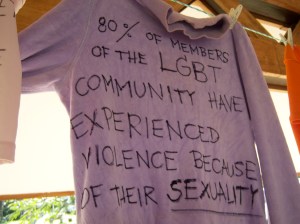
Violence is often inflicted on women by men they are close to such as fathers, husbands, brothers, uncles, or boyfriends, but lesbians and transgendered people around the world are at risk of assault and sexual violence everyday, just because they exist. And while violence within LGBTQAI relationships is often overlooked and covered up, lesbians are not exempt from domestic violence.

Another vulnerable group of adult women are elderly women, both in retirement homes and out. Elder abuse can take many forms, from neglect to homelessness and widows in many countries are even more vulnerable. This week we will not tackle child abuse as a separate topic but look at the various ways in which girl children are specifically targeted for abuse and victimized by incest.

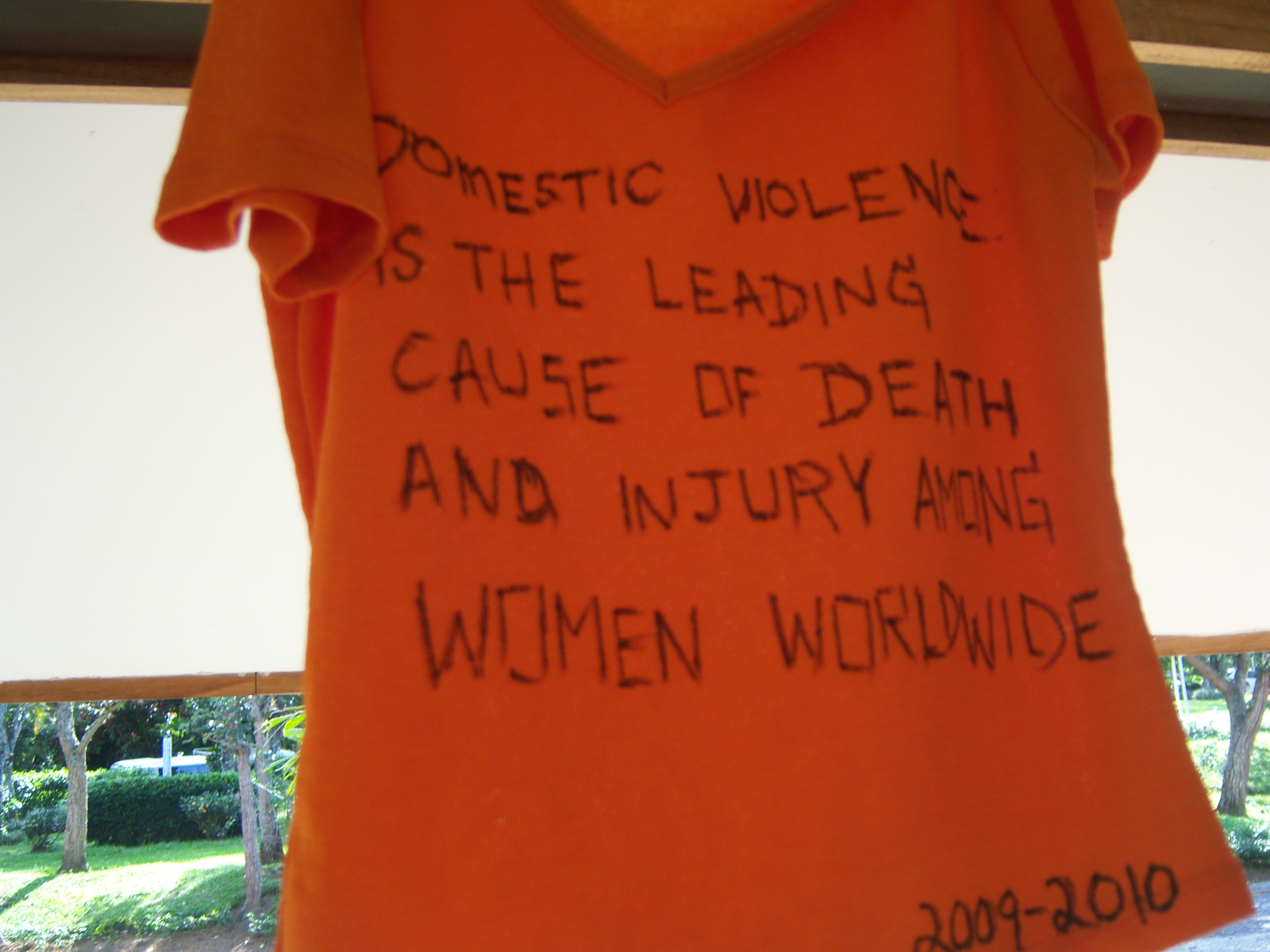
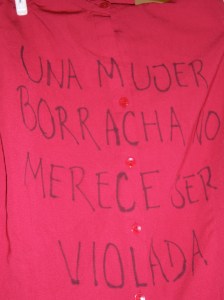
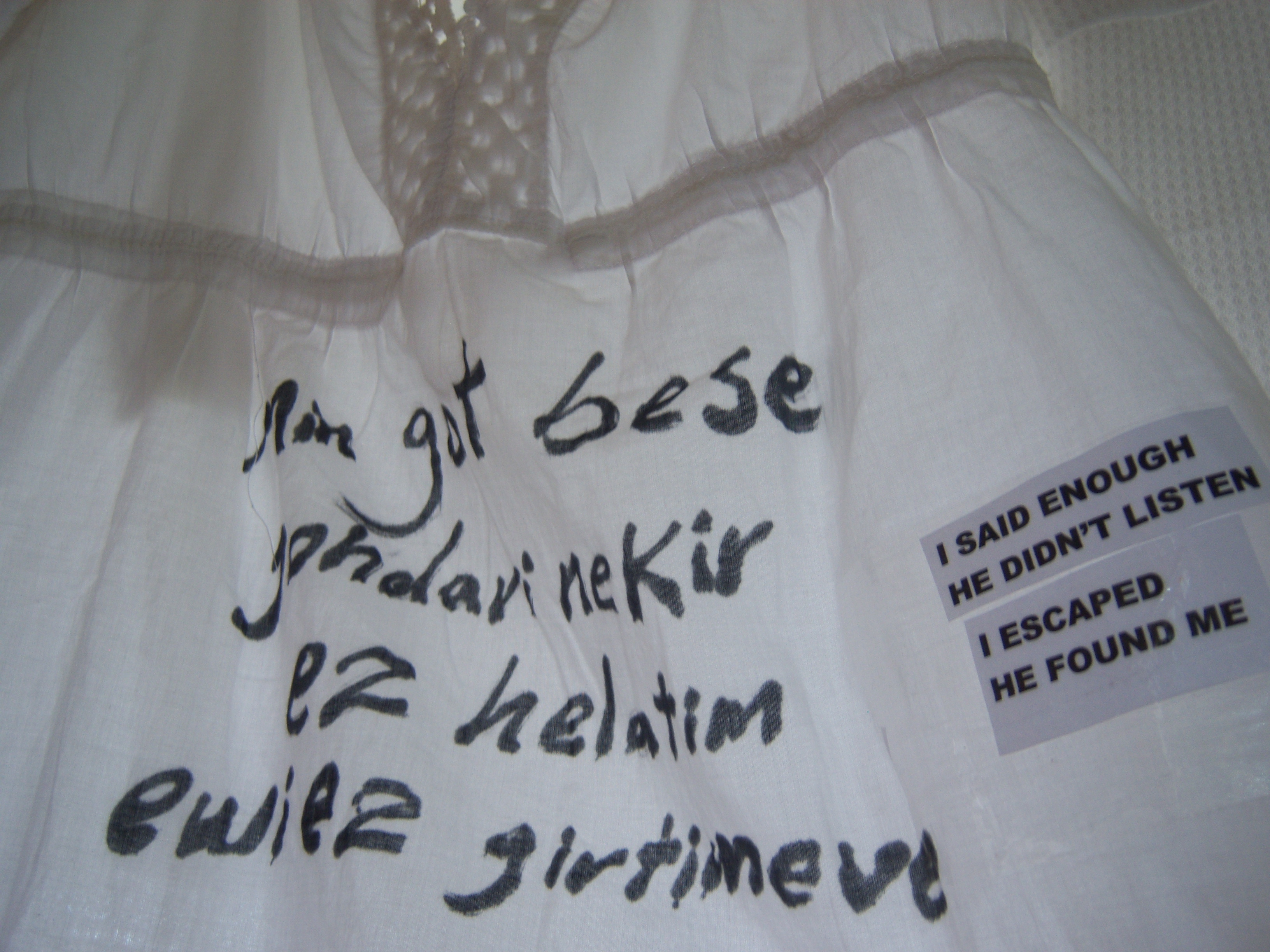
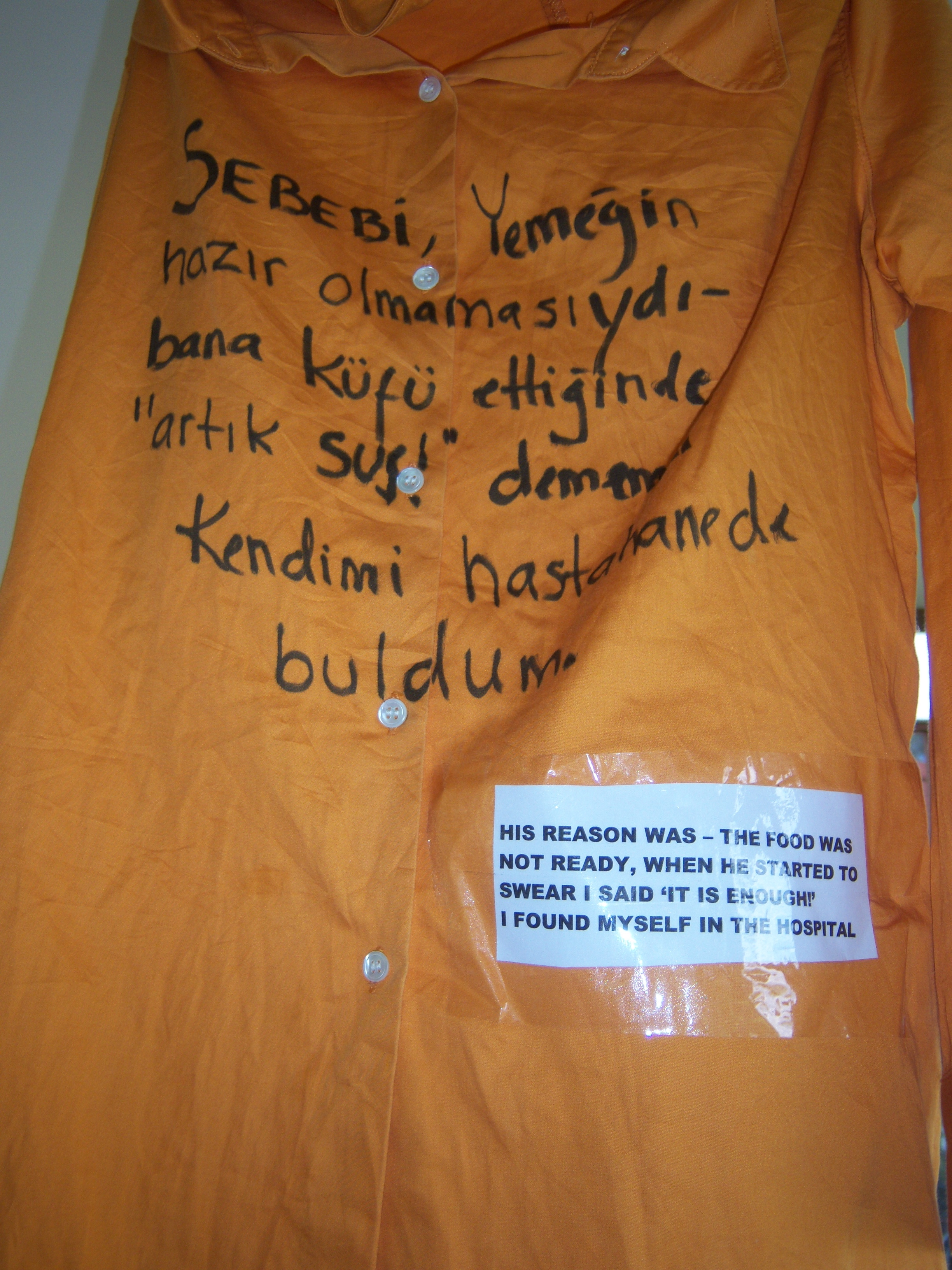
The Clothesline Project: I had witnessed the power of the Clothesline Project as an undergraduate student at San Diego State University. The personal messages written on old shirts at first are overwhelming and bring a sense of sadness and dismay, then you see the messages of hope and triumph written by women who have learned to overcome their own personal tragedies.

The first (and to-date only) Clothesline Project I have personally taken part in was last year at the University for Peace. All of the photos in this post are from that event. I cannot explain how empowering it was to share my own stories of abuse and support other women in their own healing processes.

Many groups that arrange Clothesline Projects do not allow men to write shirts but when asked by a classmate’s father if he could create a shirt to honor his sister who had been murdered by her boyfriend in front of her eight-year-old son, there was no way I could exclude men from our project.

Men and boys are also deeply affected by violence against women, and this project is a good cathartic opportunity for them to realize they have a community of people with whom they can share their stories and show their support to others who have faced similar challenges.

If you are interested in creating a Clothesline Project in your neighborhood to send a message of support to victims of violence, and defiance to perpetrators, see the original creator’s website.

For our project, we first raised money to buy shirts from a second-hand store. Because our student community was very international and would only be in Costa Rica for a year, most of us could not afford to part with the few articles of clothing we had brought with us.

At the store I purchased roughly 70 shirts of various solid colors. We used black permanent markers to share our stories and so some materials are better than others.

The color scheme of CP is broken down this way: Grey for verbal abuse, yellow and orange for physical violence, red and pink for rape and sexual assault, blue and green for child abuse, purple for violence against the LGBTQAI community, and white for murder.

From there we set up a quiet table, put pieces of cardboard in between the fronts and backs of the shirts so the markers wouldn’t bleed through, and started sharing our stories. We wrote the year on the hems of the shirts to keep track of them. We encouraged everyone to write in their native languages (our students came from 60 countries) and then we taped a typed translation onto the front of the shirts.

Because we were in a Spanish-speaking country, Spanish speakers were encouraged to write in Spanish on the front and English on the back. The idea was to eventually display the whole collection, with everything translated into Spanish, for the people of the town nearest our campus. While our class was never able to arrange this, we left the shirts our class made with the Gender & Peacebuilding department in hopes that this year’s class will add their stories, and continue our work.

The shirts were displayed for a week around the covered outdoor cafeteria area so that people could not ignore our message. The first day, during lunch, the display was accompanied by a soundtrack to make sure people were aware of how pervasive violence against women is. I created a soundtrack of a low-flying jet, a car alarm, and an air raid siren, which sounded every 13 seconds, every 2 minutes, and every 15 minutes, respectively. The jet symbolizes how often a woman is subjected to physical violence, the car alarm shows how often a woman is raped, and the siren alerts people to how often a woman is murdered in the US.

The event is emotional so if you are taking this on, be prepared for tears, confusion, and some very uncomfortable moments as people who think they don’t know anyone who has been victimized come to realize that no one’s safety is guaranteed.

Any event that raises awareness and gets people talking about such a taboo subject is a worthwhile nonviolent action. Together, we can overcome violence against women.