Category Archives: Race/Ethnicity and Activism

Earning a Living Making a Life

do-what-you-love

As longtime readers will know, for the past two years I have worked for two different causes I am equally passionate about. People who aren’t my co-workers are often surprised by how much I love the work I do. I believe everyone should have the opportunity to pour themselves into doing what they love, and fighting for something they believe in, so with that in mind I’ve compiled a list of not-for-profit organizations, both in Austin and elsewhere, so that any of you, dear readers, who want to commit yourselves to working for change, can have a starting block from which to do so. Keep in mind a lot of non-profits or non-governmental organizations may only have volunteer positions or internships, but it’s a great way to gain experience and get your proverbial “foot in the door.” Don’t forget to check your local Craigslist and Idealist listings too. In no particular order, here’s a partial list (come back soon for more!) of organizations I have bookmarked on my computer to get you started:

Survival International– The global movement for tribal peoples’ rights

Native Planet– Preserving Cultures, Empowering People.

Minority Rights Group International– Working to secure the rights of minorities and indigenous peoples.

International Women’s Tribune Center– Connecting women globally for social change

Population Action International– Healthy Families, Healthy Planet

PeopleFund– Creating economic opportunity and financial stability for underserved people

Equality Texas– Envisioning a state where all Texans are treated equally, with dignity and respect

The Michael & Susan Dell Foundation– Transforming the lives of urban children living in poverty through better health and education

Foundation Communities– Creating housing where families succeed in Austin and North Texas

Guttmacher Institute– Advancing sexual and reproductive health worldwide through research, policy analysis and public education

Fellowship of Reconciliation– Working for peace, justice and nonviolence since 1915

CARE– A leading humanitarian organization fighting global poverty

Court Appointed Special Advocates (CASA) of Travis County– Speaking up for children who have been abused or neglected

Open Democracy– Free thinking for the world

Transcending Boundaries– Providing education, activism and support for persons whose sexuality, gender, sex, or relationship style do not fit within conventional categories

National Network to End Domestic Violence– Dedicated to creating a social, political and economic environment in which violence against women no longer exists

Colorlines– News for action

Women’s Information Network– Democratic. Pro-choice. Women.

World Pulse– Connecting women’s voices to transform our world

Mama Cash– Giving grants to women’s girls’ and trans rights groups that are working to change the world

The Peace & Collaborative Development Job Board– one of the premier sites in the world focused on international development, peacebuilding, humanitarian relief, social entrepreneurship, international affairs and more

The Center for Health and Gender Equality (CHANGE)

The Association for Women’s Rights in Development– an international, multi-generational, feminist, creative, future-orientated membership organization committed to achieving gender equality, sustainable development and women’s human rights

The Texas Association Against Sexual Assault– to create a Texas free from sexual violence

The National Domestic Violence Hotline– Over 17 years of advocacy, safety planning, resources, and hope
national-domestic-violence-hotline-logo


An Open Letter to White People

Dear White People,

I seriously debated the title of this post, with White Privilege & Cultural Appropriation 101 and How to Not Suck as an Ally both strong contenders. If you can’t tell just how white I am from my avatar I am of the most sunburnable variety. And that whiteness (and of course being cis-gendered), at least in my culture in the United States, brings with it enormous amounts of unearned privilege. If you, dear reader, are wondering what race/ethnicity has to do with feminism and Feminist Activism I strongly encourage you to read this article, and check your privilege at the door.

womens-plus-dia-de-los-muertos-costume

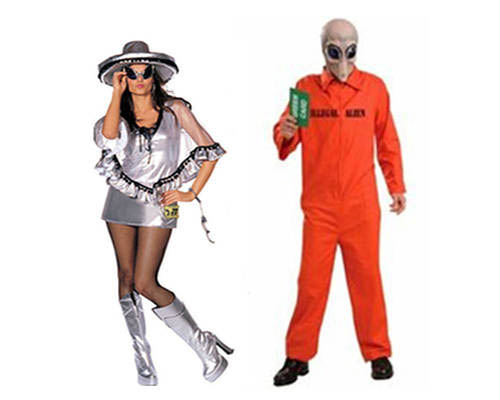
A prime example of a cheap, racist, sexist “costume” for Dia de los Muertos

I don’t want anyone to take away from this the us v. them dichotomy that this discussion may be reminiscent of. We are all human, we are all important, we are all deserving of love and respect. I just want to let other white people know that we, white people, are not the “default.” And that we have a responsibility as human beings to be just as aware of other cultures as other non-white Americans are of ours. Check out these links for a refresher on Arab/Middle Eastern, Asian, Black, Latina, Native American and Mixed-race women’s activism in the US. And check out the Other Women’s Blogs listed on the right side of the page for current voices from around the blogosphere.

El Día de L@s Muert@s is what inspired this post, and as Nuestra Hermana points out, it is no substitute for Halloween. Fall is full of celebrations and festivals from all cultures so I encourage discussions of appropriation versus appreciation of Diwali, Hanukkah, and Día de L@s Muert@s in the comments.

celia-cruz-06

The Queen of Salsa!

This year the discussions I had with many of my colleagues, as well as the numerous articles I read about racist, sexist and culturally appropriated costumes for Halloween have really stuck with me. It was a hard but humbling reality when I came to accept that it’s ok if I don’t get to dress up as Celia Cruz for Halloween, because it’s not my culture, it’s not my race and as much as I adore her, my culture has already done so much damage to Afrolatin@ culture that even with the purest of intentions I could never do justice to her because of my race and my culture. There are few downsides to being white so not being able to respectfully emulate someone of another race is something all white people should just accept.

I have made it an official rule: If you are white you do not get to dress up on Halloween (or any other day) as someone who is not white. And just as well, you’d probably end up being offensive anyway. No blackface. No hottentot Venus. Also, no feather headdresses, no geisha or dragon lady costumes, no gypsy fortune tellers, no harem beauties, no “illegal aliens” and don’t associate anything Native American with alcohol. Just don’t. Be respectful, be scary, be creative, just don’t be racist.

Racist and tasteless

Racist and tasteless

It has taken many years for me to understand my connection to the Latin@ culture. I poured myself into learning Spanish, have lived in Central America, enjoy cumbia and reggaeton, and would gladly eat Mexican food for every meal, and yet I have the privilege of turning off however Chican@ I may feel at any moment, because I am not actually Chicana. It is not my heritage, they are not my ancestors, no es mi lengua propia y no importa como elegantemente puedo communicarme en español, eso no es mío. I am and always will be white, so the stigma Latin@ children face at school for bringing rice and beans and tortillas would never be my reality. The hardship that Latina women face in the US when it comes to safe neighborhoods, fair employment, adequate child care, incarceration rates, health risks and immigration policies will never affect me in the same way.

Again, it has taken me years to learn that the connection I feel to mis herman@s is because of class, not race/ethnicity. I grew up in a trailer park and my best friend was half Mexican, half white. Because we lived in the same park we were subjected to the same disdain by the wealthier kids, but I always felt so at home with her Mexican familia that when I took a Chican@ literature class in college, studied the Nahuatl language and spent time with members of MEChA it seemed redundant for me that my classmates and professors gave me the title of “honorary Chicana.”

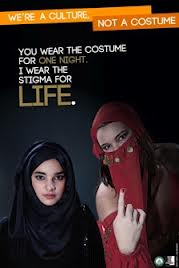
stigma 2But now I recognize just what an honor that was. I never have been and never will be Chicana, but because I respect and embrace all that Chican@ culture has done for and given to the United States, mis herman@s respect me, and my admiration for their culture, in return. It takes a lot of sincere interest in learning another culture to have members of that culture bestow such a title on you, and it’s something that no one should ever take for granted. I still consider myself very lucky to be able to  understand-both on an academic and a human level-Spanish conversations and Latin@ cultural events when my Latin@ friends choose to include me.

Here are a few tips I’ve been able to put together for those of you who are thinking of participating in another culture’s events or just generally don’t want to be racist:

  • Excepting an allergy, eat what is offered to you at a cultural event. Food, its preparation, and its enjoyment together are sacred in so many cultures that when white people make a face at menudo, crinkle their nose at kimchi or proclaim that curry “stinks” it kills me. That’s a whole lot of love you’re dismissing and if you aren’t participating in a cultural event to feel the love of the people you don’t belong there.
  • It is your job to educate yourself about other cultures. If you are planning to emulate someone from another culture, for whatever reason, it is entirely your responsibility as to whether your emulation comes across as offensive or genuine to someone from that culture.

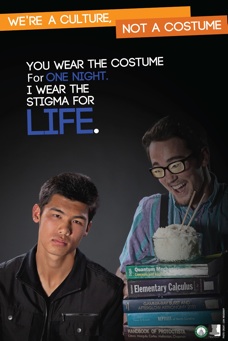
    Someone else's culture should not be your costume

    Someone else’s culture should not be your costume

  • It is your responsibility to make an effort to understand the spiritual, historical and cultural significance of any holiday/celebration/festival you do not understand. If you have read everything you can get your hands on and still don’t feel like you understand it, only then would I advise asking someone from that culture to explain it to you. It is in no way their job to educate us.
  • While it is not anyone’s job to educate anyone else, if someone does choose to talk to you about their own experience or how to be more helpful in the fight for equality LISTEN!
  • Your/my/our white culture has chewed up and spit out and mangled beyond recognition so many cultures from the time Columbus invaded the Americas that we collectively as the “majority” must step back and allow the non-dominant cultures to have their own safe spaces where we may be onlookers/participants by invitation only.
    not funny
  • The other side of the coin is that you should make every effort to participate in cultural events you are invited to. If your friend or colleague invites you to join in a Lunar New Year’s celebration, attend a non-Christian wedding or break the fast after Ramadan, they want to share a part of themselves with you. Don’t forego your neighbor’s quinceañera just because you can’t dance!
  • stigmaLearn about your privilege. Make an effort to understand racism and its deep, deep roots here in the US. Think about how different your life would be if one of every three people who look like you is incarcerated. Think about how you would feel if a make-up line based their “urban  look” on one of the largest femicides in history, and that that history was of your people. Think about how hopeless you might feel if rates of domestic violence in your community were four times higher than amongst every other race. Think about how excluded from society you might feel if only 3.8% of people in the media looked like you. Just think about it.
  • Make your movement inclusive. Make it a safe space for all people. Actively seek out diversity in all its forms and never accept tokenism or expect anyone to speak for all people with whom they may share one piece of their identity. And let every individual define themselves in their own terms.
  • Get involved in (all) struggles for equality. DO NOT TRY TO LEAD movements with which you do not personally identify. But do get involved, educate yourself, follow the causes, sign the petitions, read the blogs and for god’s sake if someone wants your help then help them how they ask for it.
  • Lastly, DO NOT GIVE UP! Mistakes will be made. Learn from them. The struggle for equality is all of ours, no matter what our identity, and we are all in this together. No one is equal until everyone is equal.

Thank you for reading, my fellow whities. Now spread the word.

Love,

Feminist Activist

P.S. To my readers who identify as people of color, if I have said anything that is offensive or untrue I beg that you call me out on it so I, and the white people to whom this letter is addressed, can learn from the mistake. Thanks in advance!


Fighting Invisibility

Today, March 31st, is both Cesar Chavez Day and International Transgender Day of Visibility. These two fights are not so different, as far as this feminist activist is concerned. Cesar Chavez Day honors a man who fought for labor rights of Chican@ people, a people often made invisible by their labor. Transgender people’s plight is also often invisible. Both are the result of “mainstream” culture willfully turning away from any struggle for equality that is not their own.

Everyone’s freedom is tied up with everyone else’s and until every Latina/o and every transgender person, and every transgender Latina/o, is free, I am not free and neither are you. It is well understood by academics how making people invisible takes away their humanity and that is why the visibility of transgender people and undocumented workers is so vital to the struggle for freedom. Everyone’s story is important for making the quilt of American history. Everyone, including undocuqueers, have the right for their voice to be heard.

Undocuqueer Activist Jesús BarriosWhile discrimination against transgender folks sometimes makes the news, today, all over Facebook and from Canada to Venezuela to Jamaica to Myanmar the world is waking up to positive transgender visibility and images. Transgender history is our history, and without knowing our failures and shortcomings we will be doomed to repeat them. Below is GLAAD‘s brief history of transgender visibility in the United States.


Happy Birthday Rosa Parks!

birthday-black-history-rosa-parksJust in time to kick off Black History Month today marks what would have been Rosa Parks‘ 100th birthday. The “Mother of the Freedom Movement” continues to inspire generations of Americans who believe in equality. Arguably the most famous woman activist in American history, Parks’ legacy lives on along side legends of the Revered Dr. Martin Luther King Jr., the Student Nonviolent Coordinating Committee (SNCC), and the National Association for the Advancement of Colored People (NAACP). The Montgomery Bus Boycott was sparked by Parks’ refusal to obey an unjust law, and her subsequent arrest, trial and appeals lead to the Supreme Court decision upholding a federal district court ruling in the case that Alabama’s segregation laws were unlawful.

BlackHistoryRosaPark’s humble quote here that she was merely “tired of giving up” is inspiring, but overshadows the truth that she had been groomed for making history by her own family, her community, and civil rights leaders of the time. Indeed, other “test subjects” against segregation, like Irene Morgan, Claudette Colvin, Mary Louise Smith, and Aurelia Browder (the lead plaintiff in Browder v. Gayle which effectively ended segregation on public buses in Montgomery Alabama) had been considered as the face of the boycott. Parks was chosen because of her stellar history as an investigator for the NAACP of sexual assaults on black women, like Recy Taylor, her acceptable employment and family life, and because she was “above reproach.”

rosa parks stampIt is both heartening and saddening to learn that the Civil Rights Movement was sparked by a community outraged at the brutal sexual assault of one of its women; heartening because it is everyone’s duty to work together to create communities and a world that are safe for all people regardless of sex, race, age, ability or religion, and saddening because we are still fighting today to make our communities safe for all people. The fight against racism is inextricably linked to the fight against sexism, and the fight against homophobia, and the fight against ableism, etc. In the words of Dr. King “Injustice anywhere is a threat to justice everywhere.”

Rosa Parks landmarkAlthough Parks is the most famous woman activist of the Civil Rights Movement, many women had to come together to ignite the fight for equality, including Jo Ann Robinson, Coretta Scott King, Mary Fair Burks, Josephine Baker, Mary E. King, Daisy Bates, and the women of the Women’s Political Council. Although most history books focus on the male leaders of the movement, without these and other women who dedicated their lives to the fight for equality, many of the laws we now take for granted would never have been adopted. The everyday folks in Montgomery who participated in the bus boycott day in and day out for 381 days, who walked to work through rain and cold and sweltering heat were the ones who made the boycott a success. Without the cooperation of the community Rosa Parks’ determination would have been swallowed up by complacency and a resignation that the status quo would never change. It is your duty now, today, to honor Parks and other activists like her who have dedicated, and in some cases given, their lives in the fight for equality. Analyze, strategize and act to create equality. And do it with love.
Happy Birthday Rosa Parks: You are an inspiration to us all!

Rosa Parks arrest


Love Your Body Day

October 19 is Love Your Body Day, something I’ve been celebrating since I was introduced to the concept in college at San Diego State University by the courageous members of the National Organization for Women. Erin Matson, NOW’s Action VP had this to say about body image and loving yourself. And while I very much appreciate Meghan McCain’s courage in posing for the NOH8 Campaign and openly discussing body image issues, the photo chosen by Hollywood NOW to showcase their Celebrity Host could not possibly fit any tighter into the media box of what women in America are supposed to look like. Welcome to the 2011 Love Your Body Day Blog Carnival.

Many issues arise when talking about body image, especially for women; and for all we (especially feminists) talk about personality and intelligence and inner-strength being more important than outer-beauty… the truth is, in every society, women are judged on outward appearance.

From men in America and the UK navigating body image standards set up by advertising and the porn industry to transsexuals in Iran fighting stigmas of “abnormality” to young girls in Cameroon being subjected to breast ironing to the more than 100 million girls and women worldwide suffering the effects of Female Genital Mutilation (FGM), unfortunately our bodies are battlegrounds.

Eating disorders affect more than 10 million people a year in the US alone, so think twice before you praise someone for loosing weight. Eating disorders affect women, girls, boys and men around the world, with silverchair’s frontman Australia-native Daniel Johns being one of the most recognized male celebrities suffering from anorexia anywhere. Because of the incredibly unhealthy body images fed to us by the media cosmetics is a multi-BILLION dollar industry and rates of plastic surgery to “beautify” everything from earlobes to vaginal labia are skyrocketing.

So, as always, I want to give suggestions for you to improve the world around you. How can we fight the Ariel complex of altering our bodies and loosing our voices to be attractive?What can you do to promote realistic body images of real people? Speak up! Learn to accept that hundreds of body types exist and are natural; don’t give in to media standards fueled by capitalist greed designed to make you spend money; demand that stores carry your size clothes and shoes whether you’re a naturally tiny size 0 or a naturally curvy size 20; look up to real people around you for inspiration, your teachers, parents, and mentors, not airbrushed and nip/tucked celebrities; if someone tells you you’re ugly/fat/unloveable/don’t-fit-neatly-into-the-claustrophobic-boxes-built-by-the-media, tell them to fuck off; and send sexist ads into Ms. Magazine’s No Comment section. Understand that differences, especially body differences like sex, (dis)ability and race, are beautiful!

Finally, what’s the most important thing you can do? Love your body! “The moment we choose to love, we begin to move against domination, against oppression. The moment we choose to love, we begin to move toward freedom, to act in ways that liberate ourselves and others.”- bell hooks


Israel/Palestine vs. Turkey/Kurdistan

Before I say anything about these two highly controversial, generally violent, and inherently unjust political and territorial situations I want to make my views on geo-political borders in general clear, first.

I do not believe in borders. I believe in the free and uninhibited movement of people, goods, ideas, and cultures all around the globe. I totally support individuals and/or communities in maintaining their ethnic identities including their languages, cultures, foods, clothing, traditions, dances, holidays, celebrations, etc. but personally I see no use in using violence to maintain imaginary lines on a map. I understand cultural, especially spiritual, ties to specific places, like certain Native American cultures have to specific rivers, lakes, forests and mountains, however, delineating certain areas as “ours” as opposed to “theirs” requires the “othering” of anyone outside the specific ethnicity.

I understand that the elimination of geo-political borders is not feasible at the moment, and would cause utter chaos and potentially even more violence and destruction, and so, I will engage you, dear readers, in a political discussion about these two hotly contested areas within the confines of the currently accepted understanding of nation-states, borders and “states’ rights.” In any case I entirely denounce violence as ineffective and immoral and would ONLY support nonviolent efforts by any actors hoping to have their human rights recognized. So then, the question I have for the world wide web (which I hope will be answered with intelligent, thoughtful commentary and constructive ideas, not jingoistic, trolling rants) is this:


How does the situation of Palestinians in the internationally recognized (but contested) borders of Israel differ from the situation of Kurds in Turkey?


I would especially like to hear opinions from Palestinians, Kurds, Turks, and Israelis, and people with experience in any of these lands. I am also interested in the views of people of any other ethnicities living within the borders of Israel and Turkey.

Does religion make a difference in the discussion? Does language make a difference? How effective have nonviolent efforts been in advancing the human rights of Palestinians and Kurds? Is the situation of women in the oppressed/unrecognized regions similar? Would the causes of Palestinian independence and Kurdish independence benefit from each other’s input and support? Or would Palestinians feel they are betraying other Arabs or their Turkish allies in calling on the political recognition of Kurds’ rights? I have no answers but I would love to learn from the community and then form an opinion.


Day 31- Connecting the Dots

As Women’s History Month wraps up today I want to express my deep gratitude for all of the support I have felt from readers over the past 31 days. I hope that you have enjoyed the discussions and have learned something. I also hope that you can see how interconnected every individual’s struggle for justice is with everyone else’s. I welcomed you all to Feminist Activism with this quote by Rev. Dr. Martin Luther King Jr. “Injustice anywhere is a threat to justice everywhere.” As I conclude my personal goal of writing everyday, I want to focus on the overarching ideas of justice and equality.

In the web of humanity everyone’s fate is intertwined with everyone else’s, so even if we personally are not facing injustice or persecution, we must stand up for those who are. Fighting to secure basic rights and freedoms for everyone will someday protect you, or someone you love. This statement by Pastor Martin Niemöller comes to mind.

Human rights covers a huge range of things, from women’s rights to access to education to the rights of the disabled to access to health care, etc. Merely fighting for each individual human being to have equal access and opportunity will not fix what is wrong with our world though. Environmental issues and the rights of other species to not only exist but to thrive need to be priorities as well, for even the most equal of societies will fall if the planet cannot sustain it.

A look into one individual’s life will clearly illustrate how dependent all living beings are on each other. Let’s look at an average white American woman: 30s-40s, two teenagers and a shelter rescue dog, one expensive abortion, Christian with no time for church, divorced because her alcoholic ex-husband broke too many of her ribs, high school graduate, working class–living paycheck to paycheck, no retirement fund to speak of, paying a mortgage, lives in the suburbs downwind from her job, tries to help take care of her disabled mother who lives in a run-down nursing home, health insurance only covers cervical cancer screenings every two years instead of the recommended annual screenings, her gay brother lives with her because he was forced out of his home when his partner passed away and their home was automatically given to the legal “next of kin,” her mid-90s car has tons of miles on it and is just as hard on her wallet as it is on the environment, and her best friend is the Mexican woman with whom she can barely communicate who is charged with her mother’s care. This story of “middle America” could go on and on.

Every aspect of an individual’s life–sex, race, sexual orientation, gender identity, education, class, religion, ability, language, environment, legal status, criminal record, and age–affects her/his reality. Each of these factors individually can be cause for discrimination but when more than one factor is “abnormal” the individual can feel hopeless. The norm for American society is male, white, straight, man, some college, middle-upper class, Christian, nondisabled, English-speaking, suburban, US citizen, non-convict, 30s-40s. Imagine how harsh someone’s reality is if these are the facts: female, Latino, bisexual, transgender FTM, some high school, working class, atheist, disabled, Spanish-speaking, urban, undocumented, ex-convict, 60s. Obviously this is an extreme case of being at the bottom of the food chain but this man does exist, many times over!

Let’s go back to our “average” American woman. Her Christian upbringing lead her to get married at age 20 and have children by age 22. After her youngest child went to school she tried to get back into receptionist work but found she had been out of the game too long and no one would hire her. The family couldn’t survive on her husband’s paycheck alone so she took an entry-level job at a manufacturing plant where she was often sexually harassed for being a woman and doing a “man’s job.” Despite missing work for three weeks because her husband put her in the hospital, she worked her way up in the union and, since she left her husband, luckily makes enough money to get by every month. Her brother helps with some of the bills but his employers give him just enough hours to qualify for health insurance, out of pity, because they know if he ever lost his health insurance his HIV status would make him “uninsurable.” Her children, whom she would sacrifice anything for, are in high school, sexually active, average students, mildly involved in extra-curricular activities. She’s straight but sometimes wonders what it would be like to be with a woman. Her mother’s illnesses are taking a toll on her and the Mexican caretaker at the nursing home is the only person she feels comfortable being honest with, partly because she believes the caretaker can’t understand her. She’s been having some pains in her stomach lately which could be attributed to cervical cancer or could be a result of years of inhaling pollution, but she can’t afford to take the time off work to see a doctor during normal business hours, and couldn’t afford her co-payment anyway.

We must all fight each other’s battles. My only word of caution is not to fight for what we think someone else wants, but to fight for what she says she wants, otherwise we’re repeating colonialism all over again. If you are interested in fighting injustice in any (or all) of its many forms, get involved in your community. The old feminist adage to “think globally and act locally” is still true. Always consider what effect your actions will have on the global community and start to make changes in your life and at the local level. This explanation may help.

Some organizations with whom you can explore the birdcage of oppression include The Connect the Dots Movement focused on human, animal and environmental well-being, The Connect the Dots Network which teaches green/sustainable environmental practices to social justice non-profits, 100% Renewable Energy that explains the folly in ageist discrimination in relation to the environmental movement, Counter Quo which examines how a multitude of factors compound oppression and sexual violence, Advocates for Environmental Human Rights that is a legal service that understands how race and security issues affect environmental issues, and L.O.V.E. Living Opposed to Violence and Exploitation which explores the necessary links between veganism and feminism, and on combating speciesism, racism, sexism and rape culture.

Tomorrow is April 1st and the start of Sexual Assault Awareness Month. I will not be writing everyday but hope to be able to post at least 2-3 times per week, so check back often for new discussions, or subscribe so you’ll automatically be notified when I post something new. As always, any ideas, links, information, etc. is more than welcome. Thanks y’all. Keep fighting the good fight!


Day 30- Indigenous Rights

Indigenous women all over the world face discrimination on multiple levels on a daily basis and historically were systematically targeted for extinction through rape and slaughter. Indigenous women may utilize many labels to identify themselves such as Native, First Peoples, First Nations, Aboriginal, etc. but for continuity’s sake I will use the label Indigenous throughout this post. I was unaware that March 21 is celebrated as the International Day for the Elimination of Racial Discrimination, but it is, and was celebrated by Dialogue Between Nations, “an interactive global communications network and an educational forum….”

Earlier this month we have seen examples of Indigenous women’s activism in the US, Peru, and Oceania. While the challenges of each individual woman across the globe are specific to her life and circumstances, some issues almost universally affect Indigenous women. According to Wikipedia some 300-350 million Indigenous people, making up roughly 6% of the total population, inhabit more than 70 countries around the world and represent more than 5,000 distinct peoples. Climate change, gender-based violence, poverty, legal obstacles, and linguistic discrimination are the most common issues affecting Indigenous women worldwide.

Linguistic discrimination: As a linguist the rate of extinction of Indigenous languages physically pains me; as a humanitarian the loss of the worldviews associated with these languages is traumatizing. Many, if not most Indigenous peoples are denied their right to speak their native languages, and this fact plays a role in all other forms of discrimination against Indigenous women from housing and education to health care and democratic representation. The amazing group Cultural Survival is one of many that focuses on linguistic justice, among other issues, in the fight for Indigenous rights.

Climate change and environmental issues: This 1995 declaration by Indigenous women at the UN Fourth World Conference on Women in Beijing explores the effects of biocolonialism on Indigenous women. There is a long history of discrimination against the Igorot peoples of Cordillera in the Philippines, especially with regard to land rights, unsustainable farming, and soil erosion. This article discusses the potential impact of REDD+ on Indigenous women. United Nations Radio has aired this piece about deforestation and property rights of Indigenous women. In honor of the 100th anniversary of International Women’s Day the Asian Indigenous Women’s Network issued this statement underscoring the needs of Indigenous women in relation to the environment.

Gender-based violence: For all its positive traits, Canada’s dirty little secret are the disappearances of Indigenous women that are chronicled by Amnesty International and many other organizations. The ongoing saga of the murder of Native American activist Anna Mae Aquash is chronicled by Indigenous Women for JusticeWomen’s Campaign International explains the violence that Arhuaco and other indigenous women of Colombia face due to internal conflict here. Amnesty International also speaks out against sexualized violence against Indigenous women in the US.

Poverty: Also in 1995, in Guatemala, this Agreement on the Identity and Rights of Indigenous Peoples was drawn up. The New York-based Indigenous Women’s Fund of the International Indigenous Women’s Forum has a concise and thoughtful plan of action for helping Indigenous women from around the world overcome the poverty that has been imposed on them. International Funders for Indigenous Peoples is also an international funding organization working for Indigenous peoples’ rights. This concise article from genderaction.org highlights the problems Indigenous women face as a result of “gender-blind” approaches to finance from International Financial Institutes. From here you can download Indigenous & Tribal People’s Rights in Practice produced by the International Labor Organization.

Health issues: The UN Population Fund, UNFPA, has produced this report on empowering Indigenous women with regard to reproductive rights. Another group dealing with reproductive justice for Indigenous women is the Native American Women’s Health Education Resource Center. The Indigenous Portal is one group that recognizes the interconnection of Indigenous peoples’ land degradation and lack of reproductive justice.

Human Rights and legal obstacles: Native Planet is one of many NGOs working for the socio-political rights of all the world’s Indigenous peoples. The UN Permanent Forum on Indigenous Issues will hold its 10th session May 16-27 2011 in New York. From 2002, this paper highlights some of the issues faced by Indigenous women in Africa, and has recommendations for ways to improve Indigenous women’s rights. Here is a Guide to Indigenous Women’s Rights Under the International Convention on the Elimination of All Forms of Discrimination Against Women (CEDAW), published in 2004. A 2005 factsheet on the rights of Indigenous Canadian women on- and off-reservation can be found here. Many groups in Canada, including the Congress of Aboriginal Peoples, participated in the first National Aboriginal Women’s Summit NAWS I in 2007. The International Work Group for Indigenous Affairs recommends the now out-of-printIndigenous Women: The Right to a Voice edited by Diana Vinding. Here is a list of articles dealing with Indigenous women’s rights in Canada. This project of the UN Development Program addressed Indigenous women’s rights in Asia. Oxfam also works for the rights of Indigenous women, like Calel from Guatemala. The Aotearoa Indigenous Rights Trust works for the rights of Indigenous Maori people in New Zealand. The Indigenous Peoples of Africa Co-ordinating Committee works across the African continent for the rights of Indigenous peoples there. Finally, the Society for Threatened Peoples (Gesellschft für bedrohte Völker in the original German) tackles everything from political imprisonment and land rights to slavery and environmental degradation.


Day 25- SisterSong

To the readers who know me personally, the lack of discussions surrounding sex and reproductive rights and health has probably been puzzling. Sex, sexual rights, and sexual health are some of the areas about which I am most passionate. As Jean Kilbourne states in Killing Us Softly, sex is both more important and less important, than the advertising industry shows. I have not delved into sex/sexuality yet because it is such an intense topic and I have to be mentally prepared for it. Sunday’s blog will go in depth into the fight for sexual/reproductive rights in the US.

Today I want to introduce you to SisterSong, an amazing organization that is “building a movement for reproductive justice.” Reproductive justice is one of my favorite phrases in the English language. Put simplyRJ is “the complete physical, mental, spiritual, political, social, and economic well-being of women and girls, based on the full achievement and protection of women’s human rights.” In other words, reproductive justice explores women’s sexuality and reproductive health while fighting for individuals’ rights to make fully-informed decisions regarding every aspect of life from education to employment to the environment.

SisterSong is a Women of Color Reproductive Justice Collective. I know that all sounds really hippy feminist, and it is, but hear me out.  Let’s break it down: women of color includes any and all women who are marginalized by the imposed, socially-constructed racial heirarchy in the US, usually anyone who is not or does not appear to be white and does not benefit from the privileges of whiteness; reproductive justice, again, is a social movement that seeks to teach an understanding of sexual and reproductive health and rights issues as it relates to the framework of oppression women face in the US, including poverty, racism, ableism, ageism, and homophobia, in addition to sexism; finally, collective underscores the need for solidarity amongst women to not fall prey to the imperialist tactic of divide and conquer, as SisterSong explains: doing collectively what we cannot do individually.

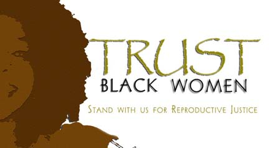
The Goose Story explains members’ clear committment to the work they are doing and how vital a community of support can be. The SisterSong community includes Southern RJ Activists, the Latina Encuentro, Trust Black Women and these member organizations. SisterSong also produces Collective Voices, “the only national newspaper addressing reproductive health created and distributed by and for women of color….” They also recommend these publications and articles.

July 14-17 this year SisterSong will host its 2011 Let’s Talk About Sex Conference in Miami Beach. The theme this year is Love, Legislation and Leadership. Sistersong also offers three different levels of RJ training which are aimed at audiences of 10-20 people.

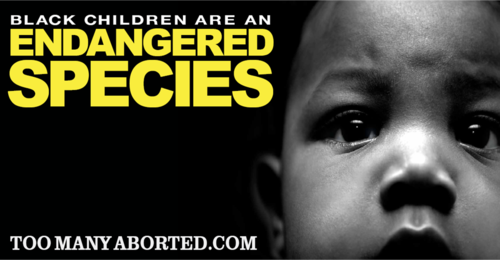
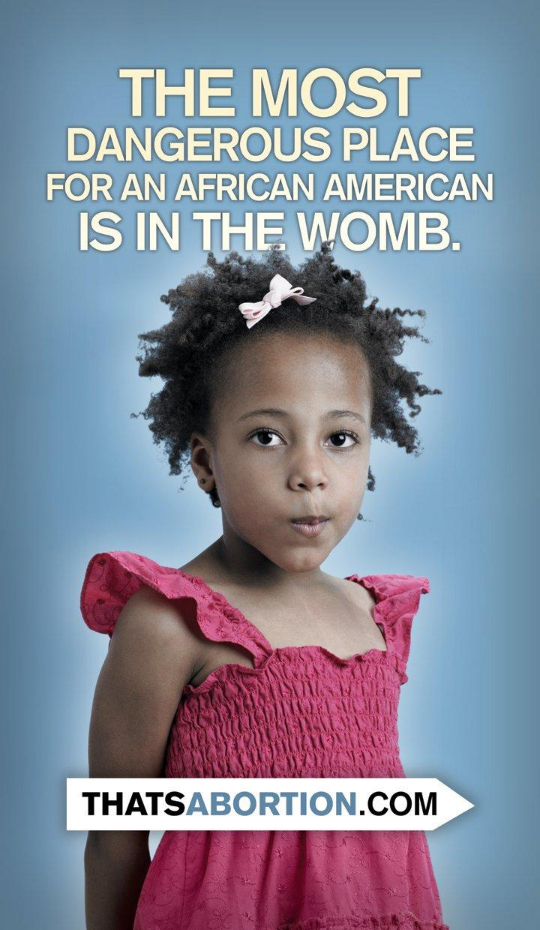
If you would like to support the work SisterSong does to end racial oppression and sexism you have a few options: you can register for their training sessions so that you will be more prepared and able to discuss RJ with anyone who will listen; you can donate to Trust Black Women to help continue the fight against racist billboards aimed at shaming black women into not asserting their right to choose; you can donate to help preserve Mother House, the historic home offices of SisterSong in Atlanta, Georgia; or you can donate to SisterSong’s Women of Color Scholarship Program to ensure that “women of color, working class communities, immigrant communities, and young women and students” have access to information and services surrounding SisterSong’s work.


Day 23- Activism Surrounding the Prison System

I have to admit that I am somewhat ambivalent about the death penalty and I welcome any and all arguments for or against it as long as you are civil to each other. Also, most information I have regarding prisons is US-based so any information about prisons from other countries is welcomed, too.

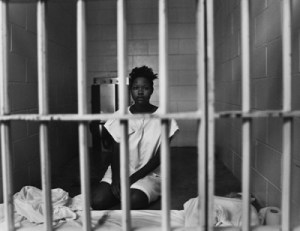
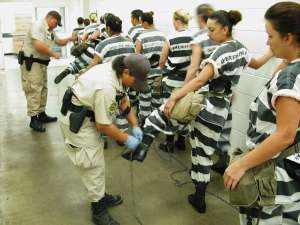
In the United States, the country with the highest documented incarcerations in the world, there are many organizations that are working to reform the prison system as well as some that advocate the abolition of the prison system because of the horrendous conditions prisoners face including rape, injury, illness and even death.

The racism behind the prison system in the US is blatant and damaging to every aspect of society as shown by the Prison Policy Initiative. This list of political prisoners compiled by The Prison Activist Resource Center shows the severity of the impact of racism on minorities in America– roughly 70% of inmates are not white while minorities only make up 35% of the total US population. According to the U.S. Justice Bureau 1 of every 32 adults in the US is either incarcerated (in prison or jail), on parole, or on probation. This number does not include the more than 90,000 children held in juvenile facilities.

Nearly 93% of inmates are male but despite blacks making up only 12.4% of the total population, black men outnumber white men in prison 6 to 1, and most people who are incarcerated have not been convicted of violent crimes. The November Coalition is one organization fighting for the reform of drug policy in the US. The rape of prisoners is one of the biggest concerns of human rights groups such as Los Angeles-based Just Detention International, while such reputable organizations as Human Rights Watch also address the conditions under which prisoners are held, reforming drug policy, and class issues as they relate to inmates. The issues surrounding the use of solitary confinement in prison were outlined in Law & Order: SVU (Season 11, Episode 3). Prisoners of the Census is another organization that fights the immoral gerrymandering of political districts based upon census figures that count prisoners where they are incarcerated rather than where they are from.

HIV+ inmates make up at least 1.7% of the incarcerated population and face specific challenges and discrimination within the prison industrial complex, including an infection rate of 5-10 times that of unincarcerated people, but some groups do exist within prisons to help prevent the spread of HIV and offer support to those who are HIV+ such as ACE (AIDS Counseling and Education) at the maximum security women’s prison Bedford Hills in New York. Here is a brief history of the fight against the spread of HIV and AIDS within the prison system. LGBTQAI (especially male-to-female transgender) inmates are almost certain to face violence, and rape, while imprisoned. This long piece explores the history of “Queer Encounters in Gay and Lesbian Prison Activism.”

The US drug policy “has become a war on women,” and a staggering 58% of women inmates were victims of violence before being incarcerated. Women in prison face challenges their male counterparts do not, but often their experience is invisible. From these statistics we learn that 60-67% of female prisoners are black or Hispanic in the US, while only 24% of the total US population is black or Hispanic; women are 33% more likely to be incarcerated on drug charges than men; 64% of women enter prison without having graduated high school and women in prison are 12 times more likely to be HIV+.

The health and well being of women is not one of the US government’s priorities, neither are eradicating racism, ending poverty or improving education, therefore it is clear that women in prison may constitute the most vulnerable group in American society as the isms of patriarchy are suffocatingly piled on them.

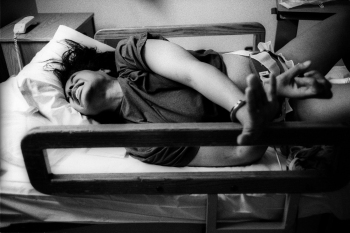
Jailing pregnant women has recently gotten much press with many women being shackled during childbirth. The Rebecca Project for Human Rights’s Anti-Shackling Coalition has been very vocal in its opposition to this inhumane treatment. The Prison Doula Project is another group working to improve conditions for pregnant inmates. Pregnant women are not only being sent to prison for violating real laws, but are also subject to “pro-life” sheriffs and judges locking them up for potentially breaking laws.

Other activism for women’s rights in prison includes The Advocacy Project which “believes that incarcerating women is an inappropriate and ineffective response to profound social problems such as poverty, racism, childhood sexual abuse, and mental illness,” The California Coalition for Women Prisoners, and the amazing, highly-recommended Women + Prison which also takes on the issue of incarcerating women who use violence against their abusers. All of these inspiring organizations utilize a feminist perspective in their activism. The International V-Day Movement also raises awareness of issues specific to women in prison with productions of the play Any One of Us: Words From Prison and screenings of the film What I Want My Words To Do To You.

In related news, the death of a prominent prison rights advocate in Greece caused an uprising in women’s prisons there. For just a few poignant references to the prison system in pop culture listen to “Folsom Prison Blues” by Johnny Cash, “Locked Up” by Akon, and especially “Prison Song” by System of a Down. If anyone knows any good songs in this light by female artists I would much appreciate a heads-up. To support prison reform (or abolition) and fight for human rights check out any of the organizations mentioned above and consider volunteering, donating, writing to your representative, or even just educating yourself (and those around you) more about this normally-hidden issue.