Tag Archives: #16Days

Day 6 of 16 Days of Activism: South Africa

#Day6 of #16Days explores the help available in South Africa, the callously misnamed “rape capital” of the world. Certainly South Africa has an abhorrent track record of sexual assault, especially so-called “corrective rape,” (whereby some misogynist tries to rape lesbians into heterosexuality,) but most countries have embarrassing rates of sexual assault. Hell, any sexual assault is embarrassing.

With a history like theirs though South Africans have taken to the streets and created an astounding number of organizations aimed at bettering society for everyone. The Gender-Based Violence Prevention Network has member organizations in numerous cities throughout the country. The Advice Desk for Abused Women may be reached at 27 31 204 4922. The National Network on Violence Against Women may be reached at 27 012 312 7541. The Women’s National Coalition of South Africa may be reached at 27 11 331 5958 / 331 5958 and beijing@wn.apc.org.

safrica2


Lifelines has a Gender Based Violence Helpline- toll free line 24hrs/7days per week for more information and counselling: 0800-150-150; an AIDS Helpline: 0800-012-322; and a National Counseling Helpline: 0861-322-322. Women’s Net is another organization that has information about violence against women, as well as many other topics from gender budgeting to governance to HIV/AIDS.

There are some very specialized programs in South Africa.

Agenda Feminist Media is “committed to giving women a forum, a voice and skills to articulate their needs and interests towards transforming unequal gender relations. We aim to question and challenge current understandings and practices of gender relations.”

African Gender Institute at the University of Cape Town “is a feminist research unit, committed to political work on the African continent. We focus on writing, publications, research processes and partnerships, network-building and participative learning.”

The Center for the Study of Violence and Reconciliation has a gender-based violence program which “seeks to understand the root causes of gender-based violence in all its forms in society and to develop strategies of violence prevention for use by civil society and government.”

Childline–08000-55-555–is “an effective non-profit organization that works collectively to protect children from all forms of violence and to create a culture of children’s rights in South Africa.”

Paralegal Advice for Family Law and Violence Against Women. They have information on everything from abortion to marriage, divorce, and custody to death.

Titelbilder_Rape_Crisis_Facebook_A-940x290

Rape Crisis is an organization dedicated to ending the shame surrounding sexual assault. “Rape Crisis has a vision of a South African criminal justice system that supports and empowers rape survivors in all of its interventions. Until such time as this vision becomes a reality we provide that support and empowerment. We believe that the rape survivor is the key to a successful conviction and that her empowerment is based on safety, respect, support and the ability to make informed choices as she embarks on this difficult and challenging journey.”
someone-you-know-600x340

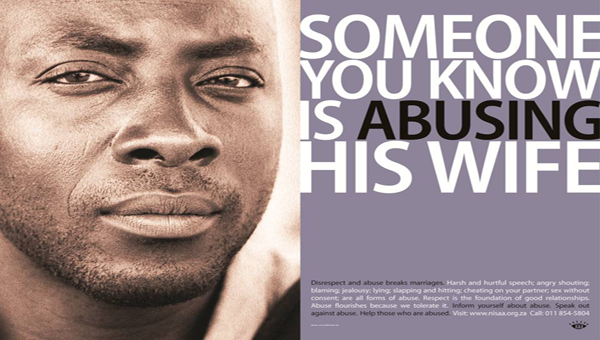
The Nisaa Institute for Women’s Development provides counseling, training and pubic awareness and advocacy. The Institute “provides counselling through three mediums face-to-face being the most prominent, but telephonic and e-mail counselling services are also used. We thus reach a wider spectrum of people.We are able to provide these services to women and their children for free.”

already


People Opposing Women Abuse is a “feminist, women’s rights organisation that provides both services, and engages in advocacy in order to ensure the realisation of women’s rights and thereby improve women’s quality of life.” They use a multi-faceted approach to reach their goals.

1. SECTOR CAPACITY BUILDING AND STRENGTHENING

As an organisation that has been in existence for 29 years, we recognise the need to increase the knowledge and capacity of women’s groups in rural and peri-urban areas where traditionally, access to services such as the Criminal Justice System and clinics are a major challenge.
Due to requests for POWA to open offices in their communities by women’s informal groups, we resolved to empower women within their own communities through the concept of ownership. As an organisation, we therefore provide training, education and mentorship for women’s groups to understand the women’s rights discourse as well as formalise and develop services that respond directly to their particular needs in regards to violence against women.
We currently provide this service to 6 women’s groups in 5 provinces (Limpopo, Mpumalanga, Northern Cape, Northwest and Gauteng)

2. LAW REFORM

A critical part of engaging in improving the rights of women is influencing national, regional and international policy. As an organisation, we have therefore developed a department that actively writes and makes submissions to parliament on issues that relate directly to our core issues. In addition, we provide expert support to government institutions regarding creating gender sensitive spaces for all women.
From the grassroots perspective, we actively engage in rights education to women’s groups and organisations thus mobilising women’s voices to create the appropriate attention to women’s issues and cause the desired effect of reforms for better laws for the protection of women.

3. RIGHT’S EDUCATION

Part of the responsibilities of all branch offices is to engage with their surrounding communities in rights education. This process is done through community meetings , community conversations and formal workshops on understanding Human rights with specific focus on women’s right and access to justice.

4. REGIONAL AND INTERNATIONAL STRATEGIC ADVOCACY

POWA recognises that South Africa has a comprehensive constitution, a good legal framework and numerous agreements and policies that are set out to protect women’s rights. These agreements are not only national, but regional (SADC), continental and international.
Part of the failings regarding the protection and access of women’s rights is the limited knowledge of the document framework, capacity and skills to implement and domesticate the substance of the agreements set out by the state.
POWA conducts preparatory workshops and information sessions to enable organisations to learn and choose to engage in the regional strategy. We also work towards creating report back or feedback sessions on activities of such meetings and thirdly, we work towards creating round table discussions for strategies of calling for state accountability on emerging issues.

5. SHELTERING AND COUNSELLING

As an organization, we provide individual face-to-face counselling, group counselling and telephonic counselling to women whom have experienced violence. In addition, we provide child play therapy for children who reside in our shelters of safety with their mothers.
Women can access our counselling through our branch offices. We currently have 6 satellite offices and 2 confidential shelters. Our offices are strategically located in areas for women from economically disadvantaged communities and women from the Johannesburg inner city for easy to access services.
As we provide free services to all women in South Africa, we ensure that access is not an additional challenge to the already overwhelming challenges for women to access their rights. This approach assists with the reduction of women’s vulnerability due to economic/financial dependencies that play a huge role in violence against women. Our activities address issues of safety and security that are fundamental to rights for all in South Africa.

With all of these fantastic organizations working so hard in South Africa, hopefully a violence-free future is awaiting all South Africans regardless of sex, gender, race, age, dis/ability, sexual orientation, or religion.



Day 5 of 16 Days of Activism: Mexico

#Day5 de los #16Days of Activism es sobre nuestro vecino al sur, México. Sabemos que la violencia contra mujeres allá es una vergüenza, pero el país no es sin recursos.

Infografia-Violencia-Mujer

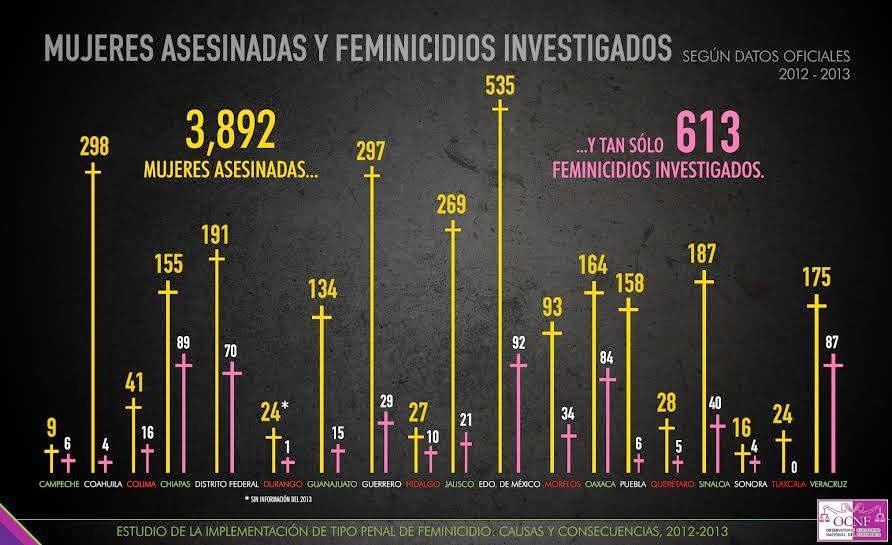
El Instituto Nacional de Mujeres, del gobierno, tiene esta pagina con líneas telefónicas para casi todo el país, estado por estado, porque tod@s merecen una vida sin violencia. La Portal Víctimas de Maltrato Abuso y Hostigamiento Sexual también tiene muchas números de teléfono donde puede conseguir ayuda. Una de las organizaciones más importantes en la lucha contra el feminicidio es Nuestras Hijas de Regreso a Casa, que lucha para todas las hijas y mujeres desaparecidas y asesinadas de Juárez, y todo el país. Sus objetivos incluyen:

  • Acompañar y orientar a las familias cuyas hijas han desaparecido.
  • Reclamar la justicia jurídica y social para las familias afectadas, a través de diferentes acciones.
  • Promover programas de rehabilitación ocupacional para atender la salud física y afectiva de integrantes de las familias que lo soliciten.
  • Impulsar la modificación, elaboración y revisión de artículos de la ley contenidos en el Código Penal del Estado de Chihuahua que permiten estos y otros hechos violentos.
  • Informar oportunamente a la comunidad nacional e internacional acerca de los asesinatos, desapariciones y violaciones a los derechos humanos de mujeres en el Estado de Chihuahua.
  • Promover entre ciudadanos y ciudadanas de cualquier país, organismos internacionales, los gobiernos y las ONG´s, que se pronuncien en contra de los asesinatos y desapariciones de mujeres y a favor de un alto a la impunidad de que gozan actualmente estos crímenes.
  • Demandar que desde la comunidad nacional e internacional se obligue a las autoridades locales, estatales y federales de México, a que destinen las personas y los recursos materiales necesarios para la búsqueda de la solución a esta problemática.
  • Difundir pronunciamientos, informes y diagnósticos que organizaciones e instituciones nacionales e internacionales hagan en relación con la situación que viven las mujeres en el Estado de Chihuahua.

mujeres asesinadas

Otras organizaciones en México incluyen Ya Basta de Violencia Contra la MujerEl Centro de Orientación y Prevención de la Agresión Sexual, El Centro Virtual de Derechos Humanos, El Dirección General de Igualidad y Diversidad Social, La Comisión Nacional de los Derechos Humanos, CONAM y La Unidad de Asuntos Internacionales de la Mujer. Hay mucha violencia en México, contra las mujeres, contra l@s hij@s, contra el medio ambiente, y contra derechos humanos en general, pero también hay muchas personas en México trabajando día por día, para hacer el país más seguro por tod@s.


Day 4 of 16 Days of Activism: Aotearoa/New Zealand

#Day4 of #16Days takes us to Australia’s Pacific neighbor, New Zealand, Aotearoa in the native Maori language. In 1893 New Zealand’s women earned the right to vote, the first in the world to earn national suffrage, and Aotearoa is considered the fourth most peaceful country in the world, but as recently as 2011 New Zealand had the shame of landing near the bottom of the UN’s list–near the USA–when it came to the number of women suffering from intimate partner violence as well as the rate of maternal mortality. According to the organization Women’s Refuge police are called to a domestic violence scene every seven minutes, and yet the police estimate that only 18% of domestic violence incidents are reported. What that means is that like the US and Australia, one in three women in New Zealand will face abuse in her lifetime.

Womens Refuge

Aside from helpful statistics Women’s Refuge also provides education to survivors of violence, support for their family and friends, and operate a youth site with the message that real love doesn’t hurt. Their crisis line can be reached at 0800 REFUGE.

As an independent community organisation we work at many levels. From our contact with individuals and families through to involvement with local community and government agencies, we strive to help prevent and stop domestic violence.

Shine–Safer Homes in New Zealand Everyday–te kakano tumanako, also operates a confidential domestic abuse helpline at 0508 744 633. They outline their values and their mission as follows:

Integrity / Rangatiratanga The koru unfolds – symbolising honesty, transparency and accountability

Excellence / Manaakitanga The koru reaches towards the light – striving for growth and better outcomes

Innovation / Whakatupuranga The koru adapts to its environment – symbolising creativity and openness to new ideas

Optimism / Whakapono The koru symbolises hope, growth and encouragement for the future

Unity / Kotahitanga The koru’s strength depends on sun and water — many elements working as one — symbolising the need for us to work as one team

Support / Tautoko victims to be safe and perpetrators to change

Learn / Akoranga from our clients, research and others

Act / Whakamahia to implement change

Reflect / Maumahara on our experience and develop our practice

Share / Mahitahi what we learn with others

helplinecardpage1

Te Ohaakii a Hine– National Network Ending Sexual Violence Together is another organization in Aotearoa designed to help victims, perpetrators and family and friends of anyone affected by sexual violence. They are available 24/7 at 0800 883300 and their services include:

  • Primary prevention: Promoting healthy and respectful social norms in whanau/families, hapu, iwi and communities
  • Early intervention: Crisis support for victim/survivors, including support in the criminal justice system, forensic medical services for victim/survivors and support for children displaying inappropriate sexualised behaviours
  • Recovery and support for victim/survivors
  • Longer term treatment for victim/survivors with high and complex needs
  • Harmful sexual behaviour services for people who have perpetrated sexual abuse or harm on others.
  • Specialist advice and training for government agencies and for professionals working with sexual violence e.g. psychologists, counsellors, GPs, nurses, health workers, teachers, social workers
  • Promotion of law reform to increase the accountability of offenders.

ltsarahcampbell

It’s Not OK is a great example of an organization that encourages the entire community to act together to end violence. “Its goal is to change attitudes and behaviour that tolerate any kind of family violence. The campaign’s vision is a community where each person believes there is something they can do to help and is likely to act when they know violence is happening.” In addition to their very interactive website they operate the Family Violence Information Line (0800 456 450).  “It provides self-help information and connects people to services where appropriate. It is available seven days a week, from 9am to 11pm.”

New Zealand, despite it’s small island size and population under 5 million, also has a ton of other great resources like Shakti, specializing in helping families of Asian, African and Middle Eastern origin, 0800 Whats Up, for kids and teens to talk about anything at all, Rape Prevention Education– Whakatu Mauri, working to prevent sexual violence through education, Te Kupenga – the National Network of Stopping Violence, a network or ‘he kupenga’ of 42 independent community-based organisations, the government-run Family Services Directory, and the New Zealand Family Violence Clearinghouse. That’s a lot of resources all with the same goal: safer lives for everyone in their community. 


Day 3 of 16 Days of Activism: Australia

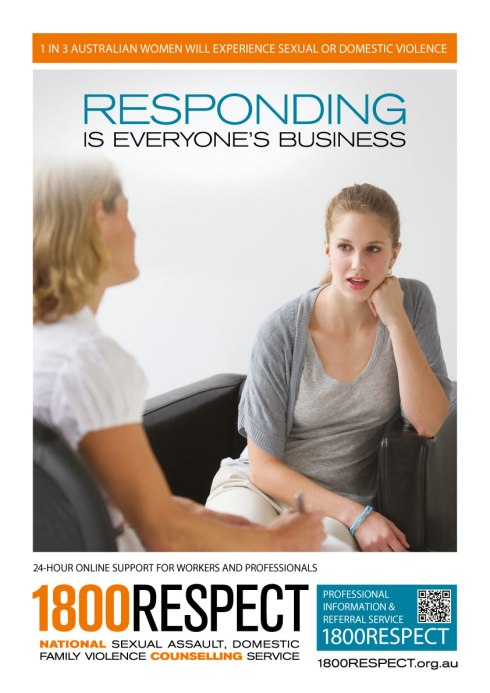
#Day3 of #16Days explores another English-speaking country with a history of English subjugation and genocide against Native people. Just like in the United States 1 of every 3 women in Australia will experience sexual or domestic violence. Available in 28 spoken languages as well as Auslan–Australian Sign Language, 1800RESPECT is the Australian National Sexual Assault, Family Violence Counselling Service. They offer free help to survivors of violence and their friends and family by phone and through chat 24/7. You can learn more about the work they do from their YouTube Page. They also have a map of organizations throughout the country that provide help to Aboriginal and Torre Strait Islander women, children and families. Additionally they provide help to service providers from dealing with vicarious trauma to webinars on cultural issues to working with people with disabilities. From their website:

While living free from violence is everyone’s right, reducing violence is everyone’s responsibility. Reducing all violence in our community is a priority. All forms of violence are unacceptable, in any community and in any culture.

Domestic or family violence and sexual assault are the more pervasive forms of violence experienced by women; they can also happen to men. These forms of violence cause significant personal, social and economic costs for all in our community.

1800RESPECT-Poster
The Australian Government Department of Social Services website has crisis line numbers for each territory, as well as the national Mensline Australia–1300 789 978– (a professional telephone and online support and information service for Australian men) and explains domestic violence and sexual assault this way:

Domestic or family violence can include any behaviours used by one person to establish and maintain power and control over their partner or another person in his/her family, including:

  • physical abuse – including direct assaults on the body, use of weapons, driving dangerously, destruction of property, abuse of pets in front of family members, assault of children, locking the victim out of the house, and sleep deprivation.
  • sexual abuse – any form of forced sex or sexual degradation, such as sexual activity without consent, causing pain during sex, assaulting genitals, coercive sex without protection against pregnancy or sexually transmitted disease, making the victim perform sexual acts unwillingly, criticising, or using sexually degrading insults.
  • emotional abuse – blaming the victim for all problems in the relationship, constantly comparing the victim with others to undermine self-esteem and self-worth, sporadic sulking, withdrawing all interest and engagement (e.g. weeks of silence).
  • verbal abuse – continual ‘put downs’ and humiliation, either privately or publicly, with attacks following clear themes that focus on intelligence, sexuality, body image and capacity as a parent and spouse.
  • social abuse – systematic isolation from family and friends through techniques such as ongoing rudeness to family and friends, moving to locations where the victim knows nobody, and forbidding or physically preventing the victim from going out and meeting people.
  • economic abuse – complete control of all monies, no access to bank accounts, providing only an inadequate ‘allowance’, using any wages earned by the victim for household expenses.
  • spiritual abuse – denying access to ceremonies, land or family, preventing religious observance, forcing victims to do things against their beliefs, denigration of cultural background, or using religious teachings or cultural tradition as a reason for violence.

Sexual violence is any behaviour of a sexual nature which is unwanted or occurs without consent. It includes sexual harassment, sexual assault, childhood sexual abuse and rape. Sexual violence is an abuse of power which may involve the use of physical force, threat or coercion.

Some Australians still feel that violence against women is condoned in their country and their culture, much as many Americans do,  and reporting rates are similar as well: 64% of Australian women who experienced physical assault and 81.1% of women who experienced sexual assault still did not report it to police. While progress is being made it’s clear that Australia still has a long way to go.


Day 2 of 16 Days of Activism: USA

#Day2 of #16Days of Activism Against Gender Based Violence showcases resources available in the United States to survivors of domestic violence, sexual assault and human trafficking. We are fortunate in the US to have many, many local programs dedicated to helping survivors of these human rights atrocities, and these national organizations can help you locate them if needed.

ndvh_bubble

The National Domestic Violence Hotline has been highlighted here many times before. From their website:

Operating around the clock, seven days a week, confidential and free of cost, the National Domestic Violence Hotline provides lifesaving tools and immediate support to enable victims to find safety and live lives free of abuse. Callers to the Hotline at 1-800-799-SAFE (7233) can expect highly trained experienced advocates to offer compassionate support, crisis intervention information and referral services in over 170 languages.  Visitors to this site can find information about domestic violence, safety planning, local resources and ways to support the organization.

The Hotline is part of the largest nationwide network of programs and expert resources and regularly shares insight about domestic violence with government officials, law enforcement agencies, media and the general public. The National Domestic Violence Hotline is a non-profit organization established in 1996 as a component of the Violence Against Women Act (VAWA).

300x250_every2B

The Rape, Abuse and Incest National Network has been highlighted here as well. They describe themselves as:

the nation’s largest anti-sexual violence organization and was named one of “America’s 100 Best Charities” by Worth magazine. RAINN created and operates the National Sexual Assault Hotline (800.656.HOPE and online.rainn.org) in partnership with more than 1,100 local rape crisis centers across the country and operates the DoD Safe Helpline for the Department of Defense. RAINN also carries out programs to prevent sexual violence, help victims and ensure that rapists are brought to justice.

and

Polaris Project

The Polaris Project which I have not had the pleasure of writing about before.

Polaris, named after the North Star that guided slaves to freedom in the U.S., disrupts the conditions that allow human trafficking to thrive in our society. From working with government leaders to protect victims’ rights, to building partnerships with the world’s leading technology corporations, we spark long-term change that focuses communities on identifying, reporting and eliminating trafficking networks. Our comprehensive model puts victims at the center of all that we do — helping survivors restore their freedom, preventing more victims, and gathering the data to pursue traffickers wherever they operate.

Unparalleled expertise. Relentlessness. And an innovative spirit. This is how Polaris eradicates the slavery networks that rob human beings of their lives and their independence.

Freedom happens now.

DV in the US

The United States is also privileged to host such amazing organizations as ADWAS– The Abused Deaf Women’s Advocacy Project, The Shalom Task Force, The National Human Trafficking Resource Center and Love Is Respect, plus hotlines for every state in the nation, plus many territories like Puerto Rico. While we still have a long way to go before we’re rid of this scourge, the ever-growing number of resources available to help survivors live free from violence is definitely something to be thankful for.


Day 1 of 16 Days of Activism: The Pixel Project

Today kicks off #Day1 of 16 Days of Activism Against Gender-Based Violence! Everyday I’ll be showcasing resources in different countries that help people live lives free from violence. The Pixel Project has a fantastic running library of Tweets with the contact information for various domestic violence and sexual assault hotlines around the world. Follow them @PixelProject, use #16DaysofActivism or just #16Days, get ready to #OrangeUrHood, and like them on Facebook.

Pixel Project

They have some awesome posts about ways you can participate in stopping the epidemic that is domestic violence, like:
16 Ways to Stop Domestic Violence in Your Community
16 Ways You Can Support a Survivor of Domestic Violence
16 Films About Violence Against Women
16 Ways Men Can Help Stop Online Violence Against Women
16 Ways to Help Your Local Domestic Violence Shelter
and
16 Tech Innovations That Help the Movement to Prevent and Stop Violence Against Women.