Category Archives: Violence Against Women

The War FOR Women

Soon I start a six-week online training course designed to teach Americans more about how to defend women’s human rights against the egregious attacks against women’s health, sexuality and autonomy coming from right-wing politicians. Democracy For America has organized the War FOR Women training sessions which will all take place virtually, once a week, at 8pm Eastern (5pm Pacific). Topics include practical rebuffs to the attack on reproductive justice, lobbying techniques to stop violence against women, how to address pay inequality in your community, how to get the media to cover your story (VERY important for the success of strategic nonviolent action!), how to register voters and encourage women to exercise their hard-earned right to vote, how you can be a successful political candidate and how to get out the vote.

The schedule is as follows:

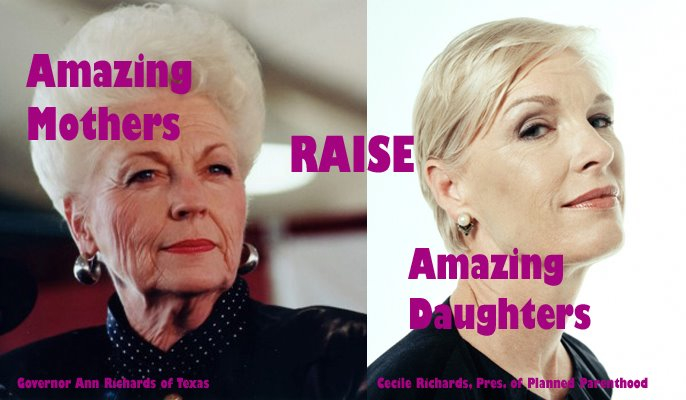
July 10 – Women’s Health and Reproductive Rights with Cecile Richards (President of Planned Parenthood)
July 18 – Victory Over Violence with Debby Tucker (Executive Director of the National Center on Domestic and Sexual Violence)
July 25 – Economic Gender Gap with award–winning educator and communicator, Jenifer Daniels (“the friendraiser”)
August 1 – Women in the Media with Karen Finney (MSNBC Political Analyst) and Kimberly “Dr. Goddess” Ellis (California Director, EMILY’s List)
August 8 – Women as Voters with Celinda Lake (Pollster and Democratic Strategist, Lake Research Partners)
August 15 – Women as Candidates featuring DFA’s slate of progressive women candidates

I am thrilled to be inhabiting the same virtual space as Cecile Richards, one of my personal heroes, as she explains “what’s at stake for women’s health nationally and in particular states where dangerous legislation is being considered. Deirdre Schifeling, Planned Parenthood’s National Director for Organizing & Electoral Campaigns, will provide a practical training on how you can join the fight.”

I will blog about the trainings and what I am learning over the next six weeks. If you’d like to join Democracy For America will “show you how you can challenge the GOP’s attack on women and build a movement for equality.” Register here for seminars that will “provide practical tools and create a community of people of all genders committed to fighting for women’s rights. Each session will feature leading experts on each issue, a practical training on how you can take action, and a chance to connect with like-minded people who refuse to be silent in the face of injustice.” What more can you ask for?


The Republican War on Women

The War on Women being waged in the United States is culminating in the likely closure of the only abortion clinic in the nation’s poorest state, Mississippi. Measures specifically introduced by the state’s legislature to shut down its last remaining abortion provider have been successful so far, with a new law passed requiring abortion providers to have privileges at local hospitals. While the office’s three doctors have all applied for hospital privileges, as of yet they do not have them. It is unknown what will happen to the clinic after the new law takes effect. In Virginia similar measures are being protested that would make it extremely difficult for abortion providers to remain open. This piece explores the painful reality these abortion restrictions inflict on women, an important voice in the conversation when women are not even “sources” for women’s rights issues. It’s high time women were not ashamed to say that they’ve had abortions, and while men’s opinions on everything from menstruation to menopause seem to hold more weight, we in the pro-choice movement would like to hear from more pro-choice men.

The legislative tactics used by Mississippi and Virginia to effectively make abortion illegal, or at least unobtainable, are nothing new. Across the country a terrifying 1,100 pieces of anti-women legislation have been proposed since 2011! You really should check that link out. Add to this the very real violence faced by clinic workers on a daily basis, like death threats, arson and bombings, and it’s no wonder abortion is becoming impossible to obtain safely and legally in the wealthiest country in the world. Republicans are even trying to sneak language about life beginning at conception into completely unrelated bills, like this one extending FEMA’s national flood insurance plan. But disaster-stricken Americans are not the only ones the GOP is alienating. Not only should women have no control over their own sexual and reproductive health, argue elected Republican officials, their work is worth less than men’s. Extending the war on women to their ability to feed themselves, Republican Senators refused to pass the Paycheck Fairness Act.

From the absurdity of women being excluded from a panel discussing birth control (and the attacks women who wanted to speak endured) to the extremely anti-choice Michigan legislature banning two female representatives for “inappropriate language” i.e.. vagina and vasectomy, during debates about anti-choice legislation, legislators and laws in the US are becoming more and more misogynistic. Beautifully, thousands of protesters took to the… steps with a performance of the timeless Vagina Monologues to demand that freedom of speech extend to female legislators discussing body politics. If you want to send your own message to Michigan legislators sign this petition asking Facebook to allow users to change their middle name to Vagina, then change yours. You might also mention that the double standard– Medicare covers Viagra and penile implants, yet Republicans think birth control should be an out-of-pocket expense– is unacceptable. Thankfully, while the majority of the anti-woman rhetoric in the US is coming from the Christian Rightwing, it’s good to see other religious figures supporting women’s bodily autonomy.

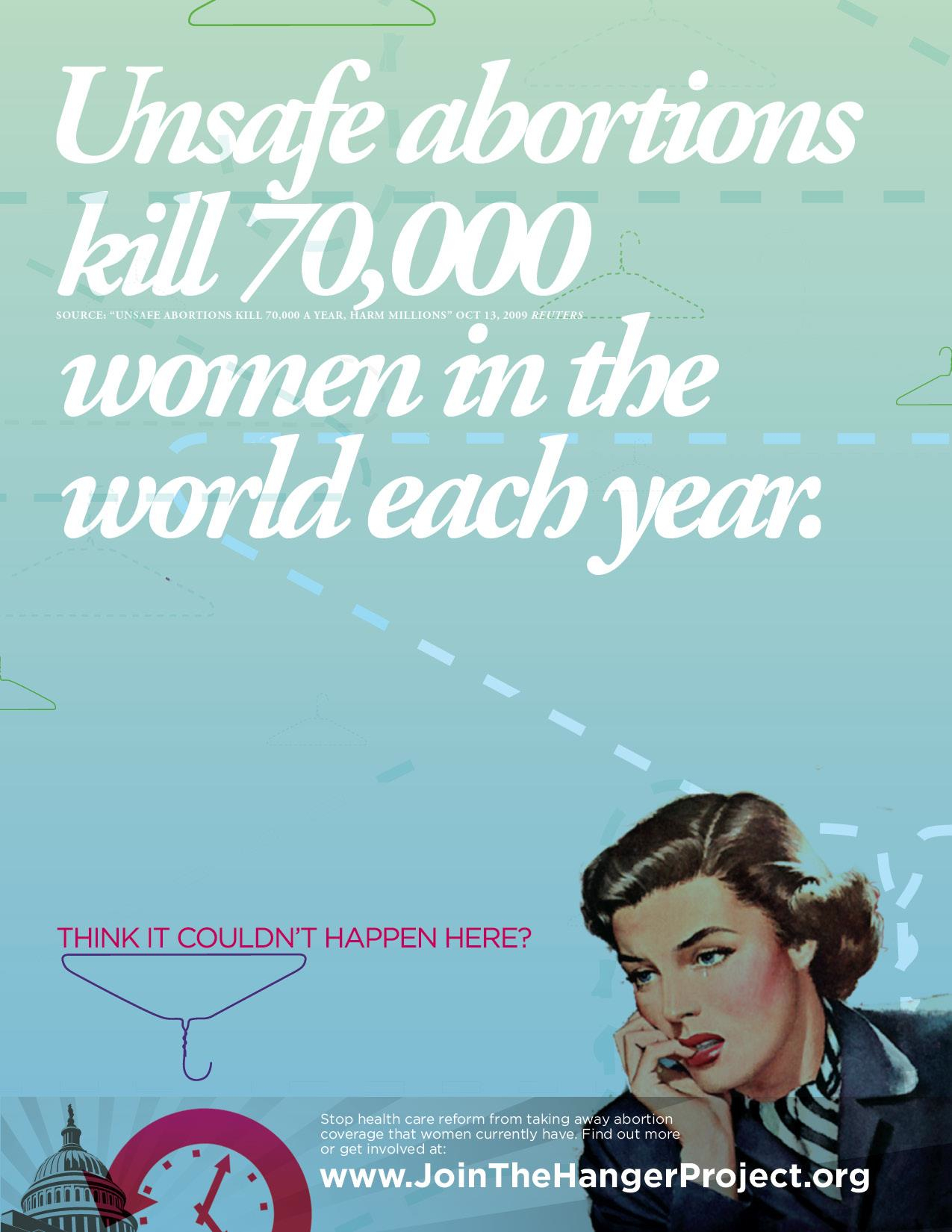
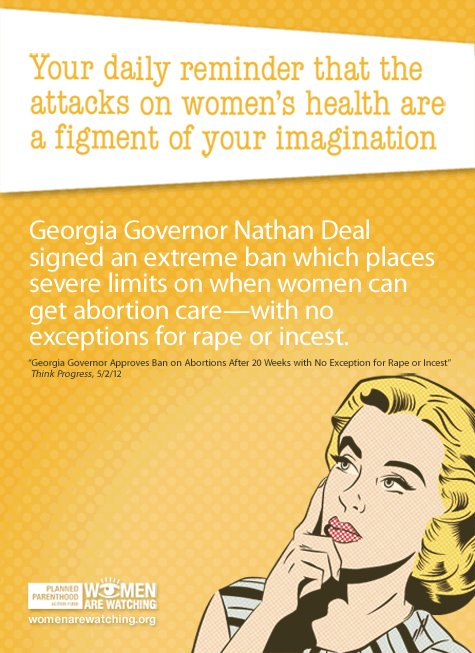
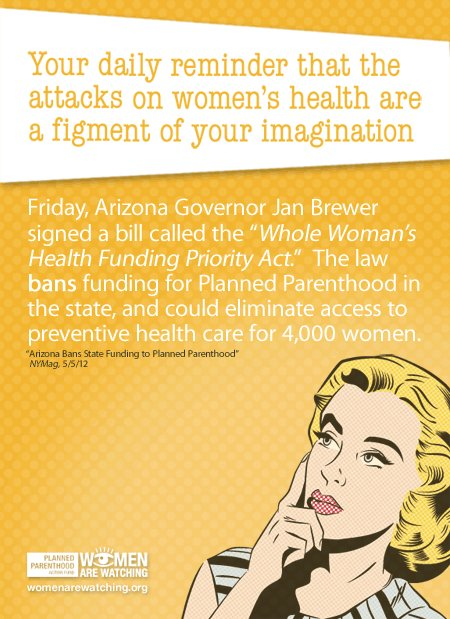
As you can see from the graphic at the top Michigan isn’t the only state waging war on women’s reproductive freedoms. In Ohio alone a staggering 16 pieces of anti-choice legislation were introduced since 2010. North Carolina Republicans are trying to defund Planned Parenthood, again. Texas Republicans are promoting proven-ineffective abstinence-only sexual education courses. Kansas Republicans have introduced a host of Christian-based anti-woman legislation and a doctor there may permanently lose her medical license for refusing to force a ten-year-old to give birth. South Dakota has proposed a 72 hour waiting period between ultrasound and abortion for women seeking to terminate their pregnancies. And in Arizona now it is perfectly legal for doctors to lie to their patients if they think the information they give will influence them to have an abortion. Also in Hell Arizona, “reasonably suspicious” women and men are being asked for Papers, please, despite a mixed Supreme Court ruling on the legality of SB 1070. This article takes on an excellent exploration of what this means for immigrant women, and what the situation of immigrant women means for equality for all people in the US. Check out the pictures supplied by Planned Parenthood at the end of the post for other evidence of the war on women.

And then there’s the Violence Against Women Act…. The Senate passed a beautiful, sparkling reauthorization of the Violence Against Women Act that extended protections to undocumented women, Native American women and lesbians. The House promptly stripped those additions, leaving millions of women in traditionally under-served populations even more vulnerable, all the while claiming that women would use these new provisions to scam the system with false accusations. The President has vowed to veto the House version if it crosses his desk. LGBT lobbies and Native American women’s lobbies are still pushing for passage of the Senate version at Capitol Hill and even Christian websites think Congress should pass the Senate version! At least New York understands.

With a staggering 1 in 3 Native American women raped in her lifetime one would hope Republicans could at least show compassion in the wake of such terrible violence. But no. A sickening story of a Tampa rape victim who was arrested on charges of outstanding warrants after she reported her rape has outraged women across the country. The worst is yet to come. After being booked, a guard where she was being held confiscated the second pill of her emergency contraception because it went against her beliefs. A federal court has ruled that the victim will be allowed to sue the guard for violating her right to privacy. In other news of the State violating individuals human rights, this (potentially triggering) piece explores the unnecessary police practice of forced catheterization in Utah. Even liberal San Francisco is being accused of victim blaming people who come to the police as victims of rape and domestic violence.

Rape in the US military is a hot-button issue too, yet House Republicans showed little compassion when blocking abortion access for soldiers who have been raped. The award-winning documentary The Invisible War explores the issue of rape that is poisoning the US military. One service member interviewed explained victims’ options as “suicide, AWOL, or deal with it.” The film explores why many rape victims don’t report the incident: for 25% of women who didn’t report the rape to their commander, their commander was their rapist. The documentary’s website, in addition to the trailer and information on the movement, offers ways to take action and help demand accountability and justice for service members who have been raped.

Pillamina on the campaign trail!

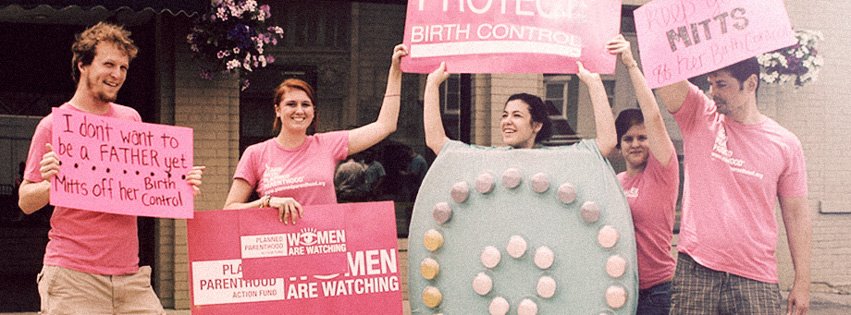
Now that I’ve thoroughly depressed you, I want to give you the good news. In addition to the beauty of an estimated 3-5,000 people filling Michigan’s capital steps to respect the word vagina, across the blogosphere people are overcoming the shame of using the word vagina. Like the personal story of abortion linked in the beginning of this post, it is extremely important women are speaking out so that their voices are heard. Public performances, like The Vagina Monologues, have long been an effective tactic in the strategic nonviolent activists’ arsenal, and with Republican Presidential candidate Mitt Romney wanting to “get rid of” Planned Parenthood, a giant pack of birth control pills, Pillamina, is now following him along the campaign trail. If that doesn’t make you smile, how about this: since 1990 abortion rates have decreased 18% for women in their 20s due to increased contraception access. Also, many big city mayors (a lot of whom are men) have added their names in support of women’s reproductive rights. Rock on Seattle, Portland, San Francisco, Los Angeles, Hartford and New York!

And not all news from individual states is bad. The Governor of New Hampshire vetoed a “partial birth” abortion ban since a similar ban (for a procedure which doesn’t actually exist) is already in place at the federal level. Also in New England Connecticut has included abortion as an essential health benefit in the state’s insurance plan. And even quiet Midwesterners in North Dakota are fighting back against this war on women, deciding they don’t want to expand religious liberty to discriminate against anyone. At the federal level Congress actually did something right, by failing to pass a ban on “sex-selective abortions,” a problem which deserves national attention in India and China but is almost non-existent in the US.

Though the comments on this video are repulsive, the White House 1 is 2 Many campaign to encourage men to speak up if they witness violence against women is a good reminder that bystanders have power too. As we saw with the contentious issue of undocumented women being covered by VAWA, immigrant women are the often-forgotten victims of violence against women. Thankfully the newly opened Tahirih Justice Center in Baltimore is a haven for immigrant victims of domestic violence throughout New England. If you want to get involved and fight back against the misogynistic legislative attacks, including the VAWA embarrassment, check out A is For, a group seeking to reclaim the scarlet letter A. Or join the National Latina Institute for Reproductive Health in their Week of Action for Reproductive Justice because you, like Mary Gonzalez, the openly lesbian Latina doctoral student recently elected to the Texas House, are poderosa.

Finally, the best news of all. In addition to this long, well-cited list of Obama’s accomplishments as President he can now definitively add “bringing American healthcare into the 21st Century: The Supreme Court has upheld Obamacare!!! This landmark decision ensures that women and men will be treated equally by insurance companies, and preventative services like birth control (with no co-pay), mammograms, and pap smear cancer screenings, will all be covered by insurance! If you’re so inclined you can write a letter of thanks to the five Supreme Court Justices who voted in favor of universal health care. Thank you for reading, be well, and as always, if you have ideas, suggestions or comments as to how we can fight back against the patriarchy, please share them below.

In Peace~


Women’s History Month 2012

Today kicks off Women’s History Month 2012. As Mark LeVine said in this piece about Black History Month, if a people has a past worth learning about, they also must have a future worth caring about. Over the next 30 days you can look forward to interviews with women who have made or are making history. If you fall into that category and would like to share your story here, feel free! I come from a long line of feisty women, including my paternal great-grandmother, “Mrs. J.U. Gartin” who, in 1937 as President of the Women’s Progressive Club was helping to raise money for disabled children. Her daughter, my father’s mother Dorothy Gartin, graduated from Stanford University in 1938. Unfortunately I was very young when my grandmother died but obviously I come by the feminist genes honestly, and being raised by a single mother who had five older brothers and took auto shop instead of home economics in high school in 1977 doesn’t hurt either.

The news today is full of stories about women and women’s progress (or lack thereof). Each case requires careful study and swift action so that the violence, hatred, poverty and shame that are heaped on women are eliminated. Laws can help or hurt, as we will see, but strategic nonviolent action continues to prove effective.

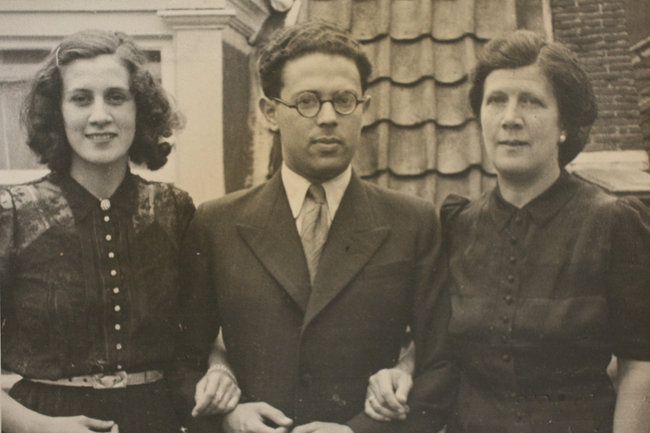
Dr. Tina Strobos, left, in 1941 with Abraham Pais and Dr. Strobos's mother, Marie Schotte. Copyright New York Times.

A living legend has left us recently, with the passing of Dr. Tina Strobos. She and her mother successfully hid more than 100 Jews from the Nazi Gestapo in Amsterdam during WWII. With the help of the extensive Dutch Resistance Movement she utilized many different methods of nonviolent action because, as she said, “It’s the right thing to do.”

Another important woman passed this week, Dr. Anna Lou Dehavenon, an urban anthropologist whose research on hunger shed light on and advocated for the rights of the homeless. A talented pianist, Dr. Dehavenon’s focus on homelessness lead to the New York State Supreme Court ruling that the homeless must be provided shelter.

Homelessness is a problem in India too, especially for that country’s widows. Today another issue emerged in the news, an average of one woman every 90 minutes is burned alive for not bringing enough dowry into her new marital home. 8391 dowry deaths were reported in 2010 in India but hundreds of burning deaths go unreported, despite stricter laws on the books meant to protect women from being treated as property. These changes only occurred because of human rights activists’ backlash against a legal system that put women at a severe disadvantage until the late 1980s. Obviously there is still much work to be done in this campaign and many others, including illiteracy, sex-selective abortion and infanticide, domestic violence, sexual harassment, etc.

Back in the US sexual harassment, even in public is still rampant but the structural violence that supports latent violence against women is gaining an even stronger foundation as the GOP is desperately trying to convince the American voters that women should not use and/or do not need contraception. From attacks on Planned Parenthood by various politicians, and the Susan B. Komen breast cancer fund, to an astounding 92 pieces of legislation aiming to restrict women’s right to choose, including the Oklahoma personhood bill that spurred the photo to the right, today’s news in the War on Women is no surprise.

When Republicans barred women from speaking at a Congressional hearing about contraception, Georgetown Law student Sandra Fluke took to the airwaves and let everyone know she is an “appropriate witness” with the I Have a Say campaign. Presidential hopeful Mitt Romney said “Of course” he’s for the Blunt Amendment, up for vote today, which would allow employers to deny women the right to contraceptive coverage if it “conflicts with their beliefs,” nevermind that there are zero other services employers can opt out of covering if they feel like it… like Viagra. Talking head Rush Limbaugh called Fluke a “slut” for wanting medical coverage of contraception, just another in a long line of slut shaming that only divides women and belittles them for being human. In some cases the bullying can lead to death.

But you can fight back! Click here to add your name to show support for the Democratic Senators who have voiced strong and consistent opposition to reducing women’s rights. You can also add your name to this Women’s Media Center petition telling politicians that My Health is Not Up for Debate! And if you’re faced with street harassment be sure to Hollaback! to name and shame abusers. Check back often for more actions and more information all throughout Women’s History Month… and give ’em hell!


Welcome to 2012!

First of all, I want to thank you, my readers, for gifting Feminist Activism with more than 92,000 views last year! And already January has seen over 5,000 views… only 3,000 more until we have a party for turning 100,000! Thank you for your continued readership and support; for liking and sharing this blog and participating in the comments. As always, I want your voice heard too, so feel free to chime in with advice, information, criticism or suggestions.

Even after only one month 2012 has proven to be an important year. Congresswoman Gabriel Giffords (D-Arizona), who was shot in the head last year in a misogyny-driven attack, resigned from Congress to continue on her road to recovery.

After last year’s constant battle against legislative misogyny-driven attacks against reproductive justice in the United States, this year we all must be vigilant in ensuring that laws that are meant to protect us are not taken away. We also have the shame of battling against ridiculous Republican bills designed to distract us from their War on Women.

But on the bright side *sarcasm* Jay-Z has discovered misogyny after becoming a father to a little girl and will no longer use the word “bitch” in his music. See this piece to learn why so many of us are not impressed with his grand gesture.

Outside the US 2012 has already heated up too.

The Canadian government, in a move that further divides the LGBTQAI communities of Canada and the rest of the world, has recently decided same-sex marriages of foreigners performed in Canada are invalid.

Women in Afghanistan are still facing the same violations of their human rights as they were when the US invaded “to liberate them.” Police in Afghanistan arrested a woman on charges of strangling her daughter-in-law to death for giving birth to a third daughter and not a son. And rape victims there, while thankfully not being executed for being raped, are still being forced to marry their rapists.

In Juarez, Mexico women are still being murdered in the string of femicides that began in 1993 and has claimed an estimated 400 (but possibly as many as 5,000) women’s lives.

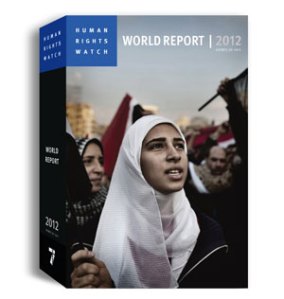
For more information on human rights abuses in Canada, Afghanistan, Mexico and around the world see the 2012 Human Rights Watch World Report.

Obviously there is a lot of work to do already to ensure that 2012 does not end in the massive global violation of human rights that 2011 did. But although internet censorship bills, the slaughter of Syrians, the forgotten famine in Africa, and the potential election of a Republican in the US give me reason to worry about 2012, I am confident that as long as we stand together and keep fighting for equality, education and human rights, this year will definitely be brighter than last.


Misogyny and Masculinity in the US Military by Jacob Steele

Don’t Ask, Don’t Tell has been repealed. So we are now allowed to be as misogynist and violent as they are. Well, good job. We can now hate women and outside cultures as good as the next man. Just don’t call me “fag,” or I’ll kick your fuckin’ ass.

We’re now allowed to serve the military machine, the clearest and finest example of patriarchy our country has to offer. Is this really a step forward? African-American men were allowed to serve in all specializations some time ago. Women of all races could serve fully in 1981 (just not in combat, because women can’t kick ass or take names like a man can). And now women and men of whatever sexual orientation, in 2011. Have those oppressed groups that went before us, integrating into the military, changed the institution from the inside? Have they made it a less oppressive, less violent expression of the hegemonic masculinity? Or have those souls who have already been admitted only been subverted into that masculinity themselves?

Fully a third of military women will be sexually assaulted or raped during their time on active duty. Of those, a mere 8% of their assailants will be brought up on charges, and basically none of those that are actually charged will be convicted or face penalties stronger than a short-term pay cut. And this is how we treat our own soldiers! Imagine what happens to those that are labeled “enemy.”

But this is the institution that we can now serve, outly and proudly. As this bill—the culmination of years, even lifetimes of work on the parts of many of us—goes into effect, it’s past time to think about what we’re asking for when we ask to be part of the old boys’ club. What exactly will membership get us? And what, precisely, is the price of that membership card?

The answer already seems clear. From the personage of Lt. Dan Choi, who was the de facto figurehead of the movement until the bill was passed earlier this year, to the ongoing efforts of Human Rights Campaign (HRC), the main thrust of the movement has been to prove that gay men and lesbians are just as good, just as hard, just as military, as their heterosexual counterparts. Lt. Choi, for example, once challenged a friend of mine to a push-up contest at a speaking event—but the self-styled leaders of our movement lack a critical lens at much deeper levels than this sort of machista bravado.

The masculinity that dominates the military and seeps into every aspect of our culture is itself pathological and destructive. This is borne out statistically, as above, and anecdotally, by thousands of stories of men soldiers’ violence against their wives and girlfriends, against women soldiers, and against other men. By pushing so hard to have the same rights that those straight white men take for granted, we have underplayed our hand. The question has not been and should not be “How can we get the same rights as them?” but “How did they ever get the right to rape, to batter, to destroy?”

Hopefully, the LGBTQ movement entering openly into the military will shed light on the fact that, right now, military men (and many non-military men) have those rights—rights which no one should ever have or want. Hopefully, our serving in the military will change the masculinity displayed by so many military men into one that is less violent, less misogynistic and (more obviously) less homophobic.

I fear, however, that our military service will only make those that are serving more violent, while the institutions we serve gain an air of “tolerance” and openness. I fear that gay men and lesbians will come to be seen as “normal” not because of an embracement of diverse sexuality in the public sphere, but because gay men and lesbians serving in the military will become closer to the norm—that is, violent and misogynistic. It’s up to us to not let the repeal of Don’t Ask/Don’t Tell (and, soon, Defense of Marriage Act) be the end.

It’s up to us to keep living and discovering and activisting a new masculinity, to keep calling out, in the streets and in the courts and in our homes, the pathology of the dominant masculinity. And it’s up to us to explore, become, and teach ways of being men that exclude violence as a legitimate way of interacting with our world in the day-to-day, and certainly, at the least, exclude perpetrating sexual violence in any of its myriad forms. It’s up to us.

Jacob discussing life with una vieja in a 'retirement home' in Nicaragua as a member of the NGO Project HOPE, where he a group of sailors from the hospital ship USNS Comfort and other civilians were doing maintenance to the infrastructure of the retirement home

Jacob Steele is a former Navy Officer and veteran of Operation Enduring Freedom. He holds a Master’s degree in Media, Peace and Conflict studies from University for Peace, Costa Rica, and is currently rediscovering his native United States by motorcycle, bus, and car. He is 29.


Man Up! by GS

Man Up!

Be a man.

That’s not manly.

Are you man enough?

I want a real man.

We often hear these phrases when a male person’s manliness is explored. What is really in question here though? Is it his economic status? The size of his penis? His physical strength? His courage? His supposed lack of emotions? Whatever it may be, there are many misconceptions about masculinity. A “real” man is mostly described as fearless and tearless, a warrior.

Yes, it is a fact that most of the world’s soldiers are men. Military training, boys’ peer groups and media often promote a direct link between being a “real” man and the practice of dominance and violence. It is true that men are responsible for most violent crimes, largely due to the fact that men rather than women are central to the symbolism of violence in mass media, sports and political rhetoric.

It is clear, there are links between masculinity and violence. To recognize this is not to say that all men are violent, or that men are naturally violent – it is to discover masculinity and its effects on gender-based violence.

Pointing out issues about masculinity can be misunderstood. It may be seen as unfairly blaming men for all violence, or implying that women are inherently better people. On the contrary, it may be seen as a way of excusing violent men, since the behavior is attributed to masculinity, which many believe to be natural and unchangeable. The focus, however, should be on characteristics of socially constructed masculinity that lead men towards violence, and on the ideologies that reinforce aggressive behavior. This allows the focus to shift towards prevention of violence against women and the building of positive alternatives.

Violence against women is used as a “policing mechanism” to emphasize socially set gender roles, and to perpetuate gender-based inequality. There are structural and personal roots to gender-based violence. At the structural level it is grounded in Patriarchy; a system that positions men over women (and other men). At the personal level it is also based on pressures, fears and emotions that underlie many of the dominant forms of manhood adopted in different settings.

The biology of sex does not explain the issues; biological differences are just that, while social patters of violence require social explanations and solutions. Our understanding of masculinity must embrace economic production, power and authority, sexuality and emotions, and identities and communication. Eliminating violence against women and building a culture of peace requires change in masculinities. But it does not require men to be weak or incapable. On the contrary, violence often occurs because masculinity is constructed to make violence the easy option, or the only option considered. We must move towards a leadership that does not see violence as the only alternative. The leadership “inherent” to masculinity should be used to work towards gender equality rather than to further segregate the gender hierarchy.

Education can open up a diversity of pathways, and allow boys and men to use a broader spectrum of their capacities; emotional, communicative, and political. Education can show boys and men a variety of ways of being a man, and allow them to experience this diversity. It can develop boys’ and men’s capacities for nonviolent action, training them in techniques of peace as they are now commonly trained in the techniques of combat.

An educational effort in this direction cannot work in isolation. It needs to be supported by action in other areas of life that will make greater diversity of experience possible for men, and nonviolent conduct easier for them. This means action to reduce gender hierarchies across the spectrum of social life, media, workplaces, and institutions.

Moving towards gender equality is an important part of the culture of peace as well. Cooperation and dialogue between women and men create new knowledge and positive change. Men’s groups should not pander to those who might attempt to emasculate them for fighting for gender equality. Media constantly emphasizes the “natural differences” between men and women. The fact is what men share with women – talents, languages, interests, institutions, and family – is far more than what divides them. As long as we focus on the mutual benefits and share the responsibilities, we will have the basis for a non-violent future.

G was born and raised in Istanbul. He moved to the US during high school and was lucky enough to live in many awesome cities while earning his degree in gastronomy. Thirteen years later he’s back, living in southern Turkey near his family. He and Feminist Activist are currently living and loving on the beautiful Mediterranean Sea. He is very proud of his partner’s work towards gender equality.  


Hijacking the Political Gender Discourse by Sven Schulte

Sven celebrating the success of UPMUNC 2010

The following article aims to shed light on the forms of structural violence against women within the realm of German right-wing extremism and how this is reflected in the political program of one party with the result of them hijacking the political gender discourse.

When considering female participation within the largest German right party NPD, Peter Marx accounts that the party currently prides itself with 27%, which is inter pares to the percentage in other parties. Moreover, around half of new members are girls and women, indicating the demographic change within right-wing parties.

Consequentially, more topics related to the gender discourse, such as day care centres, leave of absence for childbirth, child support etc. have permeated the rigid, male-dominated discourse of right-wing politics.

Yet the logical deduction that a higher percentage of women translated into inclusion of affiliated topics into the political discourse is a fallacy.

Rather, right-wing parties are more successful in capitalising on such themes in order to lure female support.

It is a twisted plot of male structural violence against women to ensnare them into bastardising their own cause.

That is because the underlying reasons for these political campaigns are not to advance the status of women or to contribute to equality.

Gitta Schuessler , President of the RNF (Ring of National Women) accounts that gender mainstreaming is first of all unnecessary, because in essence “all equal rights are fulfilled”, citing the right to vote, education and choice of profession.

That there are severe inequalities of payment between male and female in Germany or women significantly underrepresented in key positions in industry and science are negligible impurities in her view that are no cause for concern.

Moreover Schuessler identifies gender mainstreaming as an undesirable “re-educational project which wants to reshape innate gender identities”. This anachronistic image of distinctively separated gender identities is in turn based on nationalistic credo seeing women as mere birth-givers, rather than emancipated women.

That is because the path to female self-actualisation is becoming de-individualised and embedded in right-wing ideology.

It is postulated that true female happiness can only be achieved by producing offspring and caring about family, instead of individual pursuit of strengths to form careers of their own.

Henceforth, the political gender discourse becomes hijacked, as the underlying reason of equality becomes substituted by a bastardised right-wing dogma about female rights and responsibilities.

Yet the message that is transcended to the people is “We care about women and children” which in turn lures women and girls to support such right-wing extremist parties, recalling that half of new members of Germany’s extremist NPD party are girls and women. It is a dangerous vicious circle.

The real treason to the emancipatory cause of it is barely detected by the gullible souls that are preyed upon by the male perpetrators of structural violence and their female henchmen that steal and bastardise the political gender discourse in order to sway more women into mindless devotion to renounce themselves.

Sven left Germany at the age of 16 to study at an International School before embarking on studying International Relations and Peace & Conflict Studies in London, UK. He currently holds one MA in Environmental Security and Peace (UN-mandated University for Peace) and is a candidate for an MA in Peace, Development, Security and International Conflict Transformation. Scientifically questioning power structures and structural suppression, his methodology is influenced by the multitude of nuanced analysis that the gender paradigm offers.


Carolina’s Story by Anonymous

Place a piece of paper on your head.  On the paper, without looking, draw a picture of a girl.  Start with the head, the hair, then the features on the face, eyes, nose, ears and mouth, then the torso, the arms and hands, the legs and feet, and finally the genitals.   Do not look at the picture until you have reached the end of this piece. 

…………..

Carolina is 15 years old, and from one of the poorest neighbourhood’s in Nicaragua’s capital, Managua.  She has to look after her two younger brothers, both of which come from different fathers.  She herself has a one-year-old son.  When she was 13 years old she was raped by her stepfather and uncle, after the two of them had come from a late-night drinking session.

The dysfunctional nature of her family meant going to college to get an education was never an option.  Since she was 9 years old she was forced out onto the dangerous streets of Managua, to sell cigarettes and chewing gum at one of the many party and bar zones in the city.

One night, another gruelling night of selling cigarettes to the drunks at 2am, a man, a foreigner, came and spoke to her.  He was drunk, and smelt heavily of beer and smoke, but he wanted to spend the night with her.   He said he would give her $20 if she agreed.  Carolina disagreed, the man was revolting.  When she did so, the man smacked her, around the face.  It was in full view of everybody, but nobody really seemed to take notice.   She eventually agreed, and went with the man to one of Managua’s many motels.  The man forced himself onto her, breathing heavily as he penetrated her.  The pain for Carolina didn’t seem to last too long, somehow her body went numb, she fell into a form of daze, no longer really aware of what was happening around her.

Two nights later the same man spotted Carolina at her usual spot by the bars.  As he spoke to her in his broken Spanish, Carolina took in little of what was being said, focusing only a few words, Costa Rica, new life, good employment.    Defences had been broken.  The following day the man went with Carolina to her home.  Her stepfather hurriedly signed the permission slip for this man to take her to Costa Rica, only too happy to get the unhappy girl that he had raped out of his home.  Carolina’s mother seemed far less sure about the decision, and very suspicious about the employment.  A few slaps to the face from Carolina’s stepfather however quickly made her change her mind.

In a remarkable short space of time all documents were signed, and Carolina found herself on the bus to Costa Rica.  She had never left Nicaragua before, and was nervous, but excited about what awaited her.  Nine hours went by, the journey was quite slow as for some reason they had been held up at the border, but they finally arrived at San Jose.  It was about 8pm.   The man had told her he would take her to her new home.  This new home was on a dirty but busy street. They entered through the side door, it was locked behind her.   She stepped on a used condom.  She saw dozens of girls, all of them in mini-skirts and high heels.  None of them looked any older than her.  None of them looked her in the eyes.  Things were feeling very strange.  Two men approached her.  One of them grabbed her by the hands, the other she saw lowering his pants.  She went numb again.

15 months later and Carolina is now back in Nicaragua.  In total she worked at 6 different bars in San Jose, where she was abused, beaten up, raped and exploited sexually for commercial purposes on a nightly basis.  She is now being cared for at the Casa Alianza protection centers in Nicaragua.

Her story is devastatingly common.  Girls coming from impoverished backgrounds in extremely macho cultures, themselves victims of violence and abuse, finding themselves forced into sexual abuse and exploitation with little or no chance of escape.  They are broken down physically and psychology.

Carolina’s story is not real.  There is no Carolina, but after having spent nearly three years living in Central America, in which I have spent over half that time working for Casa Alianza, an NGO working to protect children in extraordinary risk, her story is all too real.

The reality is great, and there are steps which must be taken by us all to prevent children, women and girls facing such extraordinarily difficult situations:

  1. We must provide training to families to care properly for their children, especially female children
  2. We must provide awareness about domestic violence, and the support for women who are the victims such crimes
  3. We must tackle macho cultures which enable and accept violence and other crimes against women and girls
  4. We must provide the care and support for the women and girls who have been victims of crimes such as this, providing the psychological and physical care needed
  5. We must never tolerate any form of violence against women and girls.

And now, let’s go back to your drawing.  I am sure the image you have constructed is not a beautiful piece of art.  I am sure, in fact, that it is a very mutilated image.   And so why did I ask you to do this?  Because this mutilated image shows the destruction done, both on the inside and the outside, to the girls and women who are the victims of abuse, violence, sexual exploitation and human trafficking.    

We must unite to provide the training and awareness to prevent violence against women.

The author was born in the UK, although he has been fortunate to spend large parts of his life in different countries, working as an English teacher, radio presenter, trainer of debating and public speaking, and coordinator of Model United Nations events.


خشونت علیه زنان در ایران

خشونت بر علیه زنان در ایران موضوعی است که بسیاری از مردم حتی یک بار هم درباره آن نشنیده اند و یا در رسانه های گروهی درباره آن مطلبی نخوانده اند. در واقع آنقدر مشکلات اقتصادی و سیاسی وجود دارد که اکثریت مردم زمان و انرژی لازم برای توجه به چنین مسائلی را ندارند.

به نظر من موارد زیر جزئی از مواردی است که در جامعه امروزی ما وجود دارد ومی­تواند جزء فعایت های خشونت علیه زنان طبقه بندی شود :

1. عدم توانایی نیروهای انتظامی در تامین امنیت در برابر خشونت های جنسی و فیزیکی و کلامی در خیابانها علیه زنان: پلیس ایران هنوز تخصص ، توانایی و بودجه کافی برای کنترل و سازماندهی جرایمی از این نوع را ندارد . اولویت خرج بودجه­های در این زمینه به صورت مستقیم  و یا غیر مستقیم به مسائل سیاسی و نظامی اختصاص دارد.

2. کمیت و آزادی بیان رسانه­ها : فیلترهای سیاسی و دینی رادیکال (علی الخصوص در چند سال اخیر) به شدت از انتشار خبرها و گزارشهایی که عملکرد دولت ایران را در فضای داخلی و بین المللی به چالش بکشد جلوگیری می کنند و هر گونه فعالیت  رسانه ای  داخلی از مرزهای قدرت آنان عبور کند را به شدت سرکوب می کنند.  یعنی به جای طرح سوال و فکر کردن به پاسخ آن ، تریج داده می شود که هیچ مورد از خشونت علیه زنان به صورت جدی در رسانه های پیگری نشود .

3. سیستم قضائی توسعه نیافته : در ایران بسیاری از موراد خشونت عله زنان در محیط خانه اتفاق می افتد و به عنوان یه مسئله خانوادگی تلقی می شود که قابلیت پیگری در دادگاه را ندارد. سیستم قضایی به علت عدم تمایل و توانایی به تولید هیچ قانونی خارج از دین اسلام نمی تواند پاسخگوی نیازها و ایجاد حمایت قضایی از زنان در مقابل خشونت علیه آنان باشد . در زیر بخشی از آیه 34 سوره النساء آمده است :

… وَ اللاَّتِی تَخَافُونَ نُشُوزَهُنَّ فَعِظُوهُنَّ وَاهْجُرُوهُنَّ فِی الْمَضَاجِعِ وَاضْرِبُوهُنَّ فَإِنْ أَطَعْنَکُمْ فَلاَ تَبْغُواْ عَلَیْهِنَّ سَبِیلاً إِنَّ اللّهَ کَانَ عَلِیًّا کَبِیرًا

در معنی و تفسیر این آیه آمده است که مردان حق دارند برای زنانشان به آنها ضربه بزنند. با توجه به این آیه صریح و روشن از قرآن هر مردی در ایران می تواند همسرش را کتک بزند و سیستم قضایی و پلیس نمی تواند به سادگی مانع از انجام آن شود.در کل،در قوانین اسلامی مسئولیت ها و حقوق برابری برای زنان و مردان قائل نشده است.

4. اخیراً دولت تصمیم گرفته است که به جای حل مشکالات بی شمار آموزش و دانشگاه ها در کشور دست به جداسازی جنسیتی در دانشگاه ها بزند. این امر موجب خواهد شد که میزان درک دوجنس مخالف از یکدیگر به حداقل برسد و ممکن است تعارض  و خشونت را بیش از پیش در محیطهای کاری و یا در نسلهای بعد را افزایش دهد.

5. سیستم ها  و نهادهای حمایتی از اقلیت های جامعه به خوبی عمل نمی کنند ، خواه این اقلیت زنانی باشند که مورد تجاوز و خشونت قرار گرفته اند و خواه اقلیت های معلولین و حتی کسانی که در دوران جنگ تحمیلی سلامتی خود را از دست داده اند. بسیاری از سیستم های اداری کارایی لازم برای انجام مامورت خود را ندارند.

در آخر باید یادآوری کنم که سطح امنیت ، خدمات رسانی ، امنیت و رفاه اقتصادی در شهرهای بزرگ مثل تهران خیلی بیشتر از سایر شهرهای ایران است و فقط 11 درصد از مردم ایران در تهران زندگی می کنند .


فوق لیسانس مدیریت دانشگاه تهران ، تهران ، ایران


Violence Against Women in Iran by an Anonymous Man in Tehran

Haleh Sahabi, a human rights activist killed at her father's funeral

Many people in Iran have not heard or read anything about violence against women in the mass media. Actually they are faced with many economic and political problems that don’t let them spend time and energy on subjects like VAW. In my opinion the items below could be considered VAW cases or related items in my society:

1. Police forces are not devoted to handling situations of physical and sexual violence against women. They don’t have enough expertise, ability, education, skills or organization budgets to face these kinds of crimes. The priority to spend budgets belongs to political and military issues, directly or indirectly.

2. A lack of freedom of expression in mass media: radical political and religious filters (especially after the election 3 years ago) tend to prevent any news or report that challenges the government performance nationally or internationally, and suppress any internal media activity which crosses their power boundaries severely. This means that they prefer not to follow up on violence against women in the media, instead of asking questions and thinking about it like other social issues.

3. An undeveloped judicial system: many VAW cases in Iran happen in the family and home environment and are not considered as criminal activity which should be tracked in court. The judicial system cannot respond to women’s needs and create judicial support for them because of the unwillingness and inability to approve any rule from outside of Islamic rules. Below is the part of chapter 34 of the Holy Koran, the name is Alnesa (which means women) in Arabic :

وَ اللاَّتِی تَخَافُونَ نُشُوزَهُنَّ فَعِظُوهُنَّ وَاهْجُرُوهُنَّ فِی الْمَضَاجِعِ وَاضْرِبُوهُنَّ فَإِنْ أَطَعْنَکُمْ فَلاَ تَبْغُواْ عَلَیْهِنَّ سَبِیلاً إِنَّ اللّهَ کَانَ عَلِیًّا کَبِیرًا

This chapter is about how men can punish their wife, and one of those ways is “beating them.” With attention to this obvious Holy Koran chapter any Muslim could beat his wife and the judicial system and police forces can’t stop him easily. Fundamentally, there is no equity in responsibilities and rights between the male and female sexes in Islamic rules.

4. Recently the government decided to separate boys’ and girls’ classes in all universities instead of solving the numerous problems of the country’s educational system. This action will lead to less understanding and fewer transactions between the two different sexes and may increase conflict and violence more than before in their lives after university.

5. There are few supportive systems or institutions for minority groups who need to be cared for. They don’t work well or in line with their mission statements. While there are groups for women who were raped or abused, or people with disabilities, and even people who lost their health or organs through the 8 years of imposed war between Iran and Iraq, overall these institutions do not take responsibility to use their budgets to help.

I would like to mention that the level of security, social services and economic welfare in Tehran, the capital, is much more than any other city in Iran and only 11 percent of Iran’s population lives here. Our system is based on centralization and so other cities are less developed in many aspects, considerably in considering social issues like VAW.

P.G. 
Bachelor of Public Administration, Allameh Tabataba’ee University, 2007
Master of Management, University of Tehran, 2009

To read this post in the original Farsi come back tomorrow!