Category Archives: Race/Ethnicity and Activism

Day 14- Women’s Activism in North America and Oceania

North America and Oceania may seem like a strange pairing, but especially because much of the activism of the women in the United States has already been covered, grouping some of the original commonwealth countries–Canada, Australia and New Zealand–together seemed logical. Oceania is comprised of dozens of small island nations that make up Polynesia, Micronesia and Melanesia, in addition to Australia and New Zealand. Not to diminish the rights and struggles of the peoples of small nations or under foreign control but for our purposes, any location we consider will be an independent country with a population of more than 100,000.

Australia: The land down under is paying tribute to four women who have pushed to advance gender equality in Australia by immortalizing them in stamps: Germaine Greer, Eva Cox, Elizabeth Evatt, and Anne Summers will all be awarded the Australian Post Australian Legends Award for 2011. Last year Australia elected it’s first female Prime Minister, Julia Gillard, who is currently on the losing side of public opinion with regards to marriage equality. Fifty-seven percent of Australians support marriage equality but she remains opposed to it. This page offers interesting insights into other battles women, especially migrant women, in Australia have historically faced.

New Zealand: The first nation in the world to grant all women the right to vote, in 1893, and to elect a transgender person to parliament, in 1999, New Zealand prides itself on a (slightly misleading) image of gender equality. The youngest person ever elected to the NZ parliament (and editor of the below mentioned book written by women of the Solomon Islands), Marilyn Waring, recollects her journey to political power here. Issues of domestic violence, the gender wage gap, underrepresentation in politics, and discrimination against the indigenous Maori people all still affect Kiwi women. And while the LGBTQAI community in New Zealand does enjoy most human rights, including some representation in government offices, marriage and adoption are still hurdles to be overcome.

Fiji: An innovative technique for raising awareness of young, rural women’s issues in Fiji, Tonga and the Solomon Islands is coming through community radio in Fiji. A weeklong training session, held annually, was arranged by FemLINKPACIFIC, which also address issues of disability, and peace and security through their inclusive, and intelligent approach. FemLINKPACIFIC’s Executive Director is personally breaking the silence around women’s health issues in Fiji by blogging with humor and poignancy about her experiences with breast cancer. Recently, Fiji islanders have had to deal with significant political violence, and Christian extremism which left women without governmental allies in the fight against domestic violence. Marital rape and lack of decision-making capabilities also leave many women in Fiji without a say in their own contraception and pregnancy options. Despite these obstacles, the women of Fiji have a long history of virulently demanding their rights

Papua New Guinea: In a country where sorcery is blamed for deaths caused by AIDS, women suffer tremendous violence in the name of eradicating witchcraft. Nearly 2/3 of women in Papua New Guinea experience domestic violence at some point in their lives and fully half of all women there are raped, partly because there are no laws against these crimes. Sometimes crime goes the other direction and men and boys are victimized, showing how seriously a culture of rape affects everyone involved. But women in Papua New Guinea are courageously combating both physical violence and the spread of HIV though activism. Environmental issues such as mining, logging, fisheries, and palm oil production also have a significant impact on the lives of women in Papua New Guinea and so they speak out about those issues too.

Solomon Islands: The voices of the women of the Solomon Islands have rarely been heard, either within their country or by outsiders, but the book Being the First broke that cycle of silence. Women in this island nation have been an integral part of the use of restorative justice in peacebuilding after years of ethnic tensions and violence. Violence against women is a serious issue in this country and women have been vital in PeaceWomen to combat injustices. Young women in Solomon Islands are also speaking out about climate change and its disproportionate effects on women and indigenous peoples. The women of the YWCA are also critical in the fight for equality.

Samoa: Transgender activist and community leader, Dr. Vena Sele, has continuously fought for equality while expressing one of the traditional gender roles in Samoa as a fa’afafine. Some Samoa bloggers are taking on tradition by speaking out about taboo subjects. This article explains current laws with regard to human rights in Samoa, and this article is a witty explanation of how damaging misconceptions can be.

Tonga: At least one women’s rights activist in the Kingdom of Tonga has raised concerns that the November 2010 election of Lord Tu’ivakano was not the victory for democracy that it was touted to be. Women activists have every right to be weary of the men in politics in Tonga, especially since the country refused to ratify CEDAW and the newly appointed Police Minister was previously charged with assaulting his wife. The Women and Children Crisis Center WCCC, a Mama Cash grantee, is one group working to change the acceptability of domestic violence in Tonga. They have been internationally recognized for their work and won the Pacific Human Rights Award in December 2010, and the Global Social Change Film Festival & Institute Activist Award for their work in the film Paradise Glossed: Women, Violence and ‘The Friendly Islands’

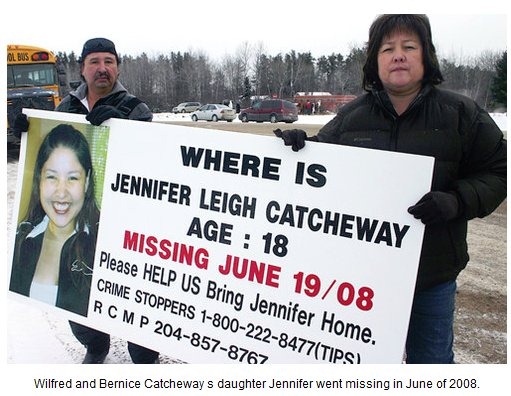
Canada: One look at Amnesty International’s Canada blog shows how determined Canadian women are in fighting for all women’s rights everywhere. Canada is a much more liberal, accepting and equal society than are we to the south, but no nation is perfect. Gender-based violence and blatant discrimination, including uninvestigated disappearances, against indigenous people still rock Canada on a regular basis. The government has not done much to address these inequalities but activists continue to speak out. On a side note–if you are a Canadian reproductive rights activist, age 19-30, go here to participate in a survey, please.

Mexico: While the Mexican government is sending women to jail for having an abortion, the femicides of Juarez, Mexico have been a disgrace to the world for years. More than 1,000 women have been killed there in the past 18 years. Many groups including Women of Juarez and Nuestras Hihas de Regreso a Casa (which has pages in many languages), fight to end the impunity in the brutal rapes, torture and murders of the women of Ciudad Juarez. Aqui hay un gran coleccion de articulos sobre los feminicidios. Y aqui Patricia Sanchez-Espinosa escrita que Ni Una Más será aceptable. And despite activists who speak out against this overwhelming violence being murdered as well, women in Mexico and around the world continue to raise their voices for justice for these women.

Enough of the violence against women- not one more!

Join the discussion for the next 7 days as we explore the many forms of violence against women and the incredible activists and organizations that are working to change the world.


Day 13- Women’s Activism in South America

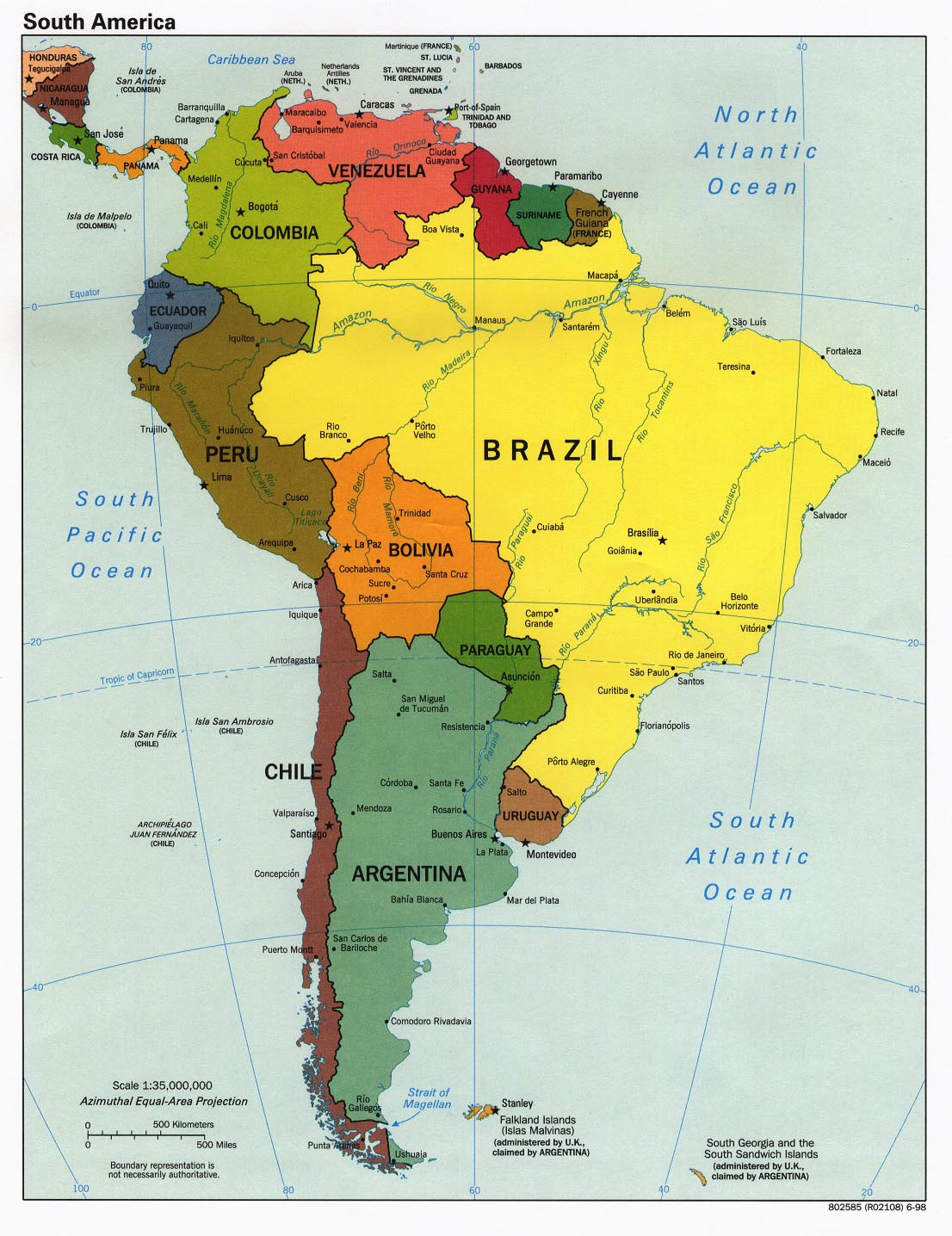
Yesterday’s discussion explored women’s activism in Central America and the Caribbean; today’s post will look at women in South America; and tomorrow we will see how women in North America combat injustice and inequality. Together, Mexico, Central America and South America make up what is commonly referred to as Latin America, with Brazil being the only non-Spanish-speaking country included in this grouping. South America also includes three areas that are not historically “Latin,” Suriname where Dutch is the official language, English-speaking Guyana, and French Guiana which is an overseas territory of France. Every nation in South America has a history of indigenous peoples and conquest. Today we will learn how women on this continent fight for their human rights.

Colombia: In one of the countries with the most internally displaced people in the world, civil war has raged since the 1960s and women participate in every group in Colombia, violent or not. Ruta Pacifica is one women’s group working for peace. Women’s voices are often silenced when they protest for peace or human rights, by both left- and right-wing guerilla forces and sometimes even the government, all of whom use sexual violence to intimidate. Sadly, violence against women, especially women protesters, has escalated to assassinations in Colombia. Unionists, and journalists are also frequent targets of violence in Columbia.

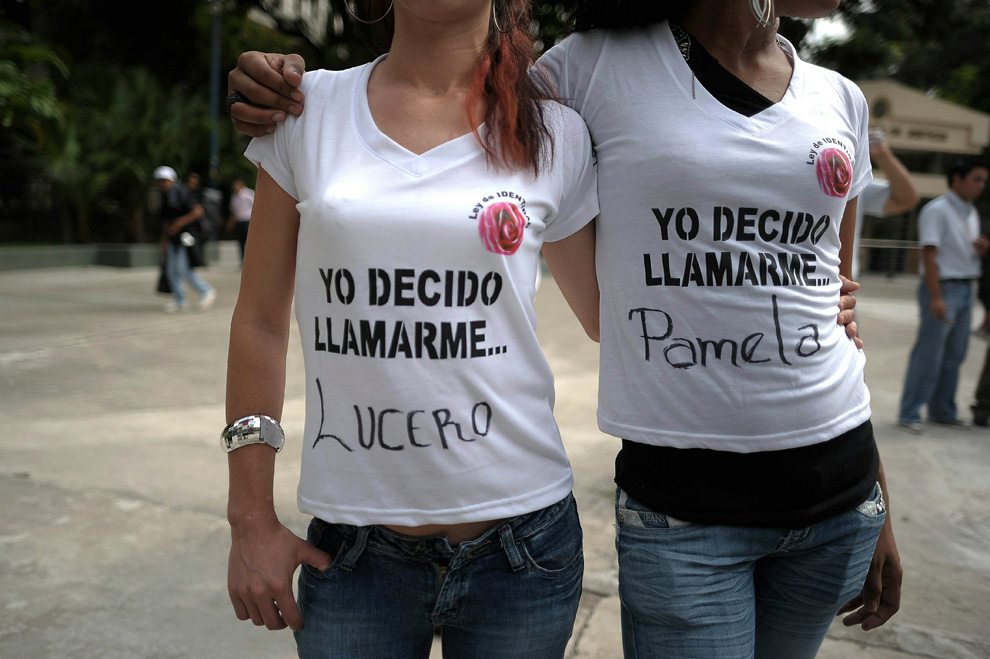
Venezuela: Venezuela’s controversial president, Hugo Chavez, has many supporters, and dissenters, among women but the Venezeulan bourgeoise that thrives on the misogyny of the beauty industry is among his most virulent opponents. Sadly, for a country with one of the most gender-competent constitutions in the world, there are only two women’s shelters. In any case, the country’s capital, Caracas, hosted this year’s Global Grassroots Women’s Conference to mark the 100th anniversary of International Women’s Day. These articles offer a balanced insight into the reality of life for ordinary Venezeulans.

Guyana: While Guyana has had a female president, politics in the country are still very male dominated. In honor of International Women’s Day Guyana’s Prime Minister addressed some of the obstacles women there face in achieving gender equality. This piece chronicles some of the important milestones of women’s rights in Guyana.

Brazil: Even though women in Brazil are not well represented in politics, November 2010 saw Brazil elect it’s first female President, but her candidacy and the race to the election was not without controversy over reproductive and social justice issues. Women’s groups in Brazil, possibly drawing inspiration from their newly elected President, are coming to understand the importance of organization and activism across all spectrums. Afro-Latina feminist activism in Brazil has deep roots that continue to inspire women there to fight for their rights, and disabled women activists in Brazil continue to fight for visibility and mobility there.

Peru: The quota systems in place to include women in government in Peru have proven to be ineffective, with women elected as puppets for male politicians. On the other hand, women in Peru are proving to be vital to ensuring the genetic biodiversity of the country’s food supply and protecting the country’s environment. Indigenous people in Peru have been the driving force behind holding everyone accountable for their environmental impact. Sadly, women’s bodily integrity has been a major issue in Peru, with women fearing for their safety if they bike to work, a number of women being sterilized against their will and women resulting to a national hotline for how to self-induce abortion because it is illegal there. This hip-hop artist is single-handedly taking on racism against the many varied peoples of Peru, and sexism through her music. One young Canadian woman tells her story of Peru here

Bolivia: 28% of Bolivia’s parliament seats are filled by women and half of President Evo Morales’s cabinet is women. Despite widespread violence against women (only in 2010 did the legal sentence for murdering a women finally equal the sentence for murdering a man!) and particular hardships for rural women, Bolivia’s President (oh how I love feminist men!) has pushed for gender equality and women’s land ownership. On International Women’s Day activist Maria Galindo was arrested for spray painting “No quiero ser la madre de Dios, de ese Dios blanco, civilizado, y conquistador” (I don’t want to be the mother of God, of this [masculine] white, civilized, and conquering God.) Go here for an academic analysis of the patriarchy of Bolivia.

Chile: The current leader of UNWomen, former Chilean President Michele Bachelet’s election in 2006 was a sign of hope for the women of Chile. In February of 2010 a massive earthquake struck Chile, and women were as much a part of the recovery process as they were victims of the tragedy. After the earthquake the government hired thousands of people to help rebuild and restore normalcy, but now the government says there is no room in the budget for these jobs. To demand the government continue to employ people to help in the earthquake recovery process 33 women in Chile have occupied a non-operational mine and are staging a hunger strike. Other activism takes place to combat forcible sterilization of HIV+ women and support feminist theology and women’s roles in spirituality.

Uruguay: La Maleta Roja (the Red Suitcase) is an organization in Uruguay that helps liberate women’s sexuality. Other women, including activist Maria Esther Gatti de Islas, have helped liberate political dissenters from government-forced disappearances. The Instituto Nacional de las Muejeres and Cotidiano Mujer are following in Gatti’s footsteps and continue to fight for women’s rights in Uruguay.

Argentina: Uruguayan activist Gatti also worked closely with the Madres de Plaza de Mayo and Argentina to fight for the rights of los desaparecidos. In July, 2010 Argentina became the first country in Latin America and the only country in the Western Hemisphere, besides Canada, to recognize marriage equality. The activist group Las Juanas is hoping to incite the writ of Habeus Corpus to legalize abortion in Argentina and also fights against femicides. Some activists have been attacked for merely starting discussions about contraception and abortion. Other activists fight against human trafficking, showing that the situation for women in Argentina needs improvement but the women there are not afraid to take on that work.


Day 12- Women’s Activism in Central America and the Caribbean

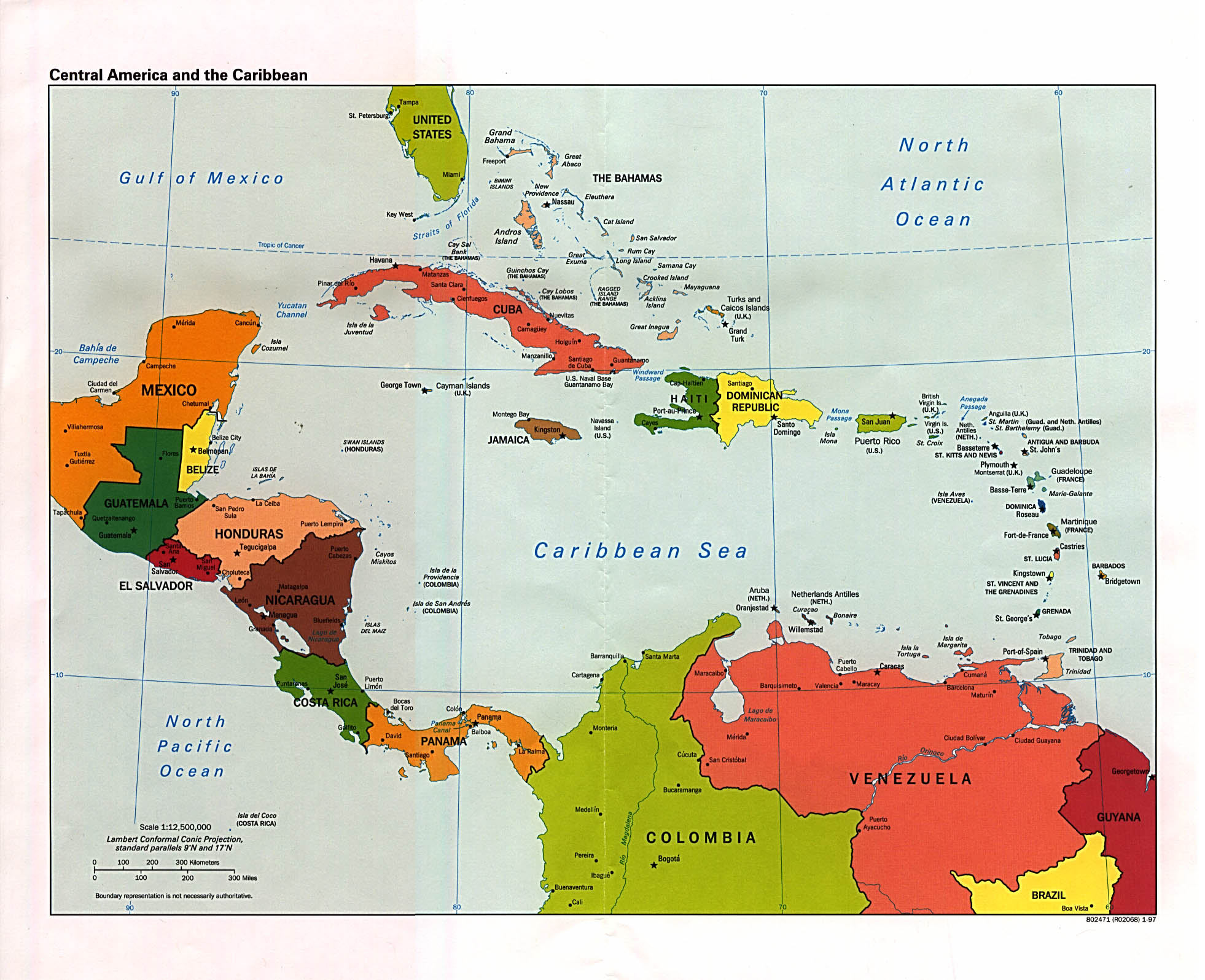
Central America and the island nations adjacent to it in the Caribbean Sea are often an unknown or forgotten part of the world. The biodiversity and fragile, supple ecosystems of these countries are under attack but so too are the people of this region. The high rates of violence in Central America and the damaging effects of climate change in the Caribbean mean that everyone here is on high alert. Two organizations that operate around the world to help women, but are particularly active in Central America are Vital Voices, the International Lesbian, Gay, Bisexual, Trans and Intersex Association and MADRE. Though I will attempt to find as much as possible in English, a number of the links today may be in Spanish, if they are, it will be clear.

Guatemala: The murder rate in Guatemala is 49 of every 100,000 people. Frighteningly, it is not the highest in the region. But the rate of violence against women in this Central American country was enough to prompt a United States federal court to rule that immigration officials should reconsider the asylum request of a woman because she would suffer violence and possibly death if she returned to Guatemala. But some Guatemalan women are using activism within the US to demand a review of America’s policies. Norma Cruz, founder of Fundacion Sobrevivientes, “staged a hunger strike in front of the US Supreme Court to protest the illegal adoption of stolen children from Guatemala….”

Belize: A relatively new country, Belize’s social stratification is a complex web of ethnicity and race. Gender based violence is also problem in Belize, one of the many countries last year to participate in the UN’s 16 Days of Activism Against Gender-based Violence. The other major problem for Belize is destruction of its ecosystem: Belize is home to the second largest barrier reef in the world but the delicacy of this ecosystem means that any changes in the global temperature or sea levels can be disastrous.

El Salvador: In a country plagued by civil war, internal terrorism and political violence, it may be hard to imagine that life for women is more dangerous after the peace accords were signed, but it’s true for El Salvador- the country with the highest murder rate in the world in 2009. In a country where women’s average salary is 28% lower than men’s, rates of murder and rape of women rose after the war. Salvadoreños also deal with US intervention, especially when it comes to mining, on a regular basis. Go here to send support to activists from Cispes El Salvador who have received death threats because of their vocal objections to US intervention there. Unsurprisingly, LGBTQAI rights in El Salvador are also under attack, but Entre Amigos (in English) is not afraid to stand up for what’s right.

Honduras: Lower than El Salvador but higher than Guatemala, Honduras’s murder rate is 67/100,000 inhabitants. The 2009 coup that expelled the former-President has left women in political limbo, but they are still in the streets demanding their human rights. Activists in El Frente are frequently targeted for their participation in anti-Lobo (the new President) demonstrations. If you are interesting in participating in a training session for the health and safety of activists fighting for the rights of sweatshop workers in Honduras, go here.

Nicaragua: The feminist movement in Nicaragua has the same generational aches and growing pains as the women’s movement in the US but some young Nica women are actively working to make the label “feminist” a positive one. Women’s rights activists in Nicaragua have been persecuted by the Catholic Church but support letters from Amnesty International followers gave them the strength to continue their fight. This page concisely explains women’s grim reality in Nicaragua. This blog highlights the work of one of my colleagues who is volunteering his time to help the street children of Nicaragua.

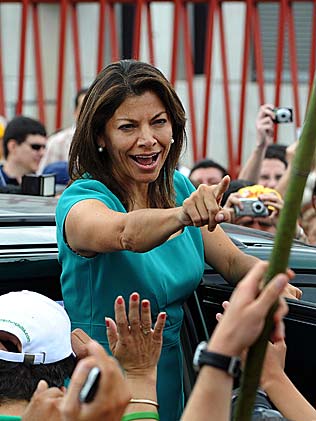
Costa Rica: Many unique international organizations working for women’s rights operate out of Costa Rica, including the Feminist International Radio Endeavour (FIRE), and the UN-mandated University for Peace which offers a MA in Gender & Peacebuilding. Also in CR the Instituto Nacional de las Mujeres and the Centro de Investigacion en Estudios de la Mujer Universidad de Costa Rica are working academically to shape and improve women’s realities.

Panama: Panama’s first lady, on International Women’s Day, called for a nonviolent revolution to bring about gender equality in the country. Gender based violence and poverty are two major concerns for Panamanian women, in addition to “unequal access to education, and lack of political activism.” But many women in Panama do take to the streets in a different form of activism.

The Bahamas: Spousal rape and the ability to transfer citizenship to their children are two of the most contentious issues Bahamian women are fighting against and for, respectively. Part of the frustration of feminists in the Bahamas comes from women simply following men’s lead in politics. Rest assured though that if and when Bahamian women stand up for their rights, they will not be denied.

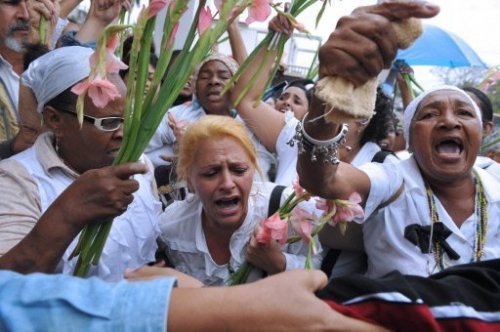
Cuba: The Revista Mujeres highlights the work and inequalities women face in Cuba today. One of the most vocal groups in Cuba Las Damas de Blanco visibly protest the government’s detention of their sons and husbands for their own political protests.

Jamaica: Homophobia is Jamaica has garnered the ire of LGBTQAI activists in the US but activists in Jamaica have their own hands full battling “corrective rape” of lesbians and violence against women in general. Racism is also still prevalent in Jamaica, but activists are speaking out against that too.

Haiti: Poor Haiti. Hurricanes, earthquakes, floods, diseases, and violence have marked Haiti’s recent history, with women suffering the most for it. Haiti lost three of its most influential women’s rights activists to the 2010 earthquake. The women who made rape a crime in Haiti, only in 2005, would have been heartbroken to hear the tragic tales of sexual violence in the makeshift camps that were constructed after the earthquake. Those women left behind continue to fight against violence, and rape (including testifying at the UN Court of Human Rights) and to have their voices heard. This year’s V-Day campaign also alerts the world to the plight of women in Haiti.

Puerto Rico: Although this island is not an independent nation, and is in fact, under the authority of the US, Puerto Rican women face unique challenges. This Master’s thesis by Matthew Perez of Ohio University explores the intersectionality of oppression that Puerto Ricans face. Activists in Puerto Rico two years ago seized the capital in a peaceful protest to decry the laws there that they say promote female submission to men and violence against women.

St. Lucia: The St. Lucia Crisis Center has participated for years in activities to bring about an end to violence against women, including AIDS awareness workshops. One of St. Lucia’s most vocal women’s rights activists, Flavia Cherry, spoke out about discrimination she has faced from the Minister of Gender Relations because of her political association.

St. Vincent and the Grenadines: As in the US, many, if not most rapes in St. Vincent and the Grenadines, a tiny island nation in the Caribbean Sea, are not reported. But when a female police officer accuses the Prime Minister of rape and the charges are dropped without investigation, it is too disheartening. This article is a good recent historical summary of the obstacles women face in St. Vincent and the Grenadines.

Trinidad and Tobago: The environment is one area that has been difficult for female activists in Trinidad and Tobago to break into, but Yvonne Ashby has managed to make her voice heard. Gender and feminism in the black power movement are explored in this essay, and at least one activist in this country has been harassed by the police for her vocal objections to the treatment of children and women. Trinidad and Tobago’s female Prime Minister, Kamla Persad-Bissessar, has promised that this year the country will establish a national Commission on the Status of Women, hopefully this will help address the concerns of the women and activists of Trinidad and Tobago.


Day 11- Women’s Activism in Europe

Europe has long considered itself the center of the world, as evidenced by most maps. And while the cultures, languages, foods and peoples of Europe are very diverse, they do not compare to the diversity of cultures and peoples in Africa and Asia, or the former diversity of Latin America. Europeans, over the course of history, have inflicted a painful history of imperialism, colonialism, persecution and war on the rest of the world. Today we will meet some European women who are both fighting against imperialism, and for human rights, including the European Women’s Lobby.

Spain: Women in Spain have made great gains in the fight for equality but are still not equal to men in terms of employment. This article explains how the financial crisis and subsequent unemployment in Spain adversely affects women there. Sex trafficking (which has also affected men and the transgender community) is another problem Spanish women are tackling but the issue is a sticky one for Spanish sex workers who participate voluntarily because of the lack of regulations.

Ireland: Abortion is a contentious issue for many but in Ireland with the Catholic Church overseeing the country’s morals, many women are fighting for their lives. The complete lack of access to abortion care in Ireland, even in cases where the pregnant woman’s life is in danger, caused the European Court of Human Rights to rule that the country “violated women’s rights” by denying women abortion services. And with high rates of rape and sexual assault that abortion care is probably needed by many. Choice Ireland is one group that is working to ensure women have the right to exercise their choice to bodily autonomy and integrity.

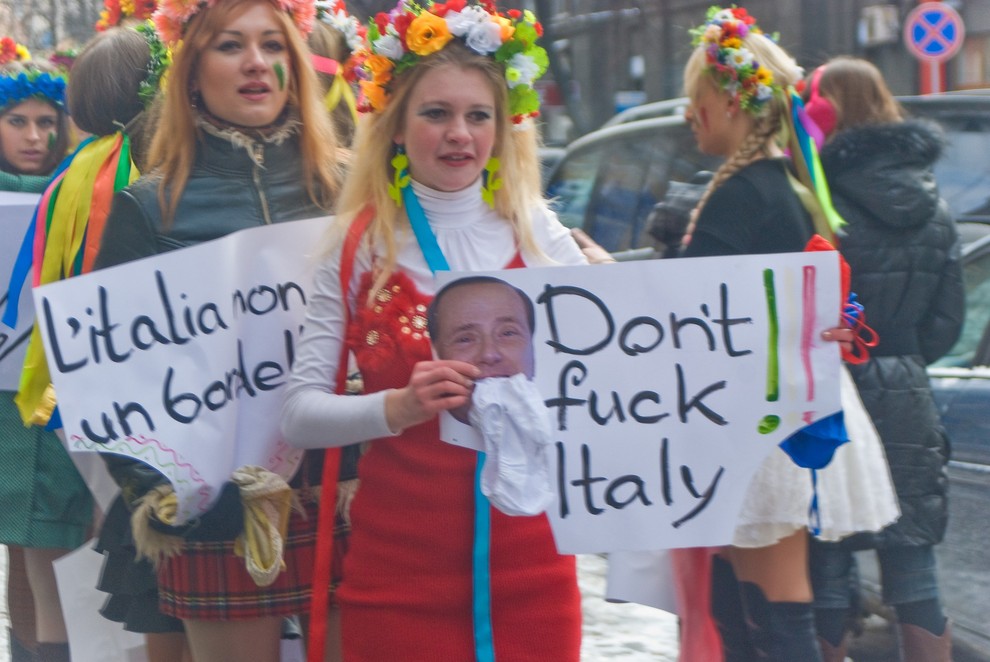
Italy: Berlusconi. The name of the Italian Prime Minister alone makes many women’s skin crawl but his disregard for women is even more disgusting. Droves of Italian women and men, upwards of 50,000, came out in February to protest the PM and his numerous sex scandals, including one with an underage girl. Groups of women around the world also protested in solidarity, including Paris, Tokyo, and FEMEN in Kiev.

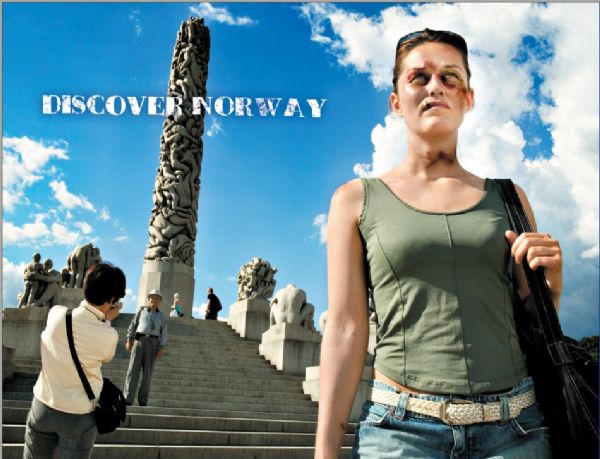
Norway: Domestic violence is Norway’s dirty little secret. Despite the UNDP’s continuous rating as the best country to live in, one in four women in Norway will experience domestic violence in her lifetime. This campaign tackles public awareness in a shocking way. Other groups in Norway protest military violence and discrimination against immigrants. This group encourages women to Be an activist! and provides training for women who want to participate in civil society.

Poland: Like Ireland, Poland’s moral conscience is lead by the patriarchal Catholic Church. Consequently abortion access is severely restricted but The Polish Federation for Women and Family Planning works to lighten restrictions. MANIFA is another group that has lead women and men in protests against discriminatory treatment of women in Poland, especially exploitation. The Polish Women’s Lobby also works for women’s equality. All of these groups, and indeed all Polish people, have the memory of Poland’s Solidarity movement icon Anna Walentynowicz to look up to.

Hungary: The Hungarian Women’s Lobby, in honor of Domestic Violence Awareness Day, rallied against domestic violence, in addition to fighting for women’s equality on a regular basis. Protests recently took place in New York City against the detention of Dr. Agnes Gereb, a Hungarian midwife. Other Hungarian women have protested against restrictive media laws.

Croatia: CROW e-zine is a Croatian publication working to advance women’s rights. Various organizations exist in Croatia to fight for LGBTQAI rights. If you can read Croatian, this page looks interesting and the Center for Education, Counseling and Research page is also available in Croatian.


And here’s a bonus picture of anti-Berlusconi protests in Paris.


Day 10- Women’s Activism in Asia

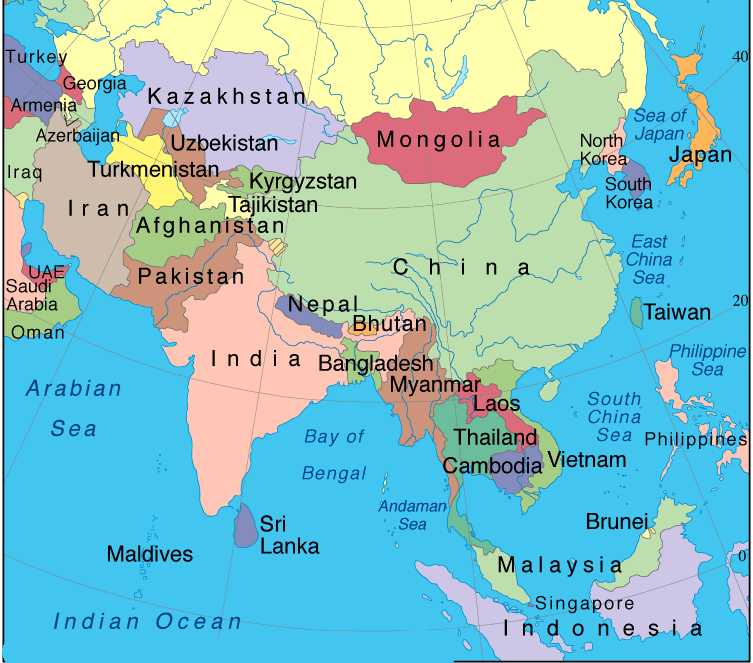
The Asian continent is the largest on the planet, home to 60% of the world’s population, it also comprises 60% of the world’s landmass. Consequently generalizations about Asian women could never be true for all of the women included in Asia’s population of 4,157,000,000. Turkey is the western border of the Asian continent and most Arab countries, including Saudi Arabia, Iraq, Iran, and Afghanistan are in Asia. Today we will look at women of countries more typically associated with “Far Eastern” culture, but also explore how women in Central Asian countries, especially countries of the former USSR, combat injustice as well.

American’s stereotypes about Asian American women are also shared with women who still live in Asia, consequently they are seen as silent, subservient and eager-to-please. The sampling of Asian women we will see today, and the organizations they run, are anything but.

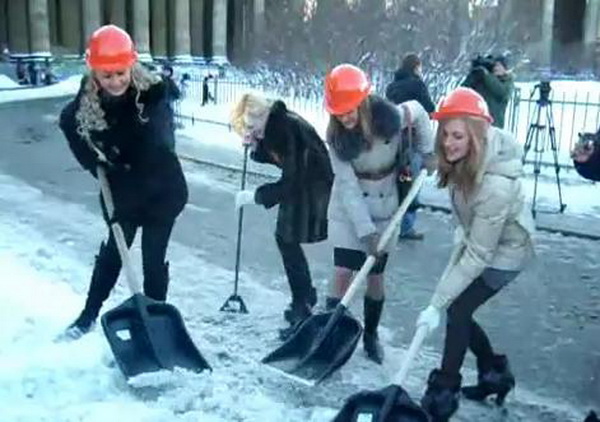
Russia: The denial of pay during maternity leave is one issue currently affecting women in Russia. Women’s rights activists in St. Petersburg have rallied to protest women being dismissed from their jobs if they become pregnant. Project Kesher is another group of women striving to bring religious and ethnic tolerance to Russian, Belarus and the Ukraine. In an unorthodox manner a group of Russian women who call themselves X-Z are bringing attention to social issues plaguing Russia, such as piles of snow the government refuses to remove.

Mongolia: Women in Ulaanbaatar are working to show that women’s rights are human rights and to create a national mechanism for protecting fundamental human rights. There is still much work to be done in Mongolia, especially to ensure LGBTQAI rights. The National Network of Mongolian Women’s NGOs, Monfemnet, tackles everything from youth participation in human rights, democracy and gender justice to exploring masculinities.

China: Grassroots women’s activists in China are combating judicial injustices and gender inequalities by fighting for human rights. One of the biggest issues facing Chinese women is Reproductive Justice. The punishment for violating the “one child” policy is a blatant denial of human rights. This page honors some of the women human rights defenders in China.

Japan: Women in Japan are under a different reproductive pressure from their government: the pressure to have more children. For those women who cannot have children or do not want to reproduce, the government and society’s pressure to do so is not only unfair, but painful. Because of the government’s position only three percent of women in Japan ages 16-49 use the birth control pill. The Feminist International Network of Resistance to Reproductive and Genetic Engineering, FINNRAGE, is one group that is fighting for women to be fully educated about their rights and their choices so that they can make informed decisions.

Indonesia: Women in Indonesia are also fighting their government for protection of their rights. The few laws that grant women’s rights, such as a 30 percent quota of women in elected offices, are not uniformly enforced. Women’s rights groups in Indonesia also state that those women who are elected are not doing their part to advance gender equality. Some women’s groups use the power of street theatre to demonstrate the dangers of childbirth and pollution, among other social issues. The rights of LGBTQAI people in Indonesia are also not guaranteed, but many women are searching for tolerance and equality within their personal studies of Islam.

Thailand: Women in Thailand are active in the country’s ever-changing political scene. Despite being warned by police to evacuate a space filled with protesters lest violence should occur, women supporting the Red Shirt party stayed to face their government. In a country where symbolism and the spiritual world are highly esteemed, women from the opposing group, the Yellow Shirt party, took on politics and social norms and used their bloody sanitary napkins to pull power from a protective statue. Thai women are also finding innovative ways to combat religious intolerance in various regions of the country. The women who are left as heads-of-household when their husbands and sons are arrested (for political or religious reasons) have become leaders in their communities. After a long day’s work feminist activists in Thailand can relax at a retreat built especially for them.

Bangladesh: The situation for women in Bangladesh is dire. Women are punished with beatings when they are raped. Women are punished with acid attacks when they say no to sexual advances. Women are punished when they go to the police, or seek medical help, or dare to complain. The deaths of women as a result of public flogging have been all over the news recently. Women are slowly making progress and some girls are being educated, but activists in Bangladesh also understand the importance of having male allies in the fight for equality. Bangladeshi women are also sharing their knowledge and lessons learned with the women of Haiti, by way of an all-female UN police force.

India: For centuries women in India have been participating in social activism. Currently, the group Pandies uses humor and theatre to showcase women’s issues. Recognizing the advances that have been made over time, women’s groups in India still push for further gender equality. Even though gains have been made, there are still many issues facing Indian women today, including child marriage, police brutality, and domestic violence.

Kyrgyzstan: Despite being the first Central Asian country to have a female president, (Roza Otunbayeva–one of this year’s recipients of the US’s Women of Courage Award), gender roles in Kyrgyzstan are still very rigid. In traditional Kyrgyz culture women must remain virgins until their wedding night and their sheets are displayed the next day as proof. Some women are combating this stigma by speaking out against it. Other problems arise when the marriages are not legally registered, and domestic violence rates in Kyrgyzstan are overwhelming. Bride kidnapping is another tradition the women of Kyrgyzstan are not proud of, and are trying to eradicate.

Uzbekistan: Uzbek human rights activist Mutabar Tajibaeva has returned her 2009 Women of Courage Award, in protest to Kyrgyzstan’s president receiving the same award this year. The activist says she has nothing against Otunbayeva personally but cannot, in good conscience, have her name listed with Kyrgyzstan’s president who failed to stop the massacres against ethnic Uzbeks in Kyrgyzstan last summer. Tajibaeva believes Otunbayeva is receiving the award only because she is the first female president of a Central Asian country, but stated that there are other Kyrgyz women more deserving of the honor. Some of the issues Uzbek human rights defenders focus on include unlawful detention of protesters by the government, and forced sterilization. Hundreds of women have been sterilized without their consent or knowledge in Uzbekistan, leaving many women fearful of doctors and hospitals.


Day 9- Women’s Activism in Africa

A composed satellite photograph of Africa.

Image via Wikipedia

North Africa has been in the news recently for its people’s uprisings. Algeria, Tunisia, Libya and Egypt are all currently in very precarious situations but the people of these nations, men and women, have shown that they want democracy and are willing to give their lives to earn it.

Sub-Saharan Africa is largely ignored by America unless the political events that occur will affect the US, such a high-profile oil spill in Nigeria which could raise gas prices in the States. The tragedies and travesties of the rapes in the Democratic Republic of the Congo, the upheaval in Sudan and its Darfur region, and the poverty and desperation in Somalia go largely unnoticed by American news outlets and the American people.

Today I’d like to give a sample of what women (and feminist men) are doing across the African continent to advance social justice and true equality.

Liberia: The women of Liberia bravely stood up against dictator and war criminal Charles Taylor and helped bring about an end to their country’s brutal civil war in 2003. Their story was told in the 2008 documentary Pray the Devil Back to Hell. Subsequently Liberia elected Ellen Johnson Sirleaf, the first female head of state in Africa. An all women UN peacekeeping unit from India still provides inspiration for Liberian women and shows them that women can do or be anything they set their minds to. Today the women of Liberia are still working for peace in their region and in the world. These women are raising their voices for the women of neighboring Ivory Coast.

Cotê d’Ivoire: In honor of International Women’s Day, and to protest the killing of women protesting Laurent Gbagbo’s refusal to recognize the November 2010 elections, thousands of Ivorians marched yesterday in an event that left three men and one woman dead.

Nigeria: Last year at this time women in Nigeria were protesting a religious massacre. Last week (2 March 2011) Nigerian women found themselves protesting the presence of cattle herders on of their farm land. In February a small group of women protested the imposing of a female candidate into a federal position for which they elected a man. These women recognize that simply because a candidate is a woman does not necessarily mean she will represent women or fight for women’s rights.

Sudan: Women in Sudan, especially in the Darfur region, understand what it means to be completely ignored and have their rights denied. In the recent referendum however, women turned out in large numbers to show their support for the cessation of Southern Sudan. OftenSudanese women’s stories go untold, but small groups of women are slowly finding their voices and demanding justice. For the second time in two weeks a group of women staged protests against the government’s detention of protesters.

Ethiopia: One of my favorite feminists, native Ethiopian Billene Seyoum Woldeyes, is helping to bring gender equality to her motherland through her blog Ethiopian Feminist.

Kenya: Wangari Maathai is perhaps one of the most well-known women in the world. The 2004 winner of the Nobel Peace Prize for her work in the Greenbelt Movement, Maathai continues to improve the world around her both through her environmental activism and her women’s rights advocacy.

Uganda: One of Uganda’s favorite journalists, Rosebell Kagumire, covers stories and brings attention to everything from vote rigging to violence against women, both in Uganda and around Africa, in her blog.

Somalia: Women in Somalia suffer under some of the worst poverty in the world. Often left without a means to support themselves, many women-heads-of-household work all day and resort to begging to feed their families, often going hungry themselves. Despite this, Somali women make the time to protest the lack of women in parliament and push for higher quotas.

Democratic Republic of the Congo: Because of the efforts of the V-Day campaign the atrocities committed in the DRC have been given at least a little public attention in the US. The widespread use of rape in the DRC as a weapon of war has drawn the sharp criticism of the UN and organizations around the world, like Amnesty International. The women of the DRC have joined forces with these international organizations and demanded safety and dignity.

Mozambique: While Mozambique is making significant progress in gender issues, one of the most dire problems women there are fighting against today is climate change. Because of the feminization of poverty and the differential affects of climate change, rising sea levels and land degradation on women, the people of Mozambique have begun to pay attention to solutions that specifically address women’s relationship to the environment.

Namibia: Forced sterilization of women is not a new concept, but HIV+ women in Namibia who were sterilized without their knowledge or consent have demanded justice. Staging sit-ins with the slogan my body, my womb, my rights thousands of women have shown their support and raised their voices in solidarity with their HIV+ sisters.

South Africa: The shameful “rape capital of the world” (a title South Africa dubiously shares with the DRC) has come a long way since apartheid, but the country’s lesbians are constantly at great risk. So called “corrective rape” of lesbians in South Africa has reached epidemic proportions with police refusing to take complaints seriously, but women around the world have demanded an end to this inhumane practice.

To learn more about women’s roles and rights in Africa, visit Solidarity for African Women’s Rights, Human Rights Watch, All Africa, Women of Africa and the newly formed UN Women.


Day 8- Yalla! International Women’s Day

Yalla! has become the cry of the Arab world in the past few months. Raised by the powerful and eloquent voice of Mona Eltahawy, yalla calls on Arabs around the world to “hurry up” and make democracy happen.

Since December 17, when desperate Tunisian Mohamed Bouazizi set himself on fire, the willingness of Arabs everywhere to risk their lives in hopes of democracy has flourished. Tunisia, Egypt, Jordan, Yemen, Bahrain, (also in Bahrain) Algeria, Palestine, Iran, Iraq, and, of course, Libya, have shown the world the spectrum of people power.

Because of the success of the Egyptian Revolution and its high-profile nature there are many more sources of information regarding what happened, and what is happening there. For this reason, and to pay tribute to Mona (who in a single hour of class taught me more than most people ever have), today’s post for International Women’s Day will focus on the women of the Egyptian Revolution.

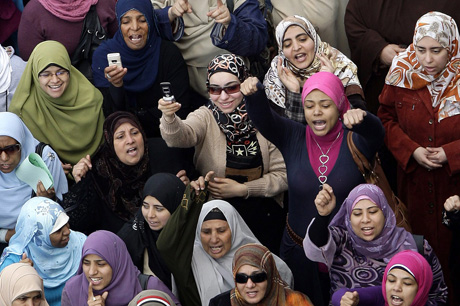
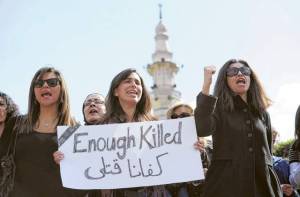
These photos showcase what an active role women have taken in demanding an end to Mubarak’s 30-year dictatorship and demanding equality for all Egyptians. From the beginning of revolutionary action international audiences questioned how involved Egyptian women were in the nonviolent actions and what their fate would be after the fall of Mubarak.

News reports of “chaos and unrest” quickly changed their language when Mona Eltahawy schooled CNN to “call it a revolution!” From then on the media have accurately labeled the events in Egypt an uprising of democracy.

Women’s experiences of the activism in Tahrir Square were unlike anything they had ever experienced, and until the brutal sexual assault on international journalist Lara Logan, women stated they were not being harassed and actually felt safer in the streets.

The brave Egyptian women (and soldiers) who rescued Logan are a testament to the courage and will of the women of Tahrir Square. Their actions, and the actions of the millions of women who took to the streets and engaged in strategic nonviolent action, have shattered the myths about complacent Arab women and paved the way for women of many other Arab nations to stand up for their rights.

Follow Egypt’s example: learn about strategic nonviolent conflict and stand up for your own rights!

P.S. In honor of International Women’s Day the Feminist Majority Foundation is hosting a FREE 1 hour webinar on International Family Planning at 1900EST. Go here to register.


Day 6- Mixed Women’s Activism in the US

All Children.  One Love.

Image by Keo 101 via Flickr

“Identity, loyalty and belonging are issues which reside at the very heart of our existence and it is up to us to define who we are and identify our needs.”[1]

Most Americans who are not recent immigrants have some Native American ancestry, whether they know it or not. If this heritage is not visible it is often overlooked or even concealed.

Self-definition can be problematic and difficult for women who identify as mixed-race in the United States because the dichotomous and superficial nature of American society assumes that whatever a person looks like is all she is.

All minorities are marginalized in the media and mainstream U.S. pop culture but mixed-race people may be the most invisible of all. Even when a mixed-race person does achieve notoriety they are usually referred to as the most visibly apparent aspect of themselves–like Barack Obama is the first black President: Obama is half Kenyan and half white (English and German).

Because light skin, hair, and eyes tend to be recessive and darker features tend to be dominant, this most likely accounts for the assumption that someone who “looks black” is only black in American culture. Many mixed-race celebrities have risen to fame in the U.S. but often their mixed racial or ethnic heritage is unknown.

A victory for mixed-race Americans came in 2000, when, for the first time, people were allowed to “check more than one box” to describe their race on the national census. Chairman of the Census Advisory Committee of Professional Associations, David Swanson states, “There is no set definition as to what race and ethnicity is. There’s social categories, social constructs, self-identification, maybe some voting-rights acts, but there’s no hard and set definition as to race and ethnicity.”[2] This is clearest for people of mixed heritage.

Often if a woman is mixed white and “colored,” the non-white ethnicities in her background are seen to taint the “purity” of her white blood, and commonly her white heritage is denied her. Denying women their white European heritage harkens back to the racism of the “one drop rule,” but because of their appearance many women with mixed white and “colored” heritage are not afforded the privileges of whiteness. “Though there exist stereotypes of people of all races and cultures, negative stereotypes are often attributed to people of colour.”[3] For this reason, and others, passing is a difficult and emotionally charged idea for many mixed-race people, especially if others in one’s family, such as siblings, are not able to “pass” for white.

Mixed-race women’s identities occur “in the context of a racist, classist, sexist society which places greater value on people who are fully able-bodied and young. Our personal experiences often parallel the experiences of women with whom we identify. Yet, because of the way in which skin colour and physical characteristics are socially graded, despite these parallel experiences, the mixed race experience is seen as different. However, this perceived difference does not place it outside the experience of racism. When we foster discussion as to who is the most racially oppressed, we encourage the colonialist tactic of divide and conquer.”[4]

Because of their similar experiences with racism, many mixed-race women who participate in social movements and strategic nonviolence do so within the context of groups aimed at women of color in general. Few organizations exist to specifically address mixed-race women, which may be another explanation for their likely participation in women of color groups.

Some of the organizations for mixed-race people were started by interracial couples who have mixed-race children, and later organizations were founded by mixed-race adults. Few movements are so forward thinking and proactive, and because they also address transracial adoption, there seems to be little homophobia in the burgeoning mixed-race movement.

Many organizations for mixed people that exist cross national in addition to racial boundaries. Since 2004, June 12 has marked Loving Day around the world, the celebration of multiracial people and couples, commemorating the end to anti-miscegenation laws in the United States.

The first organization to address the needs of mixed-race people in America began in 1978, iPride, or Interracial Intercultural Pride. In 1988 the Association of MultiEthnic Americans (AMEA) was established and remains the most visible and active mixed-race advocacy organization in the U.S. today. Project Race was founded in 1991, Mavin began in 1998, Blended People America (BPA) was founded in 2007 and My Gene Mix (MGmix)[5] and Swirl, Inc. started in 2008. MixedChildMixed Folksthe Mixed Heritage Center, and the Mixed Network are all collaborative sites of resources for mixed-race people.

One group specifically for mixed women is Mixed Chicks Chat, a live weekly radio show that addresses what it is like to be a woman with mixed racial and ethnic heritage in the U.S. This group hosts the annual Mixed Roots Film and Literary Festival, “an inclusive event targeting the growing population of multiracial and multicultural individuals and families.”[6]

The Topaz Club, established in 2004, is another organization specifically dedicated to mixed women, more specifically women with African heritage.

Despite the relative lack of organizations dedicated to mixed-race women, there is no shortage of heroines for mixed women to identify with. Unfortunately many mixed-race celebrities, politicians, and athletes are only identified as mixed within the blogosphere and not in mainstream media.

In addition to the mixed Native American and white women named yesterday, some notable mixed-race women include Linda Chavez, a mixed Hispanic/white politician and labor organizer; Marie Laveau and her daughter Marie Laveau II, both black and white creole Voodoo priestesses; anarchist and socialist activist Lucy Parsons of African, Native American, and Mexican heritage who married a white former Confederate soldier; Frida Kahlo, renowned Mexican and Hungarian artist; Japanese and white television journalist Ann Curry; painter Pashyanti Carole Hand, of African-American, Native American and white heritage; Miss America 2003, Erika Harold of Greek, German, Welsh, Russian, Native American and African-American ancestry; model, actress and AIDS awareness supporter Karin Taylor of Brazilian, Jamaican and Chinese heritage; black and Japanese model and businesswoman Kimora Lee Simmons; Dr. Maria P.P. Root, a clinical psychologist who specializes in mixed-race issues and created the Bill of Rights for People of Mixed HeritageMildred Loving, the black and Native American plaintiff in the landmark Supreme Court ruling that allowed interracial marriages; Queen Noor of Jordan who is Arab and white; Alice Walker’s daughter, bisexual black and Jewish feminist author Rebecca Walker, founder of the Third Wave Foundation; and María de la Soledad Teresa O’Brien, a television journalist of Afro-Cuban and white heritage who uses her position to showcase stories that would otherwise go untold in the mainstream media due to bigotry.

In 2010 California elected the first female, first African-American, and first Asian-American Attorney General in it’s history, and the first Indian-American Attorney General in the United States, when marriage equality supporter Kamala Harris won by more than 55,000 votes.

There are also many famous mixed-race actresses, singers, and athletes in the U.S. including Cameron Diaz, Halle Berry, Jennifer Tilly, Jessica Alba, Raquel Welch, Rosario Dawson, Vanessa Hudgens, Alicia Keys, Foxy Brown, Mariah Carey, Martha Redbone, Norah Jones, Alexandra Stevenson, Jamila Wideman and Tasha Schwikert.

These women, in embracing and naming their own racial and ethnic heritages, are making a political statement and becoming activists for equality. As non-famous mixed-race women stand up too, they will pave the way for more acceptance in America, and less racism. Women and men are always more than one portion of their identity, and race is no different.

“Rather than criticize barriers imposed externally, women must be vigilant about ones over which we have control and include our surmount of them as integral to our political work.”[7] This politicizing of the personal is important–as one woman explains, “I am tired of being afraid to speak who I am: American and Palestinian, not merely half of one thing and half of another, but both at once–and in that inexplicable melding which occurs when two cultures come together, not quite either, so that neither American nor Arab find themselves fully reflected in me, nor I in them.”

For women who have mixed heritage each of their racial and ethnic identities is as different and as integrated into their whole being as their sexual orientation, religion, age, class, and ability.


[1] Camper, 1994.

[2] Cordova, Randy. 23 March 2010. “Some Hispanics puzzle over race question on census form.” The Arizona Republic. 6 July 2001. http://www.azcentral.com/news/articles/2010/03/23/20100323census-form-hispanic-question.html

[3] Camper, 1994.

[4] Camper, 1994.

[7] Camper, 1994.


Day 5- Native American Women’s Activism

2005 Powwow

Image by Smithsonian Institution via Flickr

Native American women, like their Arab, Asian, black and Latina sisters, have also struggled in naming their own identities. Christopher Columbus’s geographic muddling typed the indigenous people of the Americas as “Indians” for centuries. Today Native American and Indian are used fairly interchangeably, but there is growing awareness as to the number and diversity of remaining tribes.

Many Latinas of indigenous heritage, from tribes that reigned from Central America up into modern-day Colorado, unlike activists in MEChA, do not identify as indigenous people or Native Americans because of the racism that plagues American societies. This is largely due to white supremacy and linguistic bigotry–Spanish-speaking indigenous people do not identify with English-speaking indigenous people and vice versa, but again, white, patriarchal society also has a stake in keeping minorities from unifying.

“Women who wish to share their similar experiences ought to be able to do so but [they should] do so within the context of being mindful that we are part of a larger body of people under siege and all of us are needed in the struggle.”[1]

Native American women were the first people to experience the violence, racism and sexism the English, Spanish, French, Dutch, and Germans brought with them from Europe. Very few women’s histories have been recorded from the time of European invasion and those stories that have been retold are suspicious in their details.

“Along with Pocahontas, Sacajawea is the best known of Native American women; the fact that both are remembered for the assistance that they rendered to white men is an aspect of national history that deserves more thoughtful attention than it has received.”[2]

These two Native American women have received the highest “honors” available in U.S. culture: Sacajawea was immortalized on a coin and Pocahontas got her own Disney movie.

“By implying that ‘noble’ Indians like Pocahontas recognized the superiority of non-Indian culture and consequently wanted Europeans to overrun their lands, it allowed whites to rationalize their illegal and immoral seizure of Indian lands.”[3] Indeed, the whitewashed storytelling about Native Americans nearly always places European culture in a superior role, and only when the “savages” recognize this are they “saved” and brought into Christianity.

The sheer number of people who were killed by violence and disease after the arrival of Europeans limits the available historical examples of Native American women but, anthologies of Native American women have recorded stories from tribes across the country about remarkable and heroic women.

Among them is Lozan, “the only Apache woman known to have devoted herself fully to the life of a warrior.”[4] Because she took on a traditionally masculine Apache role she disregarded the traditional feminine role she would have taken on if not for her prowess as a warrior.

Many Native American cultures were far more accepting of variation in gender roles than Europeans ever were. Most Native American cultures throughout North America recognized and often revered the possibility of gender variation. The modern term for those people who felt both masculine and feminine is two-spirit. A transgender person, or two-spirit, is one who is born with one sex but feels that her/his gender role should be closer to that of the other sex. Two-spirits and those who are born intersexed, were historically seen as special, intellectual beings in many Native American cultures because they embodied both masculine and feminine spirits. In essence they were more whole as a person than anyone who was solely male or solely female could be. Recognition of this cross-gender identification has been documented in over 155 tribes in North America.

It was not uncommon for a woman who dressed and acted like a man to engage in sexual relationships with other women and historically there was much more acceptance of fluidity within identity and orientation in Native American cultures. While Europeans often conflate gender roles and sexual orientation, many two-spirit people were celibate, and therefore would not fit into the modern “homosexual” box.

Today Native Americans who identify as two-spirit “face homophobia and sexism from [their] own people, racism from lesbians and gays, and racism, homophobia, and sexism from the dominant society, not to mention the classism many Native Americans have to deal with.”[5]

Many Native Americans who identify as either lesbian, bisexual, transgender, intersex, or two-spirit are active in combating homophobia in hetero-normative societies, including Native American societies, and in combating racism in predominantly white societies, including the LGBTQAI society.

Those Native American women who are now fighting for equality and an end to racism, sexism, homophobia, classism, and ableism have an amazing repertoire of heroines to look up to from the middle of the 17th century on. Unfortunately the oral traditions that would have carried stories of heroes and heroines from before the European invasion were lost to racism, disease, and death.

One of the first Native American women to make it into the European historical records was Cochacoeske, the village leader of the Pamunkey, who signed the Treaty of Middle Plantation of 1677. “Unlike most agreements between whites and Indians, it attempted to be fair to both sides…. During the negotiations, she insisted that the treaty identify her as the leader, not only of the Pamunkeys, but also of several neighboring tribes.” Cochacoeske “chose to use negotiation rather than weapons to realize her ambition.”[6]

Another historical sister Native American women can look to is Molly Brant. The sister of Joseph Brant, a Mohawk chief, she “was perhaps the most politically powerful Native American woman during the late eighteenth century.” Even if she had not been the sister of the chief, “In traditional Iroquois society, women enjoyed a good deal of economic and political power,”[7] and were the owners of the land and what it produced.

While women did not commonly perform the same tasks as men, the tasks they did perform were generally as valued as men’s–something very different from the way women’s work is valued in modern American society. The status of women in many Native American societies was such that “suffragists regularly cited their status as evidence that women and men could and should have balanced roles.”[8]

Native American women, like all women of color in the United States, have historically been forced to choose whether their primary fight is against racism or sexism. Possibly because women already had some political sway within their own communities and had rights that were denied most white women, many Native American women chose primarily to fight for their rights as Natives.
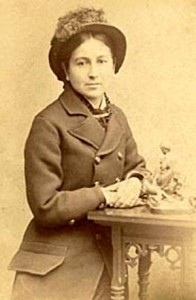
Susette La Flesche Tibbles, an affluent woman of mixed Ponca, Iowa, and French descent, fought for the rights of Native Americans as a reporter and interpreter during the case of Standing Bear v. General George Crook in 1877 when, for the first time, Native Americans “were legally recognized as human beings.”[9] This landmark ruling was a major step forward for Native Americans, but legal recognition as human beings did not necessarily result in more humane treatment by the U.S. government.

Since the European invasion Native Americans were pushed off their land and forced to sign treaties that reserved only a small piece of their homelands for them and still today Native American reservations have some of the highest crime and poverty rates in the country.

Ten years after Standing Bear the Dawes General Allotment Act was signed into law. In trying to compel Native Americans to assimilate to white culture it did irreparable damage to the tribal structure of Native American communities by allotting small parcels of land to individuals in each tribe and then distributing the “surplus” amongst white colonizers. Heads of household received 160 acres, other adults 80, and minors 40, but until an 1891 amendment to the act married women were ineligible to receive land. After the amendment all adults regardless of sex or marital status were treated equally but the size of the allotments was halved.[10]

“The allotment policy depleted the land base, ending hunting as a means of subsistence. According to Victorian ideals, the men were forced into the fields to take on what had traditionally been the woman’s role and the women were relegated to the domestic sphere. This Act imposed a patrilineal nuclear household onto many matrilineal Native societies. Native gender roles and relations quickly changed with this policy since communal living shaped the social order of Native communities. Women were no longer the caretakers of the land and they were no longer valued in the public political sphere. Even in the home, the Native woman was dependent on her husband. Before allotment, women divorced easily and had important political and social status, as they were usually the center of their kin network.”[11]

“By dividing reservation lands into privately-owned parcels, legislators hoped to complete the assimilation process by forcing the deterioration of the communal life-style of the Native societies and imposing Western-oriented values of strengthening the nuclear family and values of economic dependency strictly within this small household unit.”[12]

Until the Indian New Deal overturned the act in 1934, some 90,000 Native Americans were made landless and an estimated 90 million acres of treaty land was taken from tribes across the country.[13]

“By the late nineteenth century U.S. policies toward Indians had deeply impoverished most tribes, particularly those confined to reservations in the West.”[14]

During the period in which the Allotment Act was active many women were working for more fair and just treatment of Native Americans such as Gertrude Simmons Bonnin, a mixed Nakota Sioux and white activist who worked in the Bureau of Indian Affairs (BIA), the government agency responsible for dealing with tribes in America.
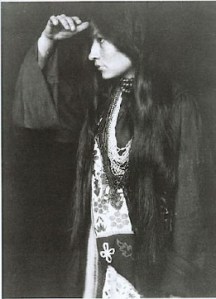
Bonnin supported the Society of American Indians, an organization established by Oneida activist Minnie Kellogg in 1911 to support pan-Indianism, or the unification of Native Americans for the rights of all tribes. The pan-Indianism movement began strong steps towards organizing various Native American tribes in 1912 when the Four Mothers Society, made up of people from the Chickasaw, Cherokee, Creek, and Choctaw nations banded together to take political action against the policy of allotment. In the same year the Alaskan Native Brotherhood and Sisterhood was formed to protect tribes’ natural resources.

Meanwhile Bonnin continued to be active in working for Native American rights until her death in 1938. She worked with the General Federation of Women’s Clubs to form the Indian Welfare Committee in 1921 and with the help of the Indian Rights Association persuaded the government to begin what would be the Meriam Report. Even though all Native Americans were finally granted U.S. citizenship in 1924, because Bonnin still felt Native Americans were being severely discriminated against by the government, she formed the National Council of American Indians in 1926.[15]

The Indian Reorganization Act (IRA) of 1934, also known as the Indian New Deal and the Wheeler-Howard Act, restored some sovereignty to Native American nations by allowing tribes to create their own governments and have input into reservation schools.

Even after this Native American children were forced to live in boarding schools far from their families. “The government still operates a handful of off-reservation boarding schools,”[16] and some students who attend them now are grateful for the opportunity to be surrounded by other Native Americans and practice their cultures. The reality of today’s Native American boarding schools lies in sharp contrast to the program implemented in 1879 that was based on a prison education system.

When Army Captain Richard Pratt opened the first Native American boarding school, the Carlisle Indian Industrial School, he did so with this philosophy: “all the Indian there is in the race should be dead. Kill the Indian in him, and save the man.”[17]

Indeed many students were killed in the century in which Native Americans were forcibly removed from their parents, renamed, forbidden to speak their own languages, and imprisoned in off-reservation boarding schools. Hard manual labor and emotional, physical, and sexual abuse were rampant in these schools and rules and discipline were often inappropriate and dangerous.

The Problem of Indian Administration, commonly referred to as the Meriam Report, published in 1928 was a scathing review of the U.S. government’s handling and treatment of Native Americans in all aspects of life. One comment on the teaching methods utilized in the boarding schools stated:

“If there were any real knowledge of how human beings are developed through their behavior, we should not have in the Indian boarding schools the mass movements from dormitory to dining room, from dining room to classroom, from classroom back again, all completely controlled by external authority; we should hardly have children from the smallest to the largest of both sexes lined up in military formation; and we would certainly find a better way of handling boys and girls than to lock the door to the fire-escape of the girls’ dormitory.”

After the Meriam Report, in the 1930s, “educated Indians were determined to fight for the rights of Indian people…. Indian women, such as Gertrude Simmons Bonnin and Ruth Muskrat Bronson, rose to prominence in this movement, which became known as Pan-Indianism because it encouraged Indians of many different tribes to work together to solve their common problems.”[18]

Bronson, a Cherokee woman who worked for the BIA, wrote Indians Are People Too and “she cautioned non-Indians that romanticizing Indian people could be just as destructive as stereotyping them. In the 1940s she also became involved with the National Congress of American Indians (NCAI), a national tribal organization dedicated to defending Indian rights.” Formed in 1944, today the NCAI is one of the largest organizations working for the welfare of Native Americans in the UNited States. [19] She also worked to improve living conditions on Native American reservations through her creation of the women’s group Ee-Cho-Da-Nihi.

Another Native American woman who was actively fighting for civil rights during this time was Alice Mae Jemison, of mixed Cherokee and Seneca heritage. Because the BIA had “promoted several policies that were meant to ‘protect’ Indians but that had ultimately helped to make them the poorest minority group in the nation,” Jemison published a newspaper article in 1933 which demanded the government “Abolish this bureau with its un-American principles of slavery, greed and oppression and let a whole race of people, the first Americans, take their place beside all other people in this land of opportunity as free men and women.”[20] In 1935 Jemison also served as the official spokesperson for the American Indian Federation.

The latter half of the 20th century saw major participation by Native American women in fighting for justice. Betty Mae Tiger Jumper, of mixed white and Seminole heritage, made history in 1967 when she became the first elected female tribal chief of any Native American tribe.[22] Her success helped to pave the way for other Native women.

The American Indian Movement (AIM), “Largely composed of young urban Indians inspired by the African-American civil rights movement of the early 1960s… advocated a renewed respect for Indian traditions and sought to make the U.S. government live up to the treaty promises it had made to Indians throughout the country.”[23] Also known as the Indian Rights Movement and Red Power, AIM included many female activists who were integral to its key campaigns such as the occupation of Alcatraz Island, the Trail of Broken Treaties–a protest march at the nation’s capital, and the occupation of Wounded Knee, amongst other activities.
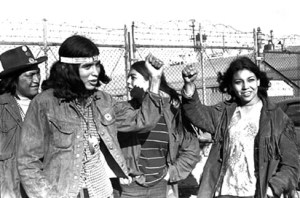
One young mixed Lakota Sioux and white activist, Mary Brave Bird, even gave birth at Wounded Knee as “a symbol of renewal, a tiny symbol, a tiny victory in our people’s struggle for survival.”[24]

Wilma Mankiller, a disabled, mixed white and Cherokee woman, was vital in organizing and fundraising for the occupation of Alcatraz by Native Americans. She would go on to be elected the first female chief of the Cherokee Nation from 1985-1995, despite concerns that “electing a female deputy would be an affront to God and would make the Cherokees a laughingstock among other Indian groups.”[25]

Other prominent Native American women active during the 1970s included Ramona Bennett, chairperson of the Puyallup Tribal Council whose “combative brand of activism during this turbulent period helped prevent the dissolution of her tribe,”[26] and Ada Deer who founded Determination of the Rights and Unity of Menominee Shareholders (DRUMS) and has thus far been the only woman to head the BIA as the Assistant Secretary-Indian Affairs, from 1993-1997.[27][28]

Choctaw activist Owanah Anderson was also an integral member of the fight for Native American women’s rights in the 1970s. She served in 1977 as a co-chairperson of the Texas delegation to the Houston Women’s Conference, and then joined the Committee on the Rights and Responsibilities of Women under the Department of Health, Education, and Welfare. “From 1978 to 1981, she also served on the Advisory Committee on Women organized by President Jimmy Carter, [and she] founded the Ohoyo Research Center in 1979.”[29] In the past she also served as a project director for the National Women’s Development Program and on the board of directors of the Association for American Indian Affairs. While Anderson is well known throughout Native American communities for her activism, her Micmac contemporary, Anna Mae Aquash has achieved legendary status.

Aquash participated in the Trail of Broken Treaties and was married during the Native American occupation at Wounded Knee to showcase “her commitment to the fight for Indian rights.”[30] Aquash was an effective organizer and leader, drawing Native American women into the causes of AIM when its male leaders could/would not. Tragically, Aquash was murdered shortly after participating in Wounded Knee with AIM leadership claiming it was the work of the FBI and many Native American women claiming it was the work of the male leaders of AIM “who incorrectly believed she was a traitor.”[31]

Today the group Indigenous Women for Justice[32] fights for an answer in Anna Mae Aquash’s murder and follows the events of the trials of those men who have been accused with involvement in her murder nearly 35 years ago.

Native American women today are just as active in fighting for their rights as Native Americans and as women as they were 40 years ago. In 1970 white and Comanche activist LaDonna Harris created Americans for Indian Opportunity and has served as its president ever since. Her active involvement in environmental issues and feminism in conjunction with indigenous issues have made her a force to be reckoned with. She chaired the National Women’s Advisory Council of the War on Poverty in 1967; served as a representative of the Inter-American Indigenous Institute; was a presidential appointee to the U.S. Commission on the Observance of International Women’s Year,[33] the National Council on Indian Opportunity, the White House Fellows Commission, and the Commission on Mental Health; has served on dozens of national and advisory boards dealing with women’s and indigenous issues including NOW and the ACLU; and participated in the founding of the National Indian Housing Council, the Council of Energy Resource Tribes, the National Tribal Environmental Council, the National Indian Business Association, Common Cause, the National Urban Coalition, and the National Women’s Political Caucus.[34]

Another environmental activist, Winona LaDuke, an Ojibwe and Jewish woman, founded the White Earth Land Recovery Project,[35] the Indigenous Women’s Network, and Honor the Earth.[36] She was previously involved, as were many of the above-mentioned activists, with WARN– Women of All Red Nations, to prevent forced sterilization among Native American women.

Other women like Paula Gunn Allen, a mixed Laguna Pueblo, Sioux, Lebanese and Scottish author, worked to increase tolerance for gays and lesbians within Native American communities. Gunn Allen did so with her work The Sacred Hoop: Recovering the Feminine in American Indian Traditions[37] while Chyrstos, a Menominee, Lithuanian and French two-spirit has done so with her work Not Vanishing and by contributing to This Bridge Called My Back: Writings by Radical Women of Color.

Another two-spirit activist, Ojibwe Carol LaFavor fights for Native Americans with HIV/AIDS and founded Positively Native to support the Native American community. Other organizations in which Native American women fight for their rights include the United Indians of All Tribes Foundation,[38] the American Indian Institute,[39] and the Native American Rights Fund.[40]

Native American have fought since their first interactions with white invaders for their rights and will continue to do so within whatever women’s/indigenous/women of color framework they choose. “Like women everywhere, indigenous women do not want others defining for them what it means to be a woman.”[41]


[1] Camper, Carol ed. 1994. Miscegenation Blues: Voices of Mixed Race Women. Sister Vision: Toronto, Canada.

[2] American Women’s History Doris Weatherford. 1994. Prentice Hall General Reference: New York.

[3] Sonneborn, Liz. A to Z of Native American Women. Facts on File, Inc.: New York. 1998.

[4] Sonneborn, Liz. A to Z of Native American Women. Facts on File, Inc.: New York. 1998.

[5] Laframboise, Sandra and Michael Anhorn. 2008. The Way of the Two Spirited People: Native American Concepts of Gender and Sexual Orientation. Dancing to Eagle Spirit Society. 30 June 2010.  http://www.dancingtoeaglespiritsociety.org/twospirit.php

[6] Sonneborn, 1998.

[7] Ibid.

[8] Mankiller, Wilma. 2004. every day is a good day: Reflections by Contemporary Indigenous Women. Fulcrum Publishing: Golden, Colorado.

[9] Sonneborn, 1998.

[10] “Indian General Allotment Act (Dawes Act) (1887).” Major Acts of Congress. Ed. Brian K. Landsberg. Macmillan-Thomson Gale, 2004. eNotes.com. 2006. 1 Jul, 2010 http://www.enotes.com/major-acts-congress/
indian-general-allotment-act-dawes-act

[12] Gibson, Arrell M. “Indian Land Transfers.” Handbook of North American Indians: History of Indian-White Relations, Volume 4. Wilcomb E. Washburn & William C. Sturtevant, eds. Washington DC: Smithsonian Institution, 1988.

[13] Case DS, Voluck DA (2002). Alaska Natives and American Laws (2nd ed. ed.). Fairbanks, AK: University of Alaska Press.

[14] Sonneborn, 1998.

[15] Sonneborn, 1998.

[16] Bear, Charla. 12 May 2008. “American Indian Boarding Schools Haunt Many.” National Public Radio. 1 July 2010 http://www.npr.org/templates/story/story.php?storyId=16516865

[17] Bear, 2008.

[18] Sonneborn, 1998.

[19] Sonneborn, 1998.

[20] Sonneborn, 1998.

[22] Sonneborn, 1998.

[23] Sonneborn, 1998.

[24] Ibid.

[25] Ibid.

[26] Ibid.

[27] Ibid.

[29] Sonneborn, 1998.

[30] Ibid.

[31] Ibid.

[33] Sonneborn, 1998.

[37] Sonneborn, 1998.

[41] Mankiller, 2004.


Day 4- Latina/Chicana Women’s Activism in the US

Like their black sisters, women of Spanish/Hispanic/Latina/Chicana/Tejana heritage in the United States grapple with the naming of their own identities, and in the past, faced overt racist violence in the form of segregation and lynching. While northern cities may not have had “White Only/Black Only” signs (usually because there were too few blacks) many businesses had signs that read “No dogs or Mexicans.”

Like their Native American sisters, Latinas have been robbed of their land, deprived of their language, and marginalized where they were once the majority. States from Florida to California have large Latino populations, due in large part to the fact that these states belonged to Spain and Mexico for many years, but Latinos are still routinely discriminated against in healthcare and education.

Like their Asian sisters, Latinas have struggled and continue to struggle with sweatshop labor practices, racist attitudes and immigration laws. Latina women earn the lowest income out of any other group, and face ridiculous obstacles to legal immigration to America.

Like their Middle Eastern sisters, Latinas in the United States are assigned an identity. Mexican on the West Coast y en la frontera or Cuban or Puerto Rican in Florida, any Spanish-speaker in the U.S. is assumed to be from one of these three places, with white Americans completely disregarding the rest of the Western Hemisphere. Latinas are also extremely racialized when they are (rarely) seen in the media and almost exclusively objectified as sex symbols. In fact, Selma Hayek was turned down for the role of El Salvadorian Alicia Nash in A Beautiful Mind because she was seen as too sexy, and the casting director thought it would be unrealistic for a Latina to be that intelligent (never mind that the film is based on a true story).

Despite the fact that the economy of the United States runs on the hard labor of ill-paid Latino immigrants, states like California have made bilingual education illegal, and Arizona is taking the lead on legalized racism.

Latinas have faced racism in what is now the United States since the 1840s, before much of the western territories even became states. As early as 1911 Mexican women, like Jovita Idar, in the United States were working towards equality with La Liga Feminil Mexicanista (the Mexican Women’s League).[1]

In the same year Puerto Rican feminist and socialist Luisa Capetillo wrote Mi opinión sobre las libertades, derechos y deberes de la mujer como compañera, madre y ser independiente, (My opinion about the freedoms, rights and responsibilities of woman as companion, mother and human being) in which she analyzed “the situation of women in society, focusing on what she viewed as the oppression and slavery of women and affirming that education is the key to freedom.”[2] She fought for universal suffrage and had an uncanny ability to “interweave the issues of the private world (such as the family, single motherhood, and women’s rights in general) with those of the public world (such as politics, wages, and education).”[3]

In 1915 the Plan de San Diego was drafted, it “called for a force of Mexican Americans, African Americans, and Japanese to liberate the states of Texas, New Mexico, Arizona, California, and Colorado from the United States and create a free society comprised of people of color.”[4]

From then on Latinas have been active in the fight for social justice and equality in the United States.

Because Mexican Americans form the largest portion of the Latino population in the U.S, nearly 65 percent,[5] their activism is the most visible with groups such as LULAC, the League of United Latin American Citizens, forming in 1929.[6]

Although LULAC was formed by Mexican Americans today the organization fights for the advancement and rights of “all Hispanic nationality groups.” This trend is common throughout Latino organizations, most of which sprang from the Chicana/o (Chican@) rights movement or El Movimiento.

El Movimiento began in the 1960s as an extension of the Mexican American Civil Rights Movement in the 1940s. Mexican American veterans returning to the United States after WWII formed the American GI Forum (AGIF)[7] in 1948 to fight for medical benefits they were being denied because of their ethnicity. AGIF is still active today and has expanded their cause to serve all Hispanic veterans and fight for all civil rights.

In both LULAC and AGIF, women’s participation in auxiliary groups soon transformed the organizations themselves to fight for equality for all people. These two organizations were also actively involved in the landmark Supreme Court ruling in 1954 of Hernandez v. Texas, which extended equal protection under the 14th Amendment to all racial groups.

The Chican@ movement, though fraught with controversy, has been an important part of the fight for all people’s civil rights since the mid 20th century. The term Chicana, (sometimes Xicana) once used to degrade children of Mexican immigrants, is now a label of pride for many Mexican and other Latino Americans. Tejanas are women of Chicana heritage from the state of Texas.

“Almost from the very beginning of the Chicano Movimiento, Chicana activists and scholars criticized the conflation of revolutionary commitment with manliness or machismo….”[8]

Chicana feminists are largely responsible for the push for women’s visibility within El Movimiento; a clear example of this is the use of Chican@ to mean both Chicano men and Chicana women. Because in Spanish the male form of any adjective is assumed to be applicable to women, Chicana activists rejected this linguistic sexism and pushed for the use of Chicana/o to identify any group made up of Hispanic men and women. The @ symbol came to simplify the term.

Many organizations that originated in the 1960s Chican@ Rights Movimiento started out working for the rights of Mexicans in the United States but soon expanded their reach to all Latino Americans. MEChA is one such group.

Formed in 1969, the Movimiento Estidantil Chican@ de Aztlán is a student group that fights for the rights of all people of Aztlán (the Southwest United States that was annexed from Mexico during the Mexican-American War and was named in recognition of the fact that the Mexica and Aztec people were indigenous to this area) and strives “for a society free of imperialism, racism, sexism, and homophobia.”[9] Though the MEChA website urges political participation and education, mainstream, white America sometimes sees them as a militant group.

La Raza is another controversial term used by Latino Americans, meaning “The Race.” Within El Movimiento it is understood to be a term of endearment for Mexicans but is sometimes interpreted as racism against non-Latinos. Again, ideas, terms, and political goals that once applied specifically to Mexicans in the U.S. now apply to all Latinos in America.

Other important and active groups in the fight for civil rights from education to legal issues include the National Council of La Raza (NCLR),[10] the Mexican American Legal Defense and Education Fund (MALDEF),[11] both founded in 1968, the National Association of Latino Elected and Appointed Officials (NALEO)[12] formed in 1976, and the National Hispanic Institute (NHI),[13] established in 1979.

While the above organizations and others like the Mexican American Youth Organization (MAYO) created in 1967 and the Raza Unida Party (RUP) created in 1970[14] had women in their ranks, some, like the Chicana/Latina Foundation formed in 1977[15] and the Association of Chicana Activists (AChA) established in 1991,[16] were specifically formed by Chicanas to work for the needs and rights of Latina women within the United States. Both the Chicana/Latina Foundation and AChA were formed by college women in California who recognized the need to support other Latina women who may not have the same opportunities they had, while fighting against the racism and sexism of the educational system in the United States.

The work of Chicana feminists both within and without the university system has been key to cross-class activism. Much of the criticism faced by the Chican@ movimiento, especially by groups like the United Farm Workers of America (UFWA),[17] formed by Cesar Chavez, Larry Itliong, and Dolores Huerta,[18] related to the educated, middle-class position of many Chican@ activists. The UFWA remains a powerful working-class union and a strong bond between the Latino and Asian farming communities.

Chicanas have used many types of nonviolent action to realize their goals, from marches, rallies, strikes, boycotts and walk-outs to the highly successful “Day Without a Mexican” campaign and are learning just how much power they wield. All of the moderate and liberal Latino organizations in the United States have voiced their opposition to Arizona’s new discriminatory laws, with some supporting a full boycott of the state.

Currently the UFWA is heading the “Take Our Jobs” campaign,[19] a play on the complaint by white Americans that Latinos are taking all of the available employment in the U.S. They are encouraging unemployed white Americans to take to the fields and sustain agriculture in the same way the Latino community does.

The UFWA is unique among Chican@ organizations in that it clearly states its commitment to nonviolence and taking disciplined action as one of its founding principles. Other organizations do not promote violence but are not as explicit in their call for nonviolence as was Cesar Chavez who “had very little patience for expressions of machismo among his activists.”[20] Chavez’s commitment to nonviolence and equality made the struggles against classism, racism, and sexism more legitimate to the mainstream Chican@ Movimiento despite the fact that Chavez was so radical in his fight against classism and racism that he disassociated himself from El Movimiento.

“In his view, the idea Chicano/a identity promotes does not operate to ease racial prejudice in society but, rather, reinforces the patterns of thinking that underlie it. He takes the idea of Chicano/a identity promoted by such nationalism to be an oppositional identity. That is, Chicano/a identity derives its content primarily by defining itself against, or by rejecting, white mainstream culture.”[21]

By openly combating the dichotomous way Chican@s and other working-class people see race, Chavez and the UFWA helped open the door to fighting against other social constructions that promote bigotry.

Chicana activists and feminists have had much to fight for and against recently, including forced sterilization due to racism and linguistic discrimination. In 1983 the director of the National Latina Health Organization (now the National Latina Health Network, NLHN) Luz Alvarez Martinez, decided “to create a health information service for Hispanic women” because economically disadvantaged Spanish-speaking women were not being offered any other form of birth control besides sterilization.[22] She was also one of the first women in the Chican@ community to raise the need for services in Spanish in women’s shelters.

Journalist Yolanda H. Alvaro also combats racism, classism and sexism against Latina women within the fight for the rights of the disabled. She understands that “the women’s movement is a great training ground for Hispanic women in organizing and… a lot of women’s concerns are Hispanic concerns.”[23]

2010 was a historic year for addressing women’s concerns and Hispanic concerns in the United States as the first Latina woman was appointed to the Supreme Court, Justice Sonia Sotomayor.

Like all their American sisters, Latinas have been subjected to sexism and misogyny under the hierarchy of patriarchy in the United States and have actively and strategically worked against sexism, racism, homophobia, and classism to create a more just society.


[1] Palomo Acosta, Teresa and Ruthe Winegarten. 2003. Las Tejanas: 300 Years of History. University of Texas Press: Austin, Texas.

[2] Notable Hispanic American Women Eds. Diane Telgen and Jim Kamp. Gale Research Inc. Detroit, Michigan. 1993.

[3] Ibid.

[4] Palomo Acosta, Teresa and Ruthe Winegarten. 2003. Las Tejanas: 300 Years of History. University of Texas Press: Austin, Texas.

[5] Pew Hispanic Center. 2007. “Table 5. Detailed Hispanic Origin: 2007.” Statistical Portrait of Hispanics in the United States, 2007.  Pew Hispanic Center: Washington, D.C. 28 June 2010 http://pewhispanic.org/files/factsheets/hispanics2007/Table-5.pdf

[8] Orosco, José-Antonio. 2008. Cesar Chavez and the Common Sense of Nonviolence. University of New Mexico Press: Albuquerque.

[14] Palomo Acosta and Winegarten, 2003.

[18] See http://www.chicanas.com/chingonas.html for a list of other Chicana activists who have left their marks on the civil rights movimiento.

[20] Orosco, 2008.

[21] Ibid.

[22] Notable Hispanic American Women Eds. Diane Telgen and Jim Kamp. Gale Research Inc. Detroit, Michigan. 1993.

[23] Telgen and Kamp, 1993.