Author Archives: feministactivist

About feministactivist

Unknown's avatar
Many words describe me but none more so than activist. I am dedicated to equality of all people and have a special focus on gender issues including reproductive justice, sexual violence, and strategic nonviolent action.

16 Days of Activism Against Gender Violence

Today marks the beginning of the annual 16 Days of Activism Against Gender Violence campaign starting today with the International Day for the Elimination of Violence Against Women and ending December 10 on International Human Rights Day.
Key dates throughout these 16 days include:

This year’s theme is From Peace in the Home to Peace in the World: Let’s Challenge Militarism and End Violence Against Women! In a roundabout way Feminist Activism will deal with militarizism by exploring masculinity. Over the next 15 days I will be posting pieces from guest authors, men who volunteered to write and share their thoughts on gender-based violence.

Authors come from France, Germany, Iran, Turkey, the UK and the US so please keep in mind that many authors are not native English speakers and the ideas expressed may not coincide with my own. Check back starting tomorrow to read some very insightful and varied opinions from some thoughtful and feminist men, or subscribe so the newest posts automatically land in your inbox!

If you’re inspired to participate in the 16 Days Campaign you can check out the United Nation’s UNiTE Say No to Violence suggestions of 16 actions for 16 days, or read and share UN Women Executive Director Michelle Bachelete’s 16 Steps Policy Agenda to end violence against women and girls. And wear a white ribbon!

Also, good thoughts and wishes of quick healing are with Mona Eltahawy, an American-Egyptian journalist who was recently brutalized and sexually assaulted by riot police in Cairo. The dangers of being a woman are compounded by the dangers of journalism, and vice versa, so let’s take the time to advocate for everyone’s human rights! See you back here tomorrow.


Love Your Body Day

October 19 is Love Your Body Day, something I’ve been celebrating since I was introduced to the concept in college at San Diego State University by the courageous members of the National Organization for Women. Erin Matson, NOW’s Action VP had this to say about body image and loving yourself. And while I very much appreciate Meghan McCain’s courage in posing for the NOH8 Campaign and openly discussing body image issues, the photo chosen by Hollywood NOW to showcase their Celebrity Host could not possibly fit any tighter into the media box of what women in America are supposed to look like. Welcome to the 2011 Love Your Body Day Blog Carnival.

Many issues arise when talking about body image, especially for women; and for all we (especially feminists) talk about personality and intelligence and inner-strength being more important than outer-beauty… the truth is, in every society, women are judged on outward appearance.

From men in America and the UK navigating body image standards set up by advertising and the porn industry to transsexuals in Iran fighting stigmas of “abnormality” to young girls in Cameroon being subjected to breast ironing to the more than 100 million girls and women worldwide suffering the effects of Female Genital Mutilation (FGM), unfortunately our bodies are battlegrounds.

Eating disorders affect more than 10 million people a year in the US alone, so think twice before you praise someone for loosing weight. Eating disorders affect women, girls, boys and men around the world, with silverchair’s frontman Australia-native Daniel Johns being one of the most recognized male celebrities suffering from anorexia anywhere. Because of the incredibly unhealthy body images fed to us by the media cosmetics is a multi-BILLION dollar industry and rates of plastic surgery to “beautify” everything from earlobes to vaginal labia are skyrocketing.

So, as always, I want to give suggestions for you to improve the world around you. How can we fight the Ariel complex of altering our bodies and loosing our voices to be attractive?What can you do to promote realistic body images of real people? Speak up! Learn to accept that hundreds of body types exist and are natural; don’t give in to media standards fueled by capitalist greed designed to make you spend money; demand that stores carry your size clothes and shoes whether you’re a naturally tiny size 0 or a naturally curvy size 20; look up to real people around you for inspiration, your teachers, parents, and mentors, not airbrushed and nip/tucked celebrities; if someone tells you you’re ugly/fat/unloveable/don’t-fit-neatly-into-the-claustrophobic-boxes-built-by-the-media, tell them to fuck off; and send sexist ads into Ms. Magazine’s No Comment section. Understand that differences, especially body differences like sex, (dis)ability and race, are beautiful!

Finally, what’s the most important thing you can do? Love your body! “The moment we choose to love, we begin to move against domination, against oppression. The moment we choose to love, we begin to move toward freedom, to act in ways that liberate ourselves and others.”- bell hooks


Domestic Violence Awareness Month

October is Domestic Violence Awareness month. If you need to raise your awareness levels you can re-read any of the Feminist Activism blogs from the third week of March (like Day 21- Violence Against Women in the US or Day 20- RAINN & NDVH or Day 15- The Clothesline Project). Also check out Ethiopian Feminist to learn about DV and a particularly gruesome case there, and A Hmong Woman for some insight into DV in America’s Hmong community and to enter a discussion on the effects of patriarchy and gender roles on DV survivors. You can then see the trailer for Education sans Excision about Female Genital Cutting/Mutilation (FGM/FGC) featuring Senegalese rapper Sister Fa. And watch the trailer for Crime After Crime, about a woman’s attempt to get justice after being imprisoned for her connection to her abuser’s murder.

You can also participate in the UNiTE Campaign to End Violence Against Women by voting on T-shirt designs to spread the message that it’s time to stop the violence. For an interesting art piece exploring masculinity see Man of the House. I also highly encourage readers to check out Man Up, a campaign directed towards men who want to stop violence against women. And don’t forget that all year-round your local DV shelters need donations of money, supplies and time. Volunteer! And make the world a better place.

As some of you may know between November 25 (the International Day for the Elimination of Violence Against Women) and December 10 (International Human Rights Day) is the international campaign 16 Days of Activism Against Gender Violence. For me everyday is a day to take action against gender violence but for those of you who have other jobs, this is a call to action.

I am opening up the floor, to my male readers in particular, for readers to share their perspectives on gender-based violence, and will offer my blog as the platform. I would love to have enough guest posts for each day of the 16 Days campaign. Ideally the post would be 500-750 words (although more or less is fine too) and would feature your perspective on VAW and what can/should be done about it. I will spell/grammar check it for you before it’s published. ;)You are welcome to look at it from any angle you like and I encourage you to think about how race, class, (dis)ability, sexual orientation, gender identity, age, education, nationality, religion, location, language and education change the situation. Whether you are interested in the laws in your country and how they punish (or not) perpetrators or you’d rather delve into the creation of masculinities in your culture that leads some men to violence, or any other side of the story, is totally up to you. Because I have a good group of amazing feminist men in my life this project is already well underway but if you would like to participate (and I don’t already know it) leave a comment and I’ll contact you about it. The deadline is October 31 so you have plenty of time to think and write and revise. Thank you in advance!


International Day of Peace

Today, September 21, is the International Day of Peace. Today is a day to be inspired by the acts of love of the millions of people around the world who all share the same goal: peace.

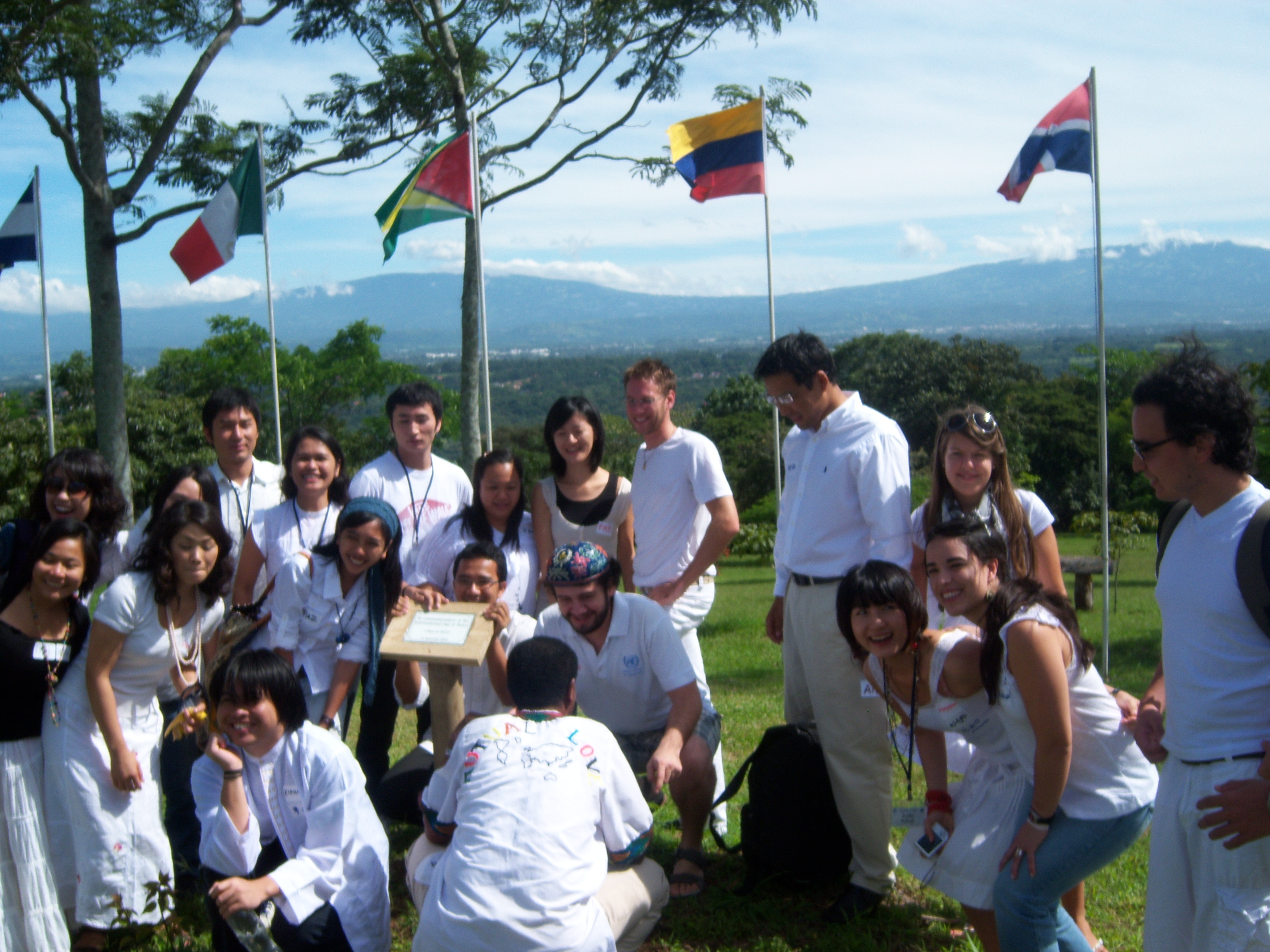
Planting a tree at the 2009 International Peace Day at the University for Peace.

Everyone’s definition of peace is different and even amongst the most outspoken peacebuilders the importance of inner peace versus world peace is addressed regularly. I firmly believe that working for equality and justice is the most important thing anyone can do with her/his/hir life. I also believe that the journey to help others is much more difficult if you cannot first help yourself, so with that in mind, if you need to achieve some balance, love or light in your life here are some suggestions:

For me, peace will come with true equality. Happy Peace Day everyone!
Love one another.

Three Women, Three Struggles

Originally posted on In Women’s Hands, the following post will serve as an introduction to my trip to Bosnia and the amazing friends I made there.

The flag of Bosnia & Herzegovina at the Srebrenica-Potocari Memorial and Cemetery. Photo by Morrarovic Photography

With different goals reached through the use of various tactics in distinct circumstances, it may be difficult to see the similarities in the nonviolent struggles that Leila Seper, Advija Ibrahimovic, and Iltezam Morrar are actively involved in. While their situations are diverse, they are each struggling somehow for the same things: equality and justice. Fighting for justice, in its many forms, is not just an option for these three dedicated women and the activists by their sides– it is a necessity.

The other commonality among them is their age: all of them represent the new face, the next generation of women activists. Skilled in social media, willing to face risks, and aware of the fact that the more people who understand their struggle, the broader impact they will have, Iltezam, Advija and Leila have accepted that changing the world — locally, nationally, and globally — is a daily responsibility.

Leila is an expert in using humor to explain Dosta!'s serious work. Photo courtesy of Dosta!

Leila Seper, an outspoken member of Sarajevo’s young and expanding activist community, uses her quirky sense of humor, and the brand recognition of Dosta!, to actively demonstrate to Bosnians of all ethnic and religious groups that they must fight for equality and human rights. An active supporter of worker’s rights, student rights, environmental protections and women’s rights, Leila takes on every challenge with conviction, enthusiasm, and a sense of humor.

Advija enjoying some rare downtime. Photo by Morrarovic Photography

Advija Ibrahimovic, the youngest member of the Women of Srebrenica Association, has learned the skills of successful activism from some of the most seasoned activists in Europe – the Women of Srebrenica. Fighting for legal justice, accountability, and recognition of the horrors that took place during the Srebrenica genocide that left her and her siblings orphans, Advija has also been educated as a nonviolent action trainer by the Alternatives to Violence Programs. Chosen to represent the Association during the 2003 unveiling of the Srebrenica-Potocari Memorial and Cemetery, where she stood alongside President Bill Clinton, Advija’s upbeat, confident demeanor is contagious.

Hajra Catic, President and Founder of the Women of Srebrenica Association with Iltezam. Photo by K. Spangler

Iltezam Morrar, a wise-beyond-her-years medical student from Palestine currently studying in Sarajevo, draws on her family’s long history of nonviolent action in the continuing struggle against the Israeli occupation. Hearing her grandmother, father and uncles tell stories of their nonviolent activism during the First Palestinian Intifada, Iltezam became inspired to join the struggle at the age of 15. Her actions, and those of her fellow villagers in Budrus, quickly became exemplars for the next generation of Palestinian activists following the success of the Just Vision documentary highlighting their nonviolent struggles against the wall.

In the process of learning to identify with seemingly disparate women and reminiscing about nonviolent successes everyone went away with fresh insights and inspiration, as well as new friends. Leila taught us to keep a sense of humor even in the face of injustice, and to work with the authorities whenever possible to reassure them violence is not an option. Advija taught us that persistence pays off, and that even the humblest of citizens has the power to affect international politics when using the right methods. Iltezam too, taught us the importance of tenacity, and the need for clearly stated objectives when battling a much stronger opponent.

Leila, Iltezam and I watch as the International Commission on Missing Persons makes a positive DNA match to a fragment of remains found in a mass grave from the Srebrenica Genocide. Photo by K. Spangler

Each woman came away from our gathering with something different. Leila explained, “I get motivation from these meetings, when I see their [Women of Srebrenica] strength to fight.” Advija agreed, “You have to be determined. That’s the example for me.” Iltezam summarized everyone’s feelings in her own way, “I’m honored to be here to learn from these women.They are so strong, and we have so much to learn from them. They never give up.”

Our meeting proved to be a unique opportunity to learn, share and grow, and the inspiration from each woman’s struggle is sure to be a source of strength for each of us for years to come. And that’s exactly what we hoped for.


Israel/Palestine vs. Turkey/Kurdistan

Before I say anything about these two highly controversial, generally violent, and inherently unjust political and territorial situations I want to make my views on geo-political borders in general clear, first.

I do not believe in borders. I believe in the free and uninhibited movement of people, goods, ideas, and cultures all around the globe. I totally support individuals and/or communities in maintaining their ethnic identities including their languages, cultures, foods, clothing, traditions, dances, holidays, celebrations, etc. but personally I see no use in using violence to maintain imaginary lines on a map. I understand cultural, especially spiritual, ties to specific places, like certain Native American cultures have to specific rivers, lakes, forests and mountains, however, delineating certain areas as “ours” as opposed to “theirs” requires the “othering” of anyone outside the specific ethnicity.

I understand that the elimination of geo-political borders is not feasible at the moment, and would cause utter chaos and potentially even more violence and destruction, and so, I will engage you, dear readers, in a political discussion about these two hotly contested areas within the confines of the currently accepted understanding of nation-states, borders and “states’ rights.” In any case I entirely denounce violence as ineffective and immoral and would ONLY support nonviolent efforts by any actors hoping to have their human rights recognized. So then, the question I have for the world wide web (which I hope will be answered with intelligent, thoughtful commentary and constructive ideas, not jingoistic, trolling rants) is this:


How does the situation of Palestinians in the internationally recognized (but contested) borders of Israel differ from the situation of Kurds in Turkey?


I would especially like to hear opinions from Palestinians, Kurds, Turks, and Israelis, and people with experience in any of these lands. I am also interested in the views of people of any other ethnicities living within the borders of Israel and Turkey.

Does religion make a difference in the discussion? Does language make a difference? How effective have nonviolent efforts been in advancing the human rights of Palestinians and Kurds? Is the situation of women in the oppressed/unrecognized regions similar? Would the causes of Palestinian independence and Kurdish independence benefit from each other’s input and support? Or would Palestinians feel they are betraying other Arabs or their Turkish allies in calling on the political recognition of Kurds’ rights? I have no answers but I would love to learn from the community and then form an opinion.


Am I just paranoid, or…

Just because you’re paranoid don’t mean they’re not after you. – Kurt Cobain

I think that many of my female readers share my feelings of paranoia but if not please let me know I’m just crazy. With this post it is my male readers I hope to speak to. The purpose of this post is in no way to blame all men for the immoral and illegal choices of some men, rather, the aim of this post is to put more fire in the bellies of male allies in the fight for women’s equality. I also in no way mean to diminish or minimize the experiences of men, boys and transgender individuals who have been sexually assaulted or raped. Their traumas are just as real as any woman’s and certainly are not given the weight in our society that they should be. With this post I want you to know specifically what my grievances are, how I feel as a woman on a daily basis, and, most importantly, what you can do to help. With everything in the news lately and all the statistics available surrounding the heinous rates of violence against women and sexual assault and rape around the world, it’s easy for me to feel like women, and our rights, are under attack.

For most of my life I have felt vulnerable simply because I am female, to the point that I’ve taken self defense classes. I’m sure some of this fear comes from having been repeatedly sexually assaulted by male relatives as a girl, but even now, as an adult woman, I find my mind shift to dark thoughts quite often when I am in the company of strangers. To live in constant fear of violence is absurd and ultimately will make you crazy, and I hate that I buy into the rape culture myth that violence against women, especially sexual violence, happens at night when a stranger jumps out from around a corner and tackles you.

Most rapes are committed by someone the victim knows and 50% of all rape/sexual assaults occur within 1 mile of the victim’s home! The Service Women’s Action Network also explains how prevalent rape and sexual assault against members of the US military is in this publication. See previous posts on violence against women including Violence Against Women in the US, The Clothesline Project, Take Back the Night, the V-Day MovementRAINN and NDVH, and others for more information on the situation of women in the US.

Women in other parts of the world are in even more frightening situations. Today Al-Jazeera posted this article explaining why Afghanistan, the Democratic Republic of Congo, Pakistan, India and Somalia are the top five most dangerous places in the world to be a woman. Reasons ranging from the feminization of poverty, rape as a weapon of war, and harmful religious and cultural practices, to female infanticide and female genital mutilation affect the safety and livelihoods of women in these places.

Back in the US, Republicans are taking their misogyny global by trying to defund Planned Parenthood at home and abroad, using “states’ rights” rhetoric to make abortion unattainable for the most vulnerable women in their districts, and trying to reinstate the Global Gag Rule, which really does just make me want to gag. But women and men are standing up for equality and human rights, including the 373 people who sent in pictures of themselves to NARAL Pro-Choice’s Stop the War on Women video to the US Senate, the fierce founders and participants of the Hollaback! movement to stop street harassment, and the thousands (millions?) of people who have participated in SlutWalks around the world to protest a culture of victim-blaming surrounding sexual assault. SlutWalk deserves its very own post, despite the massive amount of press it’s already received, so look out for that.

I think our biggest issue in victim-blaming comes from our rape culture myth that what women wear or do or say affects their chances of being raped: it doesn’t. Women should not have to protect themselves or change the way they want to appear for fear of rape: People should not rape. Period. Women have been objectified by American society for quite some time and while reinforcing that women are objects to be seen is not ideal, women should be allowed to be seen however they want, and should be able to have sex with whomever they want, without any individual thinking that anything other than clear and sober consent means yes to sex. And in the spirit of Hollaback! what I choose to wear does not give you permission to yell at me either.

So, with all this in mind, am I just paranoid or

-do you wonder whenever you’re in the shower or using a public restroom or having sex with someone for the first time if a webcam is broadcasting your nakedness all over the internet?
-do you also check your backseat whenever you get in your car to make sure a stranger or stalker isn’t waiting to rape and/or kill you?
-do you get nervous when you step into a full elevator, worried that someone might touch you in an unwanted and sexual way?
-do you think twice before going somewhere you are unfamiliar with, in case there are dark corners for bad people to hide in?
-do you feel like you’re being watched in a disgusting, lustful way by men of all ages all the time?
-do you remind yourself that yelling “fire” is more likely to garner help than yelling “rape” when you feel like someone is following you?
-do you carry your keys in your hands, extended between your fingers as you make a fist when you walk home after dark?
-do you avoid making eye contact with strangers for fear that they will misread your friendliness for a sexual advance and then rape you?
-do you wonder, whenever you’re in a group, how many of the people with you have raped someone, or have been raped?
-do you have any idea what it’s like to feel like you’re the constant target of society’s violent sexual urges and need to control?

Ladies? Gentlemen?

But cheer up, there are lots of ways you can help!

-Don’t rape anyone: passed out, drunk, wearing next-to-nothing, came onto you before, had sex with you before, started a sexual encounter and then changed her/his mind, is underage… just don’t.
-If that isn’t clear, read this.
-If you still don’t get it, watch this.
-Don’t tell rape jokes.
-Don’t use the word rape to complain about the way your school, bank, job, or government is treating you.
-Don’t let your friends get away with telling rape jokes. Explain to them why it is hurtful, wrong and dangerous.
-Don’t let your friends get away with using rape to complain about institutions.
-If you hear someone bragging about a sexual assault or rape, call the police.
-If you’re in public and you hear/see someone harassing/assaulting someone else, call the police.
-If you hear/see domestic violence taking place, call the police.
-March in rallies for human rights, healthcare, immigration rights, economic freedom and marriage equality.
-Call or email your lawmakers and tell them to end the backlog of untested rape kits in your local police departments.
-Call or email your lawmakers and tell them to support the International Violence Against Women Act.
-Sign this petition to demand that the FBI change the definition of rape from “The carnal knowledge of a female forcibly and against her will” to something that includes date rape, oral, anal and statutory rape, rape with an object, finger or fist and rape of men.
-And share this post, and the many others out there like it written by feminist who are tired of being afraid, with anyone who can and will read it. Thanks for your support!


The Damning Effects of Militarization

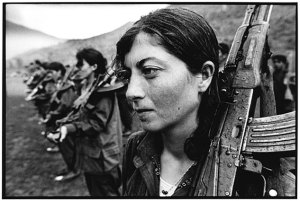
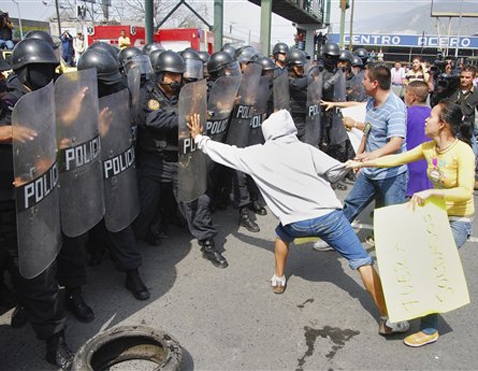
Militarization is the process of making society believe that violence, especially war, is an effective way to solve conflict to the point that any nonviolent attempt to solve conflict is snidely dismissed as ineffective, liberal, feminine, sissy or a whole host of other derogatorily used terms. The global problem of militarization takes different forms in every country, and even within each community. In Israel and Palestine troops attack women protesting the occupation. In Colombia women are participants and victims of violence perpetrated at every level of society. In Uganda those participating in the Walk to Work protest have been met with tear gas and bullets by the government’s security forces. I should be upfront here and say flat-out that I am very far left in my ideas of effective government: I don’t believe in borders or states. Imagine if the $553 billion defense bill just approved by the House was money spent on education, or healthcare, or ending violence….

Militarization is a gender issue. A gender issue is anything that disproportionately affects men, women, boys, girls and/or intersex or transgender adults or youth. Therefore, because militarization has a hugely disproportionate effect on men, men’s violences, and masculinities, it is a gender issue. It is also a gender issue in that anything defined as masculine can only be defined in opposition to that which is feminine, and because militarization of a given society negatively impacts men’s attitudes towards and treatment of women.

Many right-wing misogynists claim that feminists hate men, or that gender issues are only women’s issues, but militarization is a prime example of the genuine concern for well-being that many feminists around the world have for men who are part of the military. In graduate school one of my most influential professors, Dr. Sara Sharratt, opened my eyes to a reality that is often denied: killing people is not natural for anyone, male or female; men must be trained to kill. And as her work as a psychologist working with soldiers returning from war taught her, many men react negatively to having killed someone. The stress, trauma and horror that soldiers endure in battle is much too high a price for the false promise of “protecting freedom.”

Here in Turkey males are required by law to serve in the military, reinforcing the idea that there is honor in using violence. The belief in the effectiveness of violence is so strong in Turkey that even liberal, feminist groups condone the use of violence in protests and do not see the need or efficacy of strategic nonviolent action. Very few groups speak out against militarization here. One effect of this belief is that, according to a new report by Human Rights Watch, 47% of women in Turkey experience some kind of physical or sexual intimate partner violence within their lifetimes, regardless of education, class, religion, or region and much too few women’s shelters to accommodate the need. Violence between a couple is seen by police, the government, and society, to be a personal problem and victims are constantly told that they cannot expect their partners to be nonviolent.

In the United States there is better enforcement of laws against domestic violence and yet 1 in 4 women and 1 in 9 men in the US are victims of intimate violence at some point in their lives. Militarization in America is slightly more subtle than in Turkey, but commercials to “Go Navy,” be “Army Strong,” and join “The Few, the Proud, the Marines” constantly inundate television viewers. At the same time military recruiters are present on junior high, high school and college campuses to convince children that the military is their best route out of their hometown. Militarization is therefore a compounded heap of inequalities: class, race, gender, education, location, language, ability, and age.

Militarization in the US is forced on Americans at a very young age, when children at sporting events see the poorly named Blue Angels fly overhead with a roar as a giant American flag is unfurled across the playing field. The idealization of being a servant of war as a good, honorable thing is fed to Americans to serve the greed of the corporate world. We are taught from the time we can talk that America is the best place in the world, the most just, the most equal, the fairest. We have been lied to. We are told these things so that when our Commander-in-Chief calls on us to “protect freedom and liberty” and “stand up to injustice” our first response is to join the military killing machine so we can “serve our great nation.” This idea that the best thing a person can do for his country, the most masculine act possible, is serve in the military totally discounts the experiences of a great number of people in America including disabled men, transgender or intersex men, openly gay or bisexual men, men who believe in nonviolence, and women.

Unfortunately it is only after the damage of war has been done that many of the wide-eyed military recruits become hardened advocates for peace. The brave men and women who understand the error of the US’s ways in using violence and force to fill corporate pockets have formed a number of anti-war groups. Founded in 1985, Veterans for Peace, is seeking signatures for a petition to bring the troops home from Afghanistan. One of the newer organizations, Iraq Veterans Against the War, seeks an end to the occupations of Iraq and Afghanistan, and is pressuring the military to provide better care for returning vets. Vietnam Veterans Against the War states “We believe that service to our country and communities did not end when we were discharged. We remain committed to the struggle for peace and for social and economic justice for all people. We will continue to oppose senseless military adventures and to teach the real lessons of the Vietnam War. We will do all we can to prevent another generation from being put through a similar tragedy and we will continue to demand dignity and respect for veterans of all eras. This is real patriotism and we remain true to our mission.”

Cynthia Enloe renowned author and feminist, is one of the voices at the forefront of the anti-militarization effort. This piece nicely summarizes Enloe’s main arguments against militarization and its effects on women. Even non-governmental organizations, international organizations and peacekeeping missions are fraught with problems because of militarization, as Enloe and my professor Nadine Puechguirbal explain in a talk here on Haiti. For me, the most compelling argument against militarization is that violence does not work. It is ineffective! Nonviolent action, especially when used strategically, is an extremely effective tool for change and one that I hope more people will begin to utilize once they understand its efficacy. I will forever be indebted to Dr. Mary King for teaching me the strategy of nonviolence. In the future I will write a post summarizing the ideas behind SNVA.

If you want to do something to help end the militarization that is damaging the world here are a few ideas: teach girls to be strong, both physically and emotionally; teach boys they have a right to feel emotions and express them; teach all children the importance of respectful problem solving and dialogue; teach young people that there are many ways they can serve their country other than military service, including the Peace CorpsAmeriCorps, Job Corps, the Medical Reserve Corps, Citizen Corps, the Civilian Response Corps, and Serve Corps, as well as through thousands of non-governmental and non-profit groups; learn about strategic nonviolent action and then share what you know; and most importantly, practice strategic nonviolent action to bring an end to injustices around the world!


Socially Constructed Gender Roles: The Root of All Evil

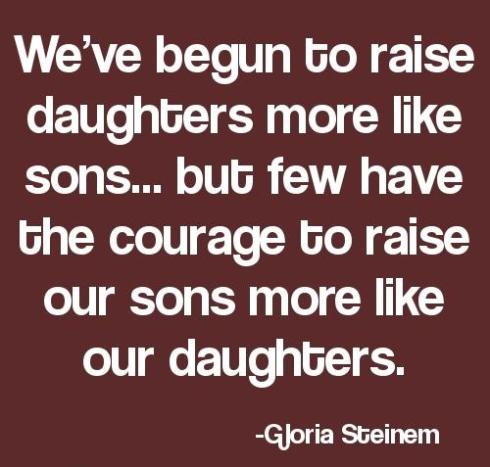
For me, inequality is the biggest issue facing humanity today because it is inequality that is the root cause of so many of the world’s problems. Environmental degradation– inequality in resource distribution and power relations. War- inequality between nations. Poverty and violence- inequality between individuals. I’m sure you’re wondering where socially constructed gender roles come into all this.

From the time the sex of a fetus is known, even before it is born, its gender is being socially constructed for it, telling it how a good boy/girl should look, sound, act, and think. This socialization process continues on everyday for the rest of one’s life. Every society and every family have their own ideas as to how a good boy or girl should be, and these ideas are consciously and subconsciously taught to children from the moment they are born.

As soon as a child is birthed in the United States it is wrapped in pink if it’s a girl and blue if it’s a boy so that the whole world has a visual cue of whether or not it’s appropriate to call the baby “tiny and pretty” or “big and strong.” The first question everyone asks when a child is born is, “Is it a boy or a girl?” (totally denying the existence of intersex people) because the answer shapes the entirety of how other people will relate to this tiny human being. And what is a socially acceptable way to relate to people of the same and the opposite sex varies greatly across time and culture. Many, many people have done research and explained this phenomena much better than I can with this post.

Now, I know some readers are thinking “What’s the big deal? Girls like pink, and they like to be called pretty. Boys are supposed to be strong.” This is where the fault lies. Yes, there are biological differences between the sexes, I am not denying that, but to demand that on the basis of external genitalia one child play with trucks and one with dolls is like trying to push a rabbit through a key hole– you may eventually succeed but it will be messy and not without serious injury.

This separation of the genders, the dichotomy of man/woman, is dangerous and illogical, for man can only be defined by what he is not: woman, and vice versa. The danger lies in dichotomies themselves for the most basic pairing is good/bad, therefore in any other dichotomy society forms one side will equate to good and one side to bad (masculine/feminine, light/dark, straight/gay etc.).

From this we learn as young children that men are rational, strong, and intelligent AND that these are the traits a leader must embody. To contrast, we learn that women are emotional, fragile, and intuitive and that these traits are not suited to leadership. Therefore if a woman wants to become a leader, wants her voice to be respected and heard, she must take on “masculine” traits at great risk to her femininity and marriageability. At the same time if a man embodies the “feminine” qualities of being emotional, fragile and intuitive, he is seen as less than a man and inherently unworthy of respect.

Women in nearly all societies around the world at disadvantaged from the moment they are born simply because the rules have been written to favor males. For a very long time women in the US were relegated to the private sphere, if they had the class privilege, and men were expected to be in the public sphere. Again, the dichotomy here public/private reinforces what is important and what is “personal” and therefore unimportant, respectively.

The male norm of reference (ie. when someone says, “Think of a person,” most people think of a man) means that women are expected to be able to physically and emotionally act like men if they are to compete in the public sphere while men who wish to stay home and care for their children, though ridiculed for their choices, are not expected to give up their “masculine” traits. Sports and physical strength is the best example of this. Over and over again in opposition to the idea that men and women should be equal is the statement that men and women are not physically equal. True. Yet, the definition of what physical strength is was written to describe a man! Practically all sports were invented by men and then when women cannot best men at their own game they are considered undeserving of equality???

Such strong messages are sent to children from a very early age as “Boys don’t cry” and “Good girls sit with their knees together” are uttered across America. This idea that to be “ladylike” is to take up as little space as possible, while men are encouraged to show their physical abilities by taking up as much space as possible, not only reinforces the sexist public/private dichotomy but also leads to low self-esteem and eating disorders.

What we tell children they are, can be and should do has a profound impact on each individual child. If a child grows up being told s/he can do and be whatever s/he wants, that child will usually believe it, whether or not success is to follow. For children who grow up in poverty whose parents don’t have the time, resources or role models to encourage their children to great heights, those children will unfortunately probably continue to live in the cycle of poverty.

The same is true of gender expectations. If a young boy is playing and scrapes his knees he is told to buck up and so, stops crying, at which point some loving adult says “Boys will be boys.” Check that article out for a great POV on how gender roles harm boys too. In many families the same scenario with a daughter would play out quite differently, if a young girl scraped her knees playing she might be chided for being “too tomboyish” while the loving adult in her life will lament that now she won’t look pretty in her Sunday dress.

I maintain that this most basic reinforcement of inequality that permeates every single component of our lives, is the basis for and the rationale behind anyone’s ability to perpetuate inequality on any other level. It is no shock that the leaders of most companies that perpetuate environmental degradation and most of the world’s powerful politicians are male, that most violence in the world is carried out by males, and that most of the world’s poor are women. Men (and women) have been taught all their lives that men are better, and to be “good masculine men” they must be physically dominant, stoic, and decisive. It is no surprise these traits carry over into their leadership styles which then impact every aspect of life and maintain inequality.

This is not to say, in any way, that there are not brave, heroic men and women and intersex people all over the world fighting against inequality. Everyday people risk their lives fighting against environmental degradation, war and poverty, and speak out against violence against women, children, the elderly, the disabled and the LGBTQAI community. (See what I mean about the male norm of reference! If you’re not a young, nondisabled, straight white male you’re the Other.)

Every fight against injustice and inequality is a good one and worth the fight (as long as its nonviolent… and we’ll get in to strategy in another post) but those hoping for true equality will always fall short of the mark if they do not address the underlying cause of all inequalities: gender inequality caused by socially constructed gender roles. The following quote by Graça Machel, President of the Foundation for Community Development Chair of the GAVI Fund Board, explains this well.

“Without gender equality none of the Millennium Development Goals will be achieved. That is why this report is so valuable. ‘Because I am a Girl’ documents the impact of gender inequality on the lives of girls. It shows clearly and powerfully that our failure to make an equal, more just world has resulted in the most intolerable of situations. In today’s world, to discriminate on the basis of sex and gender is morally indefensible; economically, politically and socially unsupportable.”

So, by now, I hope you’re salivating wondering how you can help eradicate all forms of inequality from racism to ageism by challenging socially constructed gender roles. It’s easy! All you have to do is speak out when someone makes a blanket statement such as “All women get excited to get their hair done,” or “All men love cars;” buy gender neutral toys for any little ones in your life; equally cite examples of men, women, transgender, intersex, nondisabled, and disabled leaders of all races, ages and classes; support marriage equality; speak out against militarization (more on this in another post); and volunteer with your local women’s organization.

Ok, you don’t have to do all of it. But if you did, you would be amazing, and would be rapidly contributing to worldwide equality. The biggest, and easiest thing you can do is to just ask “WHY?” If someone makes a blanket statement, start a conversation about gender roles. If someone challenges your offering of a gift like a deck of cards or marbles with “Why didn’t you get him/her a present that is more masculine/feminine?” they are obviously ungrateful, but it is a good point for you to ask why it is so important to that person that the child be lead in one direction or the other.

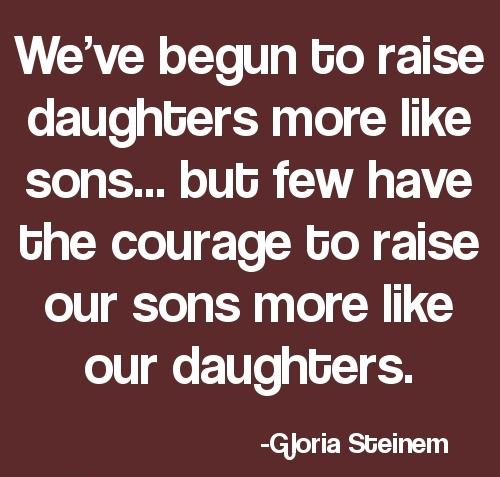
I genuinely do not understand the apprehension people have about equality between the sexes, nor do I understand the archaic clinging-to of scripted gender roles. Strength, emotionality, intelligence, intuition, and anything else that can be described as either “masculine” or “feminine” are simply HUMAN traits, and should be treated as such. Henceforth some boys would become strong stoic men and some girls would become passive emotional women but there would also be space in society for strong emotional men, passive emotional men, strong emotional women, and strong stoic women, in addition to space being opened up for intersexed and transgender people.

I am not advocating all women disregard their feminine traits or men throw off their masculinities, rather, I want everyone to be free to be who s/he is without coercion from society telling them they are too this or not enough that. The world would not exist without balance, and socially constructed gender roles brazenly defy any balance within an individual because certain qualities have been labeled as being “boys only” or “girls only.” Every single one of us needs to embrace the “feminine” and “masculine” traits within us and not being afraid to flout tradition. (See the article below at pinkisforboys for a great discussion on the problem of naming with respect to “feminine” and “masculine”… the fact that I can’t think of any other way to describe these traits that isn’t gendered is proof of the problem!)

This post has gotten longer than I expected it to be, but I never want to leave you without a complete understanding of where I am coming from in fighting gender inequality. If you have any questions, comments, suggestions, links, or information please join the discussion in the comments. And love one another!


Religion and Modest Dress

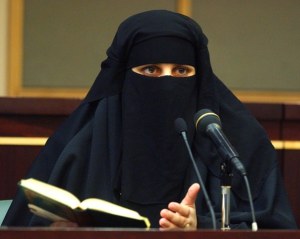
France has certainly stirred up quite a storm with their recent enforcement of a ban on the niqab, one version of the hijab that covers the face, in addition to the hair. Women who cover their faces in public will be subject to fines and citizenship lessons. While everyone has an opinion, finally including Muslim women in the debate over niqab/hijab is a huge first-step to overcoming the political wedge being driven between courageous women on both sides by right-wing groups.

As stated previously, women’s identities occur ”in the context of a racistclassistsexist society which places greater value on people who are fully able-bodied and young. Our personal experiences often parallel the experiences of women with whom we identify…. When we foster discussion as to who is the most… oppressed, we encourage the colonialist tactic of divide and conquer.” (Shah, Sonia. 1997. “Women and Gender Issues” http://www.asian-nation.org/gender.shtml). All women must first listen to each other, and then come together to support each other’s rights.
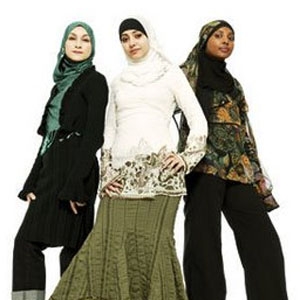
There are many, many things to consider when discussing hijab, the principle of modest dress in Islam, including the fact that observant men are also expected to dress modestly, how laws regarding expression of religion will affect various women, and why women wear outward expressions of religion in the first place. Many Islamic scholars argue that the niqab is a cultural relic and not a true observance of Islam, which adds another layer to the debate.

As an Atheist and someone who is uneducated about the world’s religions, I do not like to discuss the topic; as a feminist and someone who is concerned about every individual’s right to express her/himself, I will now delve into the common principle of modest dress found in the three Abrahamic faiths.

One of the many things Islam, Christianity and Judaism have in common is the principle of modest dress. Each of these three major religions also has followers the scale the spectrum from excruciatingly devout to merely a follower in name alone, and their outward expressions of their faiths reflect this. Here in Turkey, because a religion is strongly encouraged to be included on the birth certificate of a newborn, many parents state that their children are Muslim, with no intention of ever stepping foot in a mosque. Consequently some young women whose families force them to cover their hair rebel by wearing lots of make-up and tight “Western” clothing too. Likewise, many American families are “Christian” but do not attend church or actively practice the religion. This is to say nothing of those people, in any faith, who practice their faiths only in their houses of worship and are bad people everywhere else.
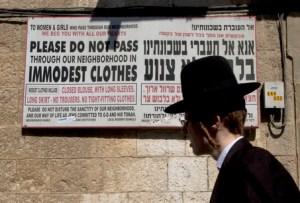
In Judaism the principle of Tzniut requires Orthodox men to dress modestly (no short-sleeved shirts or shorts) and women to cover from their collarbones to their elbows to their knees, not wear open-toed shoes or pants, wear demure colors, clothing that does not show their shape, and, if they are married, to cover their hair. Because many married Orthodox Jewish women often cover their hair with wigs they are perceived as less “frightening” than Muslim women who wear a headscarf. Jewish men too are expected to dress modestly and cover their heads out of respect for God.

Anyone who has ever been to Catholic school can tell you that nuns are scary. And while the habit is not required of regular practitioners of Catholicism, the only women allowed to serve as authorities under the Catholic Church are required to wear black, shapeless dresses and cover their hair. Other branches of Christianity also encourage modest dress, with some practicing women not allowed to wear pants or show their figure. Also the Amish, the Mennonites, and the Dunkard Brethren, among other Christian denominations, require simplicity and modesty in the dress, including head covering, of all followers.

While many of the world’s religions require followers to cover their heads, rarely is covering the face a requirement, and if it is, it is only required of women. In Catholicism women were expected for centuries to wear a veil in church, the difference here being that in Islam women are encouraged to hide themselves from unrelated men, and in Catholicism, women are encouraged to hide themselves from God. I am a fan of neither of these ideas.

Unfortunately, these major religions, Islam, Christianity and Judaism, are all patriarchal in nature, with women’s voices traditionally being left out of the “written word of God.” Of course there are examples in each of the holy texts, the Qu’ran, the Bible and the Torah, of messages of love and peace and equality, but there are also a number of passages which promote violence or revenge or inequality. Interpretation is key to utilizing the idea of a loving God to promoting human rights, including the rights of women.

Oddly, both sides of the niqab ban debate claim to have women’s rights in mind. I find it sad, if laughable, that politicians and religious leaders alike raise the banner of women’s rights only when they have no other excuse for their actions (ie. Let’s invade Afghanistan to “liberate their women!“) If either the French government or the Islamic leaders in this debate were truly concerned about women’s rights, especially Muslim women’s rights, they would have been speaking out long ago about the racism, sexism and socio-economic disadvantages Muslim women face in Muslim and non-Muslim countries on a daily basis, to say nothing of opposition to war and drone attacks.
FEMINISTS have been speaking out against the mistreatment of women, Muslim and non-Muslim alike, for decades, and yet our pleas for governments to change laws that truly can affect women’s lives have gone unnoticed. Muslim women’s groups and Islamic feminists have also been speaking out about the issues of concern to them… obviously their voices too go unheard since “veiling” is not usually amongst their biggest concerns. Poverty, education, healthcare, democracy, unemployment–these are the rights Muslim feminists are demanding. We cannot diminish their real needs by imposing our ideologies onto them.

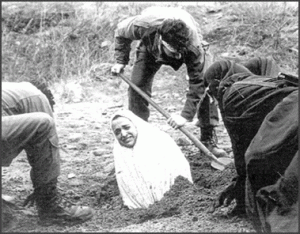
Now, one of the most important ideas I learned in graduate school was this: Cultural relativism is one step away from racism. Let me explain. By excusing away some particular behavior as “cultural” we are condoning/allowing it and claiming there is no room, need or ability for change. “[Insert any race/ethnicity here] men beat their wives… but it’s part of their culture. Those people only send their children to school for two years… but it’s part of their culture.” These ideas are inherently the same as blatantly racist statements like “X people are stupid.” Thankfully we do cry out when culture/religion are used to torture and kill people- as in the picture above, but this retroactive lamenting of “cultural practices” still does nothing for the women being killed for being raped.

There are fundamental human rights that every individual on the planet should have access to. In my mind those (should) include: education, healthcare, food, water, shelter, clean air, the right to vote, economic opportunity, the right to form legal bonds, and freedom of speech, movement, assembly, demonstration, physical expression, sexuality, and yes, religion. Of course age and issues of consent arise with such things as sex and voting, but these are still fundamental rights.

The debate over whether or not the government has the right to ban certain types of religious dress is a quagmire. On the one hand, the government has a duty to uphold secularism, work towards gender equality and fight religious/gender oppression, and on the other hand, the government has a duty to protect its citizens’ rights to practice their faiths. The French government has taken the stand that face coverings in public are of such significance to the government that it is justified in denying personal rights.

I fully appreciate the arguments that many women do not really have a choice in wearing the niqab, that the niqab disappears women and takes away their individuality, that outward expressions of religion have no place in government offices or schools, and that in the name of security one’s face should not be hidden. I also appreciate the arguments that telling women what they cannot wear is just as oppressive as telling them what they can wear, that the niqab/abaya allows women to be appreciated for what they say and not how they look, that freedom of religious expression is a fundamental human right, and that not all Muslims are terrorists!
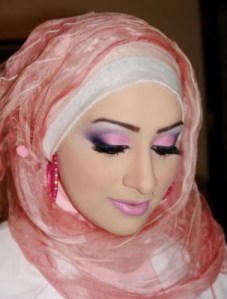
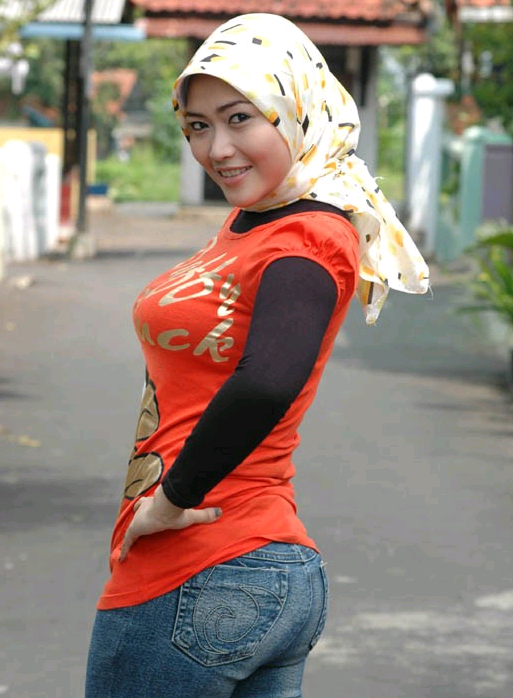
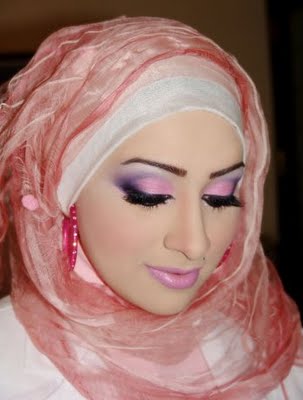
ALL WOMEN ARE JUDGED ON OUTWARD APPEARANCE. Women who wear hijab understand this as much as any woman, and sometimes choose to wear hijab out of rebellion against colonialism/government oppression/imperialism etc. Whether or not women are judged as being sexy enough for marriage material in the West or pious enough for marriage material in the East, what women wear is under constant scrutiny by other women, men, and society in general. Adopting standards of modesty specific to women objectifies women as much as encouraging women to show off does. In both cases women are to be seen, and then their worth determined.

Obviously my mind is not made up as to whether or not the ban is ethical/legal. My biggest concern with the ban, however, is the isolation it is likely to cause. Essentially, the French government is saying, “Either remove this expression of your religion (culture), or stay home,” further widening the chasm between the public and private spheres for women. Another of my concerns with the enforcement of this ban is class issues: French Muslim women who wear niqab will be fined or required to take classes in French citizenship, and the government of France is basically telling the women of the Gulf States, where niqab is the law, that they are not welcome unless they are willing to endanger themselves.

What is needed in this case is not a band-aid solution to the gaping wound that is women’s inequality. To tackle the underlying causes of why men and women are held to different standards in any situation we must start deconstructing socially constructed gender roles in every society. This is hard, dangerous work, but until women are no longer seen as property to be protected from the eyes of lustful men, (and the eyes of lustful men are rightly shamed into looking at their own feet!) we must educate ourselves and anyone who will listen as to the necessity, for men and women, in abolishing strict gender roles.