Tag Archives: Violence against women

Love Your Body Day

October 19 is Love Your Body Day, something I’ve been celebrating since I was introduced to the concept in college at San Diego State University by the courageous members of the National Organization for Women. Erin Matson, NOW’s Action VP had this to say about body image and loving yourself. And while I very much appreciate Meghan McCain’s courage in posing for the NOH8 Campaign and openly discussing body image issues, the photo chosen by Hollywood NOW to showcase their Celebrity Host could not possibly fit any tighter into the media box of what women in America are supposed to look like. Welcome to the 2011 Love Your Body Day Blog Carnival.

Many issues arise when talking about body image, especially for women; and for all we (especially feminists) talk about personality and intelligence and inner-strength being more important than outer-beauty… the truth is, in every society, women are judged on outward appearance.

From men in America and the UK navigating body image standards set up by advertising and the porn industry to transsexuals in Iran fighting stigmas of “abnormality” to young girls in Cameroon being subjected to breast ironing to the more than 100 million girls and women worldwide suffering the effects of Female Genital Mutilation (FGM), unfortunately our bodies are battlegrounds.

Eating disorders affect more than 10 million people a year in the US alone, so think twice before you praise someone for loosing weight. Eating disorders affect women, girls, boys and men around the world, with silverchair’s frontman Australia-native Daniel Johns being one of the most recognized male celebrities suffering from anorexia anywhere. Because of the incredibly unhealthy body images fed to us by the media cosmetics is a multi-BILLION dollar industry and rates of plastic surgery to “beautify” everything from earlobes to vaginal labia are skyrocketing.

So, as always, I want to give suggestions for you to improve the world around you. How can we fight the Ariel complex of altering our bodies and loosing our voices to be attractive?What can you do to promote realistic body images of real people? Speak up! Learn to accept that hundreds of body types exist and are natural; don’t give in to media standards fueled by capitalist greed designed to make you spend money; demand that stores carry your size clothes and shoes whether you’re a naturally tiny size 0 or a naturally curvy size 20; look up to real people around you for inspiration, your teachers, parents, and mentors, not airbrushed and nip/tucked celebrities; if someone tells you you’re ugly/fat/unloveable/don’t-fit-neatly-into-the-claustrophobic-boxes-built-by-the-media, tell them to fuck off; and send sexist ads into Ms. Magazine’s No Comment section. Understand that differences, especially body differences like sex, (dis)ability and race, are beautiful!

Finally, what’s the most important thing you can do? Love your body! “The moment we choose to love, we begin to move against domination, against oppression. The moment we choose to love, we begin to move toward freedom, to act in ways that liberate ourselves and others.”- bell hooks


Domestic Violence Awareness Month

October is Domestic Violence Awareness month. If you need to raise your awareness levels you can re-read any of the Feminist Activism blogs from the third week of March (like Day 21- Violence Against Women in the US or Day 20- RAINN & NDVH or Day 15- The Clothesline Project). Also check out Ethiopian Feminist to learn about DV and a particularly gruesome case there, and A Hmong Woman for some insight into DV in America’s Hmong community and to enter a discussion on the effects of patriarchy and gender roles on DV survivors. You can then see the trailer for Education sans Excision about Female Genital Cutting/Mutilation (FGM/FGC) featuring Senegalese rapper Sister Fa. And watch the trailer for Crime After Crime, about a woman’s attempt to get justice after being imprisoned for her connection to her abuser’s murder.

You can also participate in the UNiTE Campaign to End Violence Against Women by voting on T-shirt designs to spread the message that it’s time to stop the violence. For an interesting art piece exploring masculinity see Man of the House. I also highly encourage readers to check out Man Up, a campaign directed towards men who want to stop violence against women. And don’t forget that all year-round your local DV shelters need donations of money, supplies and time. Volunteer! And make the world a better place.

As some of you may know between November 25 (the International Day for the Elimination of Violence Against Women) and December 10 (International Human Rights Day) is the international campaign 16 Days of Activism Against Gender Violence. For me everyday is a day to take action against gender violence but for those of you who have other jobs, this is a call to action.

I am opening up the floor, to my male readers in particular, for readers to share their perspectives on gender-based violence, and will offer my blog as the platform. I would love to have enough guest posts for each day of the 16 Days campaign. Ideally the post would be 500-750 words (although more or less is fine too) and would feature your perspective on VAW and what can/should be done about it. I will spell/grammar check it for you before it’s published. ;)You are welcome to look at it from any angle you like and I encourage you to think about how race, class, (dis)ability, sexual orientation, gender identity, age, education, nationality, religion, location, language and education change the situation. Whether you are interested in the laws in your country and how they punish (or not) perpetrators or you’d rather delve into the creation of masculinities in your culture that leads some men to violence, or any other side of the story, is totally up to you. Because I have a good group of amazing feminist men in my life this project is already well underway but if you would like to participate (and I don’t already know it) leave a comment and I’ll contact you about it. The deadline is October 31 so you have plenty of time to think and write and revise. Thank you in advance!


Am I just paranoid, or…

Just because you’re paranoid don’t mean they’re not after you. – Kurt Cobain

I think that many of my female readers share my feelings of paranoia but if not please let me know I’m just crazy. With this post it is my male readers I hope to speak to. The purpose of this post is in no way to blame all men for the immoral and illegal choices of some men, rather, the aim of this post is to put more fire in the bellies of male allies in the fight for women’s equality. I also in no way mean to diminish or minimize the experiences of men, boys and transgender individuals who have been sexually assaulted or raped. Their traumas are just as real as any woman’s and certainly are not given the weight in our society that they should be. With this post I want you to know specifically what my grievances are, how I feel as a woman on a daily basis, and, most importantly, what you can do to help. With everything in the news lately and all the statistics available surrounding the heinous rates of violence against women and sexual assault and rape around the world, it’s easy for me to feel like women, and our rights, are under attack.

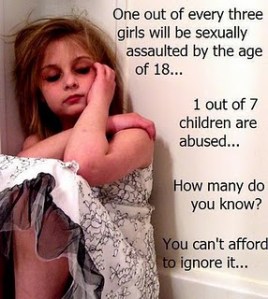
For most of my life I have felt vulnerable simply because I am female, to the point that I’ve taken self defense classes. I’m sure some of this fear comes from having been repeatedly sexually assaulted by male relatives as a girl, but even now, as an adult woman, I find my mind shift to dark thoughts quite often when I am in the company of strangers. To live in constant fear of violence is absurd and ultimately will make you crazy, and I hate that I buy into the rape culture myth that violence against women, especially sexual violence, happens at night when a stranger jumps out from around a corner and tackles you.

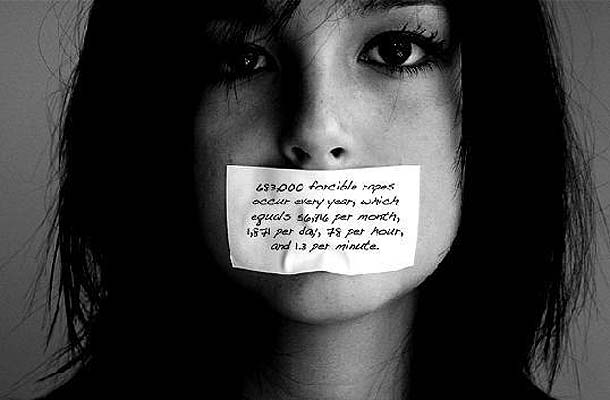
Most rapes are committed by someone the victim knows and 50% of all rape/sexual assaults occur within 1 mile of the victim’s home! The Service Women’s Action Network also explains how prevalent rape and sexual assault against members of the US military is in this publication. See previous posts on violence against women including Violence Against Women in the US, The Clothesline Project, Take Back the Night, the V-Day MovementRAINN and NDVH, and others for more information on the situation of women in the US.

Women in other parts of the world are in even more frightening situations. Today Al-Jazeera posted this article explaining why Afghanistan, the Democratic Republic of Congo, Pakistan, India and Somalia are the top five most dangerous places in the world to be a woman. Reasons ranging from the feminization of poverty, rape as a weapon of war, and harmful religious and cultural practices, to female infanticide and female genital mutilation affect the safety and livelihoods of women in these places.

Back in the US, Republicans are taking their misogyny global by trying to defund Planned Parenthood at home and abroad, using “states’ rights” rhetoric to make abortion unattainable for the most vulnerable women in their districts, and trying to reinstate the Global Gag Rule, which really does just make me want to gag. But women and men are standing up for equality and human rights, including the 373 people who sent in pictures of themselves to NARAL Pro-Choice’s Stop the War on Women video to the US Senate, the fierce founders and participants of the Hollaback! movement to stop street harassment, and the thousands (millions?) of people who have participated in SlutWalks around the world to protest a culture of victim-blaming surrounding sexual assault. SlutWalk deserves its very own post, despite the massive amount of press it’s already received, so look out for that.

I think our biggest issue in victim-blaming comes from our rape culture myth that what women wear or do or say affects their chances of being raped: it doesn’t. Women should not have to protect themselves or change the way they want to appear for fear of rape: People should not rape. Period. Women have been objectified by American society for quite some time and while reinforcing that women are objects to be seen is not ideal, women should be allowed to be seen however they want, and should be able to have sex with whomever they want, without any individual thinking that anything other than clear and sober consent means yes to sex. And in the spirit of Hollaback! what I choose to wear does not give you permission to yell at me either.

So, with all this in mind, am I just paranoid or

-do you wonder whenever you’re in the shower or using a public restroom or having sex with someone for the first time if a webcam is broadcasting your nakedness all over the internet?
-do you also check your backseat whenever you get in your car to make sure a stranger or stalker isn’t waiting to rape and/or kill you?
-do you get nervous when you step into a full elevator, worried that someone might touch you in an unwanted and sexual way?
-do you think twice before going somewhere you are unfamiliar with, in case there are dark corners for bad people to hide in?
-do you feel like you’re being watched in a disgusting, lustful way by men of all ages all the time?
-do you remind yourself that yelling “fire” is more likely to garner help than yelling “rape” when you feel like someone is following you?
-do you carry your keys in your hands, extended between your fingers as you make a fist when you walk home after dark?
-do you avoid making eye contact with strangers for fear that they will misread your friendliness for a sexual advance and then rape you?
-do you wonder, whenever you’re in a group, how many of the people with you have raped someone, or have been raped?
-do you have any idea what it’s like to feel like you’re the constant target of society’s violent sexual urges and need to control?

Ladies? Gentlemen?

But cheer up, there are lots of ways you can help!

-Don’t rape anyone: passed out, drunk, wearing next-to-nothing, came onto you before, had sex with you before, started a sexual encounter and then changed her/his mind, is underage… just don’t.
-If that isn’t clear, read this.
-If you still don’t get it, watch this.
-Don’t tell rape jokes.
-Don’t use the word rape to complain about the way your school, bank, job, or government is treating you.
-Don’t let your friends get away with telling rape jokes. Explain to them why it is hurtful, wrong and dangerous.
-Don’t let your friends get away with using rape to complain about institutions.
-If you hear someone bragging about a sexual assault or rape, call the police.
-If you’re in public and you hear/see someone harassing/assaulting someone else, call the police.
-If you hear/see domestic violence taking place, call the police.
-March in rallies for human rights, healthcare, immigration rights, economic freedom and marriage equality.
-Call or email your lawmakers and tell them to end the backlog of untested rape kits in your local police departments.
-Call or email your lawmakers and tell them to support the International Violence Against Women Act.
-Sign this petition to demand that the FBI change the definition of rape from “The carnal knowledge of a female forcibly and against her will” to something that includes date rape, oral, anal and statutory rape, rape with an object, finger or fist and rape of men.
-And share this post, and the many others out there like it written by feminist who are tired of being afraid, with anyone who can and will read it. Thanks for your support!


The Damning Effects of Militarization

Militarization is the process of making society believe that violence, especially war, is an effective way to solve conflict to the point that any nonviolent attempt to solve conflict is snidely dismissed as ineffective, liberal, feminine, sissy or a whole host of other derogatorily used terms. The global problem of militarization takes different forms in every country, and even within each community. In Israel and Palestine troops attack women protesting the occupation. In Colombia women are participants and victims of violence perpetrated at every level of society. In Uganda those participating in the Walk to Work protest have been met with tear gas and bullets by the government’s security forces. I should be upfront here and say flat-out that I am very far left in my ideas of effective government: I don’t believe in borders or states. Imagine if the $553 billion defense bill just approved by the House was money spent on education, or healthcare, or ending violence….

Militarization is a gender issue. A gender issue is anything that disproportionately affects men, women, boys, girls and/or intersex or transgender adults or youth. Therefore, because militarization has a hugely disproportionate effect on men, men’s violences, and masculinities, it is a gender issue. It is also a gender issue in that anything defined as masculine can only be defined in opposition to that which is feminine, and because militarization of a given society negatively impacts men’s attitudes towards and treatment of women.

Many right-wing misogynists claim that feminists hate men, or that gender issues are only women’s issues, but militarization is a prime example of the genuine concern for well-being that many feminists around the world have for men who are part of the military. In graduate school one of my most influential professors, Dr. Sara Sharratt, opened my eyes to a reality that is often denied: killing people is not natural for anyone, male or female; men must be trained to kill. And as her work as a psychologist working with soldiers returning from war taught her, many men react negatively to having killed someone. The stress, trauma and horror that soldiers endure in battle is much too high a price for the false promise of “protecting freedom.”

Here in Turkey males are required by law to serve in the military, reinforcing the idea that there is honor in using violence. The belief in the effectiveness of violence is so strong in Turkey that even liberal, feminist groups condone the use of violence in protests and do not see the need or efficacy of strategic nonviolent action. Very few groups speak out against militarization here. One effect of this belief is that, according to a new report by Human Rights Watch, 47% of women in Turkey experience some kind of physical or sexual intimate partner violence within their lifetimes, regardless of education, class, religion, or region and much too few women’s shelters to accommodate the need. Violence between a couple is seen by police, the government, and society, to be a personal problem and victims are constantly told that they cannot expect their partners to be nonviolent.

In the United States there is better enforcement of laws against domestic violence and yet 1 in 4 women and 1 in 9 men in the US are victims of intimate violence at some point in their lives. Militarization in America is slightly more subtle than in Turkey, but commercials to “Go Navy,” be “Army Strong,” and join “The Few, the Proud, the Marines” constantly inundate television viewers. At the same time military recruiters are present on junior high, high school and college campuses to convince children that the military is their best route out of their hometown. Militarization is therefore a compounded heap of inequalities: class, race, gender, education, location, language, ability, and age.

Militarization in the US is forced on Americans at a very young age, when children at sporting events see the poorly named Blue Angels fly overhead with a roar as a giant American flag is unfurled across the playing field. The idealization of being a servant of war as a good, honorable thing is fed to Americans to serve the greed of the corporate world. We are taught from the time we can talk that America is the best place in the world, the most just, the most equal, the fairest. We have been lied to. We are told these things so that when our Commander-in-Chief calls on us to “protect freedom and liberty” and “stand up to injustice” our first response is to join the military killing machine so we can “serve our great nation.” This idea that the best thing a person can do for his country, the most masculine act possible, is serve in the military totally discounts the experiences of a great number of people in America including disabled men, transgender or intersex men, openly gay or bisexual men, men who believe in nonviolence, and women.

Unfortunately it is only after the damage of war has been done that many of the wide-eyed military recruits become hardened advocates for peace. The brave men and women who understand the error of the US’s ways in using violence and force to fill corporate pockets have formed a number of anti-war groups. Founded in 1985, Veterans for Peace, is seeking signatures for a petition to bring the troops home from Afghanistan. One of the newer organizations, Iraq Veterans Against the War, seeks an end to the occupations of Iraq and Afghanistan, and is pressuring the military to provide better care for returning vets. Vietnam Veterans Against the War states “We believe that service to our country and communities did not end when we were discharged. We remain committed to the struggle for peace and for social and economic justice for all people. We will continue to oppose senseless military adventures and to teach the real lessons of the Vietnam War. We will do all we can to prevent another generation from being put through a similar tragedy and we will continue to demand dignity and respect for veterans of all eras. This is real patriotism and we remain true to our mission.”

Cynthia Enloe renowned author and feminist, is one of the voices at the forefront of the anti-militarization effort. This piece nicely summarizes Enloe’s main arguments against militarization and its effects on women. Even non-governmental organizations, international organizations and peacekeeping missions are fraught with problems because of militarization, as Enloe and my professor Nadine Puechguirbal explain in a talk here on Haiti. For me, the most compelling argument against militarization is that violence does not work. It is ineffective! Nonviolent action, especially when used strategically, is an extremely effective tool for change and one that I hope more people will begin to utilize once they understand its efficacy. I will forever be indebted to Dr. Mary King for teaching me the strategy of nonviolence. In the future I will write a post summarizing the ideas behind SNVA.

If you want to do something to help end the militarization that is damaging the world here are a few ideas: teach girls to be strong, both physically and emotionally; teach boys they have a right to feel emotions and express them; teach all children the importance of respectful problem solving and dialogue; teach young people that there are many ways they can serve their country other than military service, including the Peace CorpsAmeriCorps, Job Corps, the Medical Reserve Corps, Citizen Corps, the Civilian Response Corps, and Serve Corps, as well as through thousands of non-governmental and non-profit groups; learn about strategic nonviolent action and then share what you know; and most importantly, practice strategic nonviolent action to bring an end to injustices around the world!


Day 30- Indigenous Rights

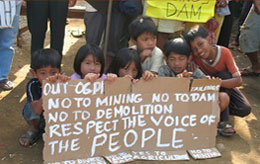
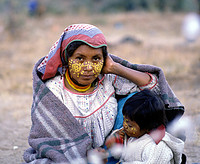
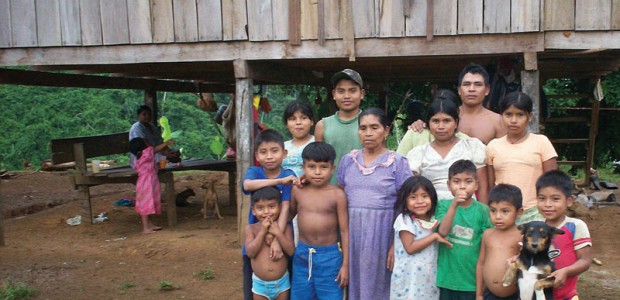
Indigenous women all over the world face discrimination on multiple levels on a daily basis and historically were systematically targeted for extinction through rape and slaughter. Indigenous women may utilize many labels to identify themselves such as Native, First Peoples, First Nations, Aboriginal, etc. but for continuity’s sake I will use the label Indigenous throughout this post. I was unaware that March 21 is celebrated as the International Day for the Elimination of Racial Discrimination, but it is, and was celebrated by Dialogue Between Nations, “an interactive global communications network and an educational forum….”

Earlier this month we have seen examples of Indigenous women’s activism in the US, Peru, and Oceania. While the challenges of each individual woman across the globe are specific to her life and circumstances, some issues almost universally affect Indigenous women. According to Wikipedia some 300-350 million Indigenous people, making up roughly 6% of the total population, inhabit more than 70 countries around the world and represent more than 5,000 distinct peoples. Climate change, gender-based violence, poverty, legal obstacles, and linguistic discrimination are the most common issues affecting Indigenous women worldwide.

Linguistic discrimination: As a linguist the rate of extinction of Indigenous languages physically pains me; as a humanitarian the loss of the worldviews associated with these languages is traumatizing. Many, if not most Indigenous peoples are denied their right to speak their native languages, and this fact plays a role in all other forms of discrimination against Indigenous women from housing and education to health care and democratic representation. The amazing group Cultural Survival is one of many that focuses on linguistic justice, among other issues, in the fight for Indigenous rights.

Climate change and environmental issues: This 1995 declaration by Indigenous women at the UN Fourth World Conference on Women in Beijing explores the effects of biocolonialism on Indigenous women. There is a long history of discrimination against the Igorot peoples of Cordillera in the Philippines, especially with regard to land rights, unsustainable farming, and soil erosion. This article discusses the potential impact of REDD+ on Indigenous women. United Nations Radio has aired this piece about deforestation and property rights of Indigenous women. In honor of the 100th anniversary of International Women’s Day the Asian Indigenous Women’s Network issued this statement underscoring the needs of Indigenous women in relation to the environment.

Gender-based violence: For all its positive traits, Canada’s dirty little secret are the disappearances of Indigenous women that are chronicled by Amnesty International and many other organizations. The ongoing saga of the murder of Native American activist Anna Mae Aquash is chronicled by Indigenous Women for JusticeWomen’s Campaign International explains the violence that Arhuaco and other indigenous women of Colombia face due to internal conflict here. Amnesty International also speaks out against sexualized violence against Indigenous women in the US.

Poverty: Also in 1995, in Guatemala, this Agreement on the Identity and Rights of Indigenous Peoples was drawn up. The New York-based Indigenous Women’s Fund of the International Indigenous Women’s Forum has a concise and thoughtful plan of action for helping Indigenous women from around the world overcome the poverty that has been imposed on them. International Funders for Indigenous Peoples is also an international funding organization working for Indigenous peoples’ rights. This concise article from genderaction.org highlights the problems Indigenous women face as a result of “gender-blind” approaches to finance from International Financial Institutes. From here you can download Indigenous & Tribal People’s Rights in Practice produced by the International Labor Organization.

Health issues: The UN Population Fund, UNFPA, has produced this report on empowering Indigenous women with regard to reproductive rights. Another group dealing with reproductive justice for Indigenous women is the Native American Women’s Health Education Resource Center. The Indigenous Portal is one group that recognizes the interconnection of Indigenous peoples’ land degradation and lack of reproductive justice.

Human Rights and legal obstacles: Native Planet is one of many NGOs working for the socio-political rights of all the world’s Indigenous peoples. The UN Permanent Forum on Indigenous Issues will hold its 10th session May 16-27 2011 in New York. From 2002, this paper highlights some of the issues faced by Indigenous women in Africa, and has recommendations for ways to improve Indigenous women’s rights. Here is a Guide to Indigenous Women’s Rights Under the International Convention on the Elimination of All Forms of Discrimination Against Women (CEDAW), published in 2004. A 2005 factsheet on the rights of Indigenous Canadian women on- and off-reservation can be found here. Many groups in Canada, including the Congress of Aboriginal Peoples, participated in the first National Aboriginal Women’s Summit NAWS I in 2007. The International Work Group for Indigenous Affairs recommends the now out-of-printIndigenous Women: The Right to a Voice edited by Diana Vinding. Here is a list of articles dealing with Indigenous women’s rights in Canada. This project of the UN Development Program addressed Indigenous women’s rights in Asia. Oxfam also works for the rights of Indigenous women, like Calel from Guatemala. The Aotearoa Indigenous Rights Trust works for the rights of Indigenous Maori people in New Zealand. The Indigenous Peoples of Africa Co-ordinating Committee works across the African continent for the rights of Indigenous peoples there. Finally, the Society for Threatened Peoples (Gesellschft für bedrohte Völker in the original German) tackles everything from political imprisonment and land rights to slavery and environmental degradation.


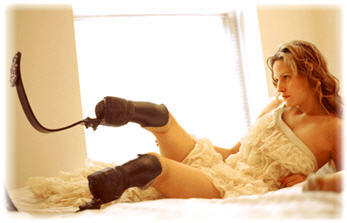
Day 28- (Dis)ability

I apologize for the lateness of my post; I have been traveling today. Although it’s still the 28th in the US, here in Turkey it is the 29th and so I have failed in my attempt to write everyday, but I will write again tomorrow (today) and everyday until the end of the month. Thank you for your continued support!

“Tomorrow I am going to rewrite the English Language.
I will discard all those striving ambulist metaphors
of power and success
And construct new ways to describe my strength.
My new, different strength.

Then I won’t have to feel dependent
Because I can’t stand on my own two feet.
And I’ll refuse to feel a failure
When I don’t stay one step ahead.
I won’t feel inadequate if I can’t
Stand up for myself
Or illogical when I don’t
Take it one step at a time.

I will make them understand that it is a very male way
To describe the world.
All this walking tall
And making great strides.

Yes, tomorrow I am going to rewrite the English Language
Creating the world in my own image.
Mine will be a gentler, more womanly way
To describe my progress.
I will wheel, cover and encircle.
Somehow I will learn to say it all.”
Tomorrow I’m Going to Rewrite the English Language by Lois Keith[1]
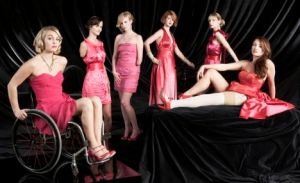
“Disability is a physical, social, mental or emotional condition which may or may not be handicapping.”[2] Many women who identify as disabled would agree that “people’s attitudes… are most disabling.”[3]

Maura Kelly explains how people’s assumptions about women with disabilities can be damaging “…what if I said I believed that prejudice expressed in subtle acts of misguided, uninformed “kindness” was not only equal to [hateful attitudes towards those of a particular race, religion or sexual orientation], but potentially more damaging and probably more difficult to change? …People can be so focused on my being in a wheelchair that they don’t even hear me saying I don’t need any assistance. This is the part that is so demoralizing…. I resent the people who feel the need to help me so much–though I am clearly not struggling–that I must wait and allow them to assist me, just to make them feel better…. Many of the people I come into brief contact with–it is clearly written on their faces–put me in an altogether different category than they do other people.”[4]

Kelly’s feelings clearly illustrate the need for women to be able to name their own identities and to group or separate themselves as they see fit. Judgments and assumptions based on physical traits–ability, skin color and sex–and not on merit or actions, have no place in an American society that touts democracy and freedom, yet they happen everyday.

The concept of passing, usually used with regard to race or sometimes sexuality, is based on these visual assumptions of physical aspects and can also be an issue in the disabled community. Kelly says, “Recently I was asked if I had trouble ‘passing’ since, other than being in a wheelchair, I don’t seem disabled…. I always associated [passing] with race or sexual orientation…. Usually the trouble is in getting people not to make assumptions about how little I can do.”[5]

Often women with disabilities are seen as doubly vulnerable because they are women and because they are disabled but many have proven their strength by organizing with the disability rights movement and by bringing information and support to others with disabilities.

Activist Anna Sullivan, after having her house blown up, was questioned by the police, “I tell them what I think, that it’s the work of the fascists…. Because of my anti-racist activity the fascists have threatened to kill me many times, now they have destroyed a part of me.”[6] While the blast did not physically harm her at the time, the trauma and stress of the event contributed to her condition- Myalgic Encephalomyelitis- making her vulnerable later in life to viruses and psychological illnesses.
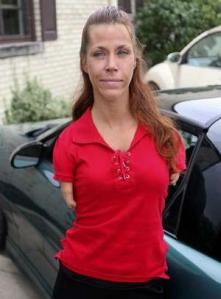
Vulnerability, though not always present, can be a reality for women with disabilities as author Lois Keith shares, “I’m always nervous about going somewhere new. This anxiety is rarely a social one, it isn’t about meeting new people or feeling shy. I had thirty-five standing up years to deal with that one. This ‘normal’ anxiety is displaced for me by the sheer physical concern of going to a place I haven’t been before. Of finding a place to park, worrying about whether I can get out of the car straight on to the pavement, whether there will be kerbs [sic]. It’s anxiety about asking a total stranger (if there is a stranger to ask) to help me in some way. It’s the fear that there will be some obstacle no one has told me about – a step, a bollard, a pothole, a locked door.”[7]

Some women defy the vulnerable disabled woman stereotype, like Janice Pink, “When I was sixteen, nearly six feet tall, and still in pain, I went to another doctor…. Obviously, if you’re disabled, you should look fragile, which I didn’t then and never will now.”[8]

Other women who were involved in strategic nonviolent action when they were nondisabled may find it difficult to participate in the same way after becoming disabled but groups like the Disability Caucus of the National Women’s Studies Association can help ease the transition.

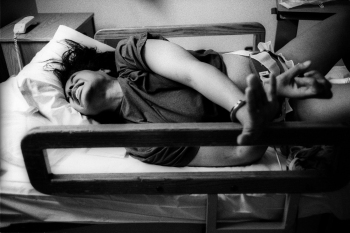
Lizard Johnson explains, “I had thought everything was possible, right down to nonviolent revolution. In moments of enthusiasm, I thought I could start the revolution by myself. Now I think: can’t do that by myself, can’t do this by myself. Certainly can’t start the revolution by myself.”[9] Relearning how to participate in activities that previously did not have to be given any thought can be very challenging for people who become disabled later in life.

These challenges can be exacerbated by other aspects of women’s identities as well. Carol Anne Roberson navigates the complex paths of disability, gender and race everyday as a white, quadriplegic woman with mixed-race (black and white) children. Hermina Jackson is another example of the intersection of gender, race, class and ability and proves that even though sexism, racism, classism and ableism are still in place, with hard work they will eventually be eradicated. She is working to do just that as a black, quadriplegic woman. As a member of a number of organizations in her local community that deal with the issues faced by women, black people, and disabled people, she shows that one person can be all of these things, and overcome the isms she faces daily.

“As a member of the Black United Front, Hermina is interested in the issues and needs of women, especially women with disabilities. She aims not only to get information for women with disabilities… but to educate the community about disabled women and what they need and how they feel.”[10]

Civil rights investigator Adrienne Asch, a blind woman who helped write legislation in New York to include protection from discrimination against disability in hiring practices, explains how her role as an activist helped to change her role as a disabled woman, “Had I not had a history of political activism, in civil rights for blacks and in opposition to the Vietnam War, I might not have been so ready to fight for my rights as a person with a disability. I realized I would have to take the energy I had put into social change for other people’s benefit and use it to benefit myself or other disabled people.”
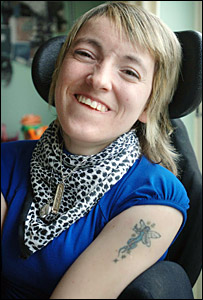
Asch goes on to explain how her disability relates to other aspects of her life, “Disability is neither at the center or the periphery of my life. It’s just sort of there. I’m not saying blindness isn’t an important fact about me or that it doesn’t affect a lot of things, but it’s not part of my self-definition. If it’s part of the world’s definition of me, that’s the world’s issue.” [11]

The overwhelming message disabled women have for young women and girls who are facing a disability is not to ignore it or dwell on it, and to be realistic about how it will affect what kind of work one wants to do, but not let it be the only consideration. Anna Sullivan admits, “The rise of fascism again, and the many terrible things that are happening in the world, make me feel that I should be out and about organizing, but I know that I can’t do it any more.”[12]

It is true that some things are more difficult for disabled people to do but the kind of disability a person has greatly influences the ease or difficulty of a particular task. A common assumption about physically disabled people is that they are also mentally disabled and so infantilized as if they are not capable of thinking for themselves. Part of the work feminist groups must do in organizing any kind of event, from a rally to a phone bank, is to make sure that the venue is accessible for all kinds of women and to properly value the identities of all the women (and men) who will participate.
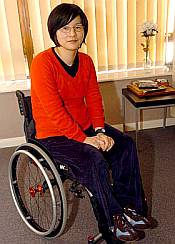
Not Dead Yet is one such group of disabled and nondisabled people that utilizes “shouting slogans, singing songs, blockading doorways, [and] being rude to cops” to protest physician-assisted suicide. Another activist group is riot grrrl, which awakens many young women to “the interconnectedness of all forms of oppression.”[13]

One of feminism’s greatest virtues is that it does value every woman’s experience, and thus should learn from every woman about how to make society more inclusive. Teacher Kate Bromfield, after battling Multiple Sclerosis for years, found hope, “I’m beginning to feel again that I can function as a responsible adult, in spite of illness, that my lifestyle can be as viable as anyone else’s.”[14] And lifestyle greatly depends on one’s ability or disability; deaf women may have no problem navigating a flight of stairs but it may be nearly impossible for someone with arthritis. A woman in a wheelchair may be able to read to her child at night but a woman with a learning disability may not be able to.

The one universal thing that disabled women are assumed not to be able (or have any desire) to do is have sex. That disabled people in general, and disabled women in particular, are often seen as asexual beings[15] may seem surprising at first, but makes total sense in the hierarchy of patriarchy: disabled women may not be able to function in some ways as nondisabled women do and therefore are demoted from the “normal” status of women in American society of sex object to something even more passive.

Author of Disabled, Female, and Proud! Harilyn Rousso explains, “One of the myths in our society about disabled women is that we are asexual, incapable of leading socially and sexually fulfilling lives. When I was growing up my parents and I accepted this myth without question. We simply assumed that because I had a disability, I could not date, find a partner, or have children.”[16]

Oddly, the possibility that disabled women may be physically weaker than nondisabled women is often cited as a reason they should not be mothers (even though the reality is that this bias is an extension of seeing disability as a barrier to sexuality and taking away agency from those who have a disability), yet being physically weak (compared to the able male norm of reference) is expected of all women.

See this story and previous posts regarding sexuality and violence for more information on the imposed horrors disabled women face at the hands of cruel people.

Gohar Kordi, a blind Iranian immigrant, tells of feeling her son’s pain at her disability, “He wants me to be like other mothers in his school, sighted, English.”[17] She is one example of the intersection of ethnicity and ability. Suna Polio exemplifies another intersection, “To the public eye I looked an unlikely candidate for motherhood. The wheelchair disqualified me.” She goes on to explain how her lesbianism and her disability intersect to unnecessarily complicate her life even further.[18]

Some disabled lesbians explain that where their lesbianism and their disability activism meet is to see “that the whole is really greater than the sum of its parts and that a better situation for everyone is possible if we see our interdependence.”[19] Not until April 15, 2010 was this interdependence starting to be recognized by the federal government. That is when same-sex partners earned the right in the United States to visit their partner in the hospital.

President Barack Obama issued a memorandum stating, “…gay and lesbian Americans… are often barred from the bedsides of the partners with whom they may have spent decades of their lives — unable to be there for the person they love, and unable to act as a legal surrogate if their partner is incapacitated. For all of these Americans, the failure to have their wishes respected concerning who may visit them or make medical decisions on their behalf has real consequences.”[20]

While corrective rape for lesbians seeking treatment for mental illness is no longer practiced in psychology in the United States,[21] disabled lesbians in the United States still face difficulties unique to their situation. Many women who identify as lesbian feminists, like Lizard Jones, have fought for the better part of their adult lives for economic and social independence, but adding disability to their identities makes life entirely more complicated.

Jones poses, “Maybe the struggle for lesbians with disabilities is categorically different from many other disability struggles because we have to convince our chosen families not to let us out, but to take us in.”[22] Social worker Joyce Peltzer admits, “It took me longer to deal with my feelings about being a lesbian than about having a disability….. All ‘isms’ are alike and you have to struggle with the internal attitudes developed by living in our culture. To be an integrated person, you have to accept your wholeness. We cannot be compartmentalized people. I had to integrate everything. I am a person who happens to be a lesbian, who happens to have a disability, but most importantly, I am a whole person.[23]

Vicky D’aoust, a deaf lesbian activist who uses a wheelchair, summarizes the disability and LGBTQAI rights arguments nicely: “I want to be who I am without fighting every step of the way…. We need actual change in how communities think, behave and act. Perhaps the biggest obstacle of all is that… attitudes are what prevent us from being whole.”[24]


[1] What Happened to You? Writing by Disabled Women Ed. Lois Keith. The New Press: New York. 1996.

[2] Restricted Access: Lesbians on Disability Eds. Victoria A. Brownworth and Susan Raffo. 1999. Seal Press

[3] Ibid.

[4] Ibid.

[5] Ibid.

[6] Keith, 1996.

[7] Ibid.

[8] Ibid.

[9] Brownworth and Raffo, 1999.

[10] Disabled, Female, and Proud! Stories of Ten Women with Disabilities Harilyn Rousso. Exceptional Parent Press: Boston, MA. 1991

[11] Ibid

[12] Keith, 1996.

[13] Brownworth and Raffo, 1999.

[14] Ibid.

[15] See “Loss” by Anne Macfarlane in Keith, 1996.

[16] Rousso, 1991.

[17] Keith, 1996.

[18] Ibid.

[19] Brownworth and Raffo, 1999.

[20] Obama, Barack. 15 April 2010. “Memorandum for the Secretary of Health and Human Services.” Federal Register. Office of the Press Secretary, The White House: Washington, D.C. 9 June 2010. http://i.cdn.turner.com/cnn/2010/images/04/15/2010rightspatients.mem.final.rel.pdf

[21] Until the Diagnostic and Statistical Manual of Mental Disorders IV was published in 1973, homosexuality was considered a mental disorder by the American Psychiatric Association and women who were diagnosed as lesbians were sometimes raped to “cure” them of their homosexuality. This practice is still common in some parts of the world, especially South Africa.

[22] Brownworth and Raffo, 1999.

[23] Brownworth and Raffo, 1999.

[24] Ibid.


Day 24- Killing Us Softly

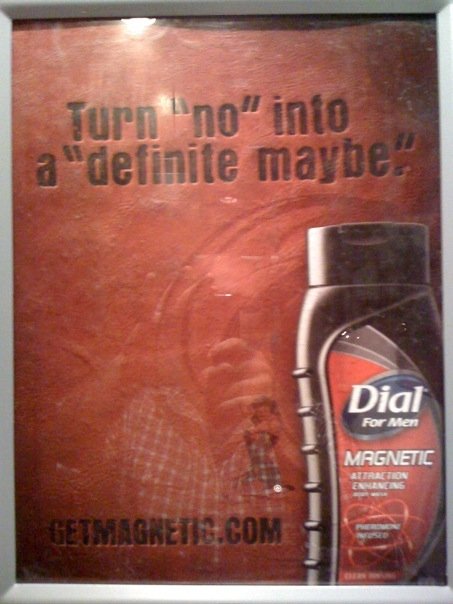
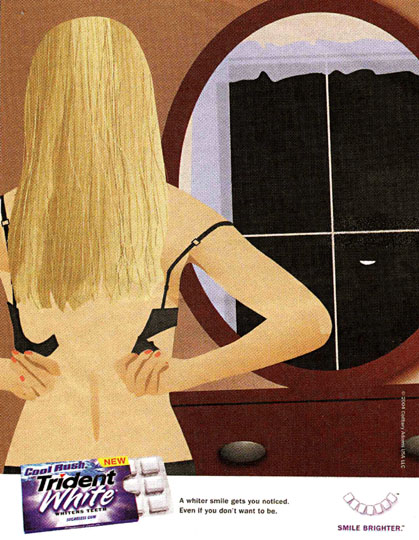
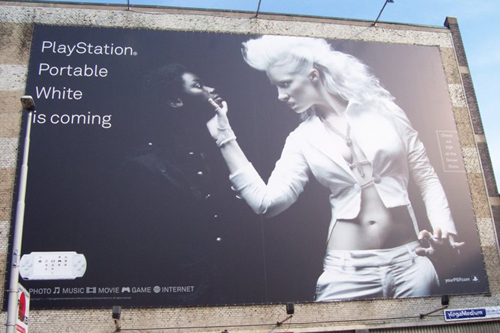
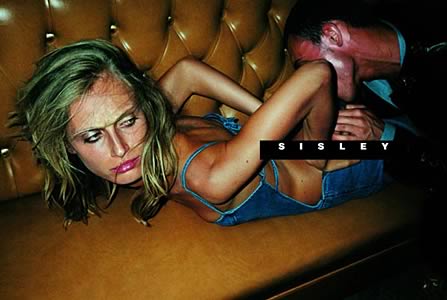
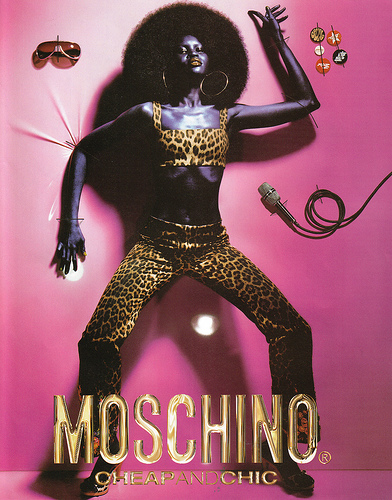
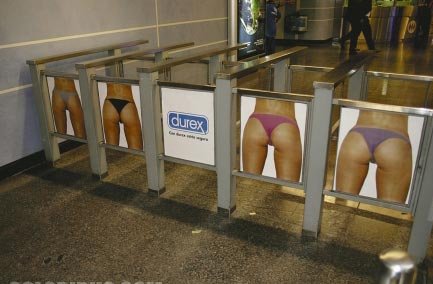
Violence against women comes in numerous forms and many feminists in modern America (including me) are of the belief that the media and advertising are detrimental to gender equality because sexism is used to sell everything. Now, I know there are a lot of groups in the US fighting against sexist and racist advertising in the media (like Ms. Magazine, About Face and SisterSong to name a couple) but today’s post is going to focus on the four installments of Jean Kilbourne’s documentaries Killing Us Softly and will feature some of the most offensive ads I’ve been able to find on the internet. Your submissions are welcome.

The original documentary was produced in 1979 when Jean Kilbourne got disgusted by the images she and all other Americans were constantly being fed. Obviously these two first ads are more vintage. The second installment, Still Killing Us Softly, was produced in 1987, Killing Us Softly 3 in 2000 and the newest film, Killing Us Softly 4 just last year, in 2010. Sadly, what this trend shows is that not much has changed in advertising in the past 30 years. Overt sexism declaring that women are stupid and belong in the home has given way to sex being used to sell everything from bodywash to beer.

Each and every one of these films should be required viewing for anyone in women’s studies programs (where they often are), sociology programs (where they probably aren’t), and advertising classes (where they definitely aren’t). And they are each only about 30 minutes long, so don’t waste 2 hours of your life watching a crappy Hollywood produced blockbuster, instead, grab your favorite snack and your favorite person to bitch to, and sit down for some eye-opening, and frustrating, entertainment. Jean Kilbourne handles each presentation with humor and warmth which helps diffuse the tension of the impact these destructive ads have on women’s views of themselves and men’s views of women.

The history of these films chronicles the intrenched way advertisers and the “beauty” industry deliberately encourage women’s insecurities so that they can offer up products to improve whatever perceived flaw women have. Kilbourne examines myriad issues concerning the images of women in advertising, including sexualization of girl children, violence against women, dehumanizing of women of color, promotion of eating disorders and plastic surgery, encouraging women to be submissive and childlike, and the literal objectification of women’s bodies. Newer advertisements promote an unhealthy beauty ideal for all women and erroneously teach that women can only be attractive if they are young, thin, white, able-bodied, big breasted and submissively sexy.

Here are a few other ads I find disgusting.

Promoting violence against women:

Sexualization of children:


Infantilizing adult women:

Promoting homophobia and transphobia:

Animalizing women of color:

And objectifying women and girls:


Day 23- Activism Surrounding the Prison System

I have to admit that I am somewhat ambivalent about the death penalty and I welcome any and all arguments for or against it as long as you are civil to each other. Also, most information I have regarding prisons is US-based so any information about prisons from other countries is welcomed, too.

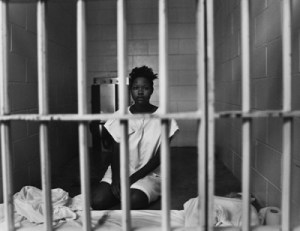
In the United States, the country with the highest documented incarcerations in the world, there are many organizations that are working to reform the prison system as well as some that advocate the abolition of the prison system because of the horrendous conditions prisoners face including rape, injury, illness and even death.

The racism behind the prison system in the US is blatant and damaging to every aspect of society as shown by the Prison Policy Initiative. This list of political prisoners compiled by The Prison Activist Resource Center shows the severity of the impact of racism on minorities in America– roughly 70% of inmates are not white while minorities only make up 35% of the total US population. According to the U.S. Justice Bureau 1 of every 32 adults in the US is either incarcerated (in prison or jail), on parole, or on probation. This number does not include the more than 90,000 children held in juvenile facilities.

Nearly 93% of inmates are male but despite blacks making up only 12.4% of the total population, black men outnumber white men in prison 6 to 1, and most people who are incarcerated have not been convicted of violent crimes. The November Coalition is one organization fighting for the reform of drug policy in the US. The rape of prisoners is one of the biggest concerns of human rights groups such as Los Angeles-based Just Detention International, while such reputable organizations as Human Rights Watch also address the conditions under which prisoners are held, reforming drug policy, and class issues as they relate to inmates. The issues surrounding the use of solitary confinement in prison were outlined in Law & Order: SVU (Season 11, Episode 3). Prisoners of the Census is another organization that fights the immoral gerrymandering of political districts based upon census figures that count prisoners where they are incarcerated rather than where they are from.

HIV+ inmates make up at least 1.7% of the incarcerated population and face specific challenges and discrimination within the prison industrial complex, including an infection rate of 5-10 times that of unincarcerated people, but some groups do exist within prisons to help prevent the spread of HIV and offer support to those who are HIV+ such as ACE (AIDS Counseling and Education) at the maximum security women’s prison Bedford Hills in New York. Here is a brief history of the fight against the spread of HIV and AIDS within the prison system. LGBTQAI (especially male-to-female transgender) inmates are almost certain to face violence, and rape, while imprisoned. This long piece explores the history of “Queer Encounters in Gay and Lesbian Prison Activism.”

The US drug policy “has become a war on women,” and a staggering 58% of women inmates were victims of violence before being incarcerated. Women in prison face challenges their male counterparts do not, but often their experience is invisible. From these statistics we learn that 60-67% of female prisoners are black or Hispanic in the US, while only 24% of the total US population is black or Hispanic; women are 33% more likely to be incarcerated on drug charges than men; 64% of women enter prison without having graduated high school and women in prison are 12 times more likely to be HIV+.

The health and well being of women is not one of the US government’s priorities, neither are eradicating racism, ending poverty or improving education, therefore it is clear that women in prison may constitute the most vulnerable group in American society as the isms of patriarchy are suffocatingly piled on them.

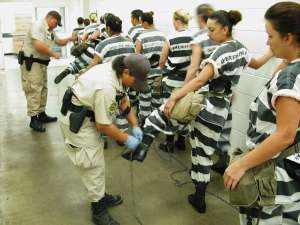
Jailing pregnant women has recently gotten much press with many women being shackled during childbirth. The Rebecca Project for Human Rights’s Anti-Shackling Coalition has been very vocal in its opposition to this inhumane treatment. The Prison Doula Project is another group working to improve conditions for pregnant inmates. Pregnant women are not only being sent to prison for violating real laws, but are also subject to “pro-life” sheriffs and judges locking them up for potentially breaking laws.

Other activism for women’s rights in prison includes The Advocacy Project which “believes that incarcerating women is an inappropriate and ineffective response to profound social problems such as poverty, racism, childhood sexual abuse, and mental illness,” The California Coalition for Women Prisoners, and the amazing, highly-recommended Women + Prison which also takes on the issue of incarcerating women who use violence against their abusers. All of these inspiring organizations utilize a feminist perspective in their activism. The International V-Day Movement also raises awareness of issues specific to women in prison with productions of the play Any One of Us: Words From Prison and screenings of the film What I Want My Words To Do To You.

In related news, the death of a prominent prison rights advocate in Greece caused an uprising in women’s prisons there. For just a few poignant references to the prison system in pop culture listen to “Folsom Prison Blues” by Johnny Cash, “Locked Up” by Akon, and especially “Prison Song” by System of a Down. If anyone knows any good songs in this light by female artists I would much appreciate a heads-up. To support prison reform (or abolition) and fight for human rights check out any of the organizations mentioned above and consider volunteering, donating, writing to your representative, or even just educating yourself (and those around you) more about this normally-hidden issue.


Day 22- Equality Now

Over the past week we’ve had discussions about violence against women and a few of the many organizations that work to eradicate VAW by using strategic nonviolent action techniques. The second week of March was a look into what women in different parts of the world are doing to overcome injustice in their own countries. And the first week of March we delved into what women of different races have done and are doing in the US to work towards gender equality.

The rest of the month of March will be a hodgepodge of activism, with no particular theme, other than take action. We will learn about women’s use of SNVA within the disability movement, sexual minority strategic actions, organizations that fight for reproductive justice and much more. Any ideas, suggestions, advice, links, comments or information would be more than welcome.

Today we will focus on the incredible work of Equality Now. Equality Now may be the first encounter I ever had with a women’s rights organization and organized feminism. I was in junior high and someone from EN was featured on Oprah and was talking about Female Genital Mutilation (FGM). From then on I was determined that no one should suffer abuse just because she is female.

Equality Now is available in English, French, Spanish and Arabic. This organization combats many forms of gender discrimination and gender-based violence, including FGM, human trafficking, rape, domestic violence, political participation and reproductive rights.

Started in 1992, “Equality Now documents violence and discrimination against women and mobilizes international action to support their efforts to stop these human rights abuses.” They have organizations in New York, Nairobi and London. There is an open position at the NY office for a bookkeeper and they also have internships at each of their locations.

The Women’s Action Network of Equality Now is how individuals and international organizations are mobilized in support of or in opposition to a specific issue. Here is a long list of the current actions supported by Equality Now. They include letter-writing campaigns to end FGM in Tanzania, and to end the femicides in Ciudad Juarez, among many other actions.

Equality Now also organizes political campaigns such as a benefit to combat human trafficking and sex tourism, and they publish Awaken which raises awareness and acts as a forum for strategies to combat FGM. They are also active in using UN mechanisms to urge governments to change their policies that are discriminatory towards women, and they support the Lawyer’s Alliance for Women Project which promotes individuals’ use of the law to combat injustice. Here is a list past events Equality Now has held, including a film screening of Fatal Promises and a panel discussion with the authors of Half the Sky. EN is supported by such celebrities as Meryl Streep.

There are many ways to support Equality Now and its work, including joining the WAN, taking actions and making donations. Equality Now also offers a list of creative ideas for ways to fight injustice. EN offers a number of items for sale featuring their super sexy logo and you can spread the word about their work by becoming a Facebook fan.


Day 21- Violence Against Women in the US

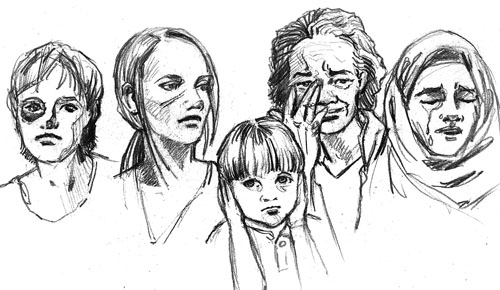
Whether it comes in the form of emotional, financial, physical, or sexual abuse, a significant portion of women in the United States face violence everyday. Violence, and the fight against it, may be the one unifying factor women across all sectors have in common other than their sex. Race, class, age, sexuality, gender identity, and ability all affect the type of violence women experience but none of these factors protect women from violence.

“Violence in the name of power, conquest, dominance, and submission are the cornerstones of”[1] the hierarchy of patriarchy in the U.S. Perhaps the most disturbing fact about violence against women in the United States is that most women are hurt by someone known to them, and the most dangerous place for women is a private home.

Luckily, help is available for victims of violence. “On September 15, 2009, 1,648 out of 1,980, or 83%, of identified local domestic violence programs in the United States and territories participated in the 2009 National Census of Domestic Violence Services,” conducted annually by the National Network to End Domestic Violence (NNEDV).[2]

This survey[3] found that 65,321 victims, (41,097 adults and 24,224 children) were served and 9,280 needs were unmet due to lack of resources and/or funding in one day. On that day four women were killed by their intimate partners and seven children were killed by their fathers.

Although the survey did not take into account how many men or women were served or what age group victims generally fell in–confidentiality issues can take precedence over sex- and age-disaggregated data–one in nine men and one in four women will be victims of domestic violence at some point in their lives.[4] Sixty per cent of unmet requests “were from victims seeking emergency shelter or transitional housing.” Insufficient funding for needed programs and services was cited by 40 percent of program respondents as a reason they were unable to provide services while “limited funding for translators, bilingual staff, or accessible equipment,” was cited by 11 percent of programs. In Texas alone, with 87% of shelters reporting, 2,988 adults and 2,443 children were served while 784 requests for services were unmet.[5]

Figures for the most underreported violent crimes–sexual assault and rape–are equally disturbing. The Rape, Abuse & Incest National Network (RAINN) estimates that one of every six women in the United States will be a victim of sexual assault in her lifetime.[6] Sixty percent of these crimes are not reported to the police. Domestic violence is also underreported.

“Language barriers, distrust of authorities, and fears of the legal system can deter reporting. Many immigrant women are reluctant to report domestic violence to authorities out of fear that they would be deported. Non-English speakers, migrant workers, or victims with disabilities may face specific obstacles in reporting….

“Traditional expectations in some cultures that demand silent subservience of women make it harder for battered women to report the abuse and deprive those women of community support. In traditional Navajo culture, for example, ‘peacemakers’ who informally adjudicate claims of battering may try to restore harmony by encouraging women to remain in abusive relationships.

“Lesbians and gay men may be reluctant to report intimate violence to avoid disclosing their sexual orientation, or they may fear police hostility. If gay men or lesbians use physical force to defend themselves from their battering partners, police may assume that two men wrestling is a ‘fair fight’ or think that two women struggling is a catfight or quarrel. If lesbians who are battered by their partner seek refuge at a shelter, their partners, who are also women, can gain access to them.”[7]

The result of underreporting and a judicial system entrenched in patriarchy is that on average three women are killed every day by an intimate partner[8] and only about six percent of rapists ever spend a day in jail.[9]

“Women are still being criticized for what they were wearing at the time of the rape and where they were when it occurred, and questioned why they were there in the first place–all of which would be unthinkable if the crime was, say, a mugging. As law professor Taunya Lovell Banks says, ‘No one ever questions if a person consents to other types of assault. Nonsexual victims don’t have to say “I didn’t consent to be hit with that crowbar.”‘”[10]

In 2008 the Federal Bureau of Investigation reports that 89,000 “forcible rapes” took place[11] while only 22,584 arrests were made for “forcible rape.”[12] The Center for Disease Control found that in 2007 sexual assault was the leading cause of nonfatal violence-related injuries for females age one to nine years old, while for all other age groups of females, including those younger than one year old, “other assault, struck by/against” was the leading cause of injury. Much of the physical violence in the report can be attributed to domestic violence and child abuse.

Sexual assault was the second most frequent cause of nonfatal violence-related injury for females under one year of age and those aged 10-14. It was also the number three ranking cause of injury overall and for women ages 15-34.[13] Citing the U.S. Department of Justice and the National Institute of Justice & Centers for Disease Control and Prevention, RAINN found that 90 percent of rape victims are female, and while white people make up 80 percent of all sexual assault victims, minorities are more likely to be attacked.

The lifetime rate of rape or attempted rate is highest for Native American women, at 34.1 percent. In America 24.4 percent of mixed raced women, 18.8 percent of black women, 17.7 percent of white women and six-point-eight percent of Asian women will be victims of sexual assault. Also, 80 percent of sexual assault and rape victims are under age 30 while a staggering 15 percent of sexual assault and rape victims are under age 12, and girls 16-19 are four “times more likely than the general population to be victims of rape, attempted rape or sexual assault.”[14]

Violence and abuse towards children is rampant in the U.S. but is even more common towards disabled people and is compounded by other identity factors. “‘Special ed’ classrooms have been, and still are in some school districts, a dumping ground for poor kids, kids of color, particularly those who don’t speak English, and kids with a variety of disabilities, all of whom learn more slowly or differently than kids in ‘regular’ classrooms.”

Thus, while most children, like most adult victims of sexual assault or familial violence, keep quiet, disabled children and adults are even more likely not to report abuse. Abuse has become institutionalized as “women still are being abused in some mental hospitals. In some cases, other patients and hospital staff have abused the women, and no one believes them because they are labeled mentally ill.”[15] One woman explains why disabled people are chosen as targets of abuse:

“There are the ones who are chosen because they cannot speak of the horror. There are the ones who are chosen because they cannot run away, and there is nowhere to run. There are the ones who are chosen because their very lives depend on not fighting back. There are the ones who are chosen because there is no one for them to tell. There are the ones who are chosen because no one has even taught them the words. There are the ones who are chosen because society chooses to believe that, after all, they don’t really have any sexuality, so it can’t hurt them.”[16]

Disabled people, especially those with mental illness or developmental disabilities, are often seen as being unaware of their surroundings and therefore treated as subhuman, creating an environment in which abuse against them is more normalized. One author found that “abuse is the rule, rather than the exception, in the experience of disabled people.”[17]

Forced sterilization and sadistic medical experiments still take place on individuals with developmental disabilities.[18] Other groups that have battled for their right to bodily integrity and against forced sterilization include Native American and Latina women and women in the prison system, especially drug addicts. Native American boarding schools, the prison system, and retirement homes are also infamous for their high rates of institutionalized violence. Elder abuse is one more example of violence that often goes unreported due to fear and unpunished due to lack of concern.

Fortunately, numerous avenues have opened up to fight sexual and domestic violence in the past 40 years, largely thanks to the women’s movement of the 1970s. From recognition of the existence of marital rape to the passage of the Violence Against Women Act (VAWA) in 1994, 2000, and 2005, women who are victims of violence now have more recourse to seek justice. There are also a considerable number of programs aimed at raising awareness of and preventing violence against women.

In addition to RAINN and NNEDV, Take Back the Night,[19] The Vagina Monologues/V-Day Movement,[20] The National Domestic Violence Hotline,[21] The National Sexual Assault Hotline,[22] and INCITE! Women of Color Against Violence[23]–co-founded by Cherokee activist Andrea Smith, are all non-governmental organizations whose work fights to prevent violence and help those who have suffered recover.

The United States government has also joined in the fight; in addition to VAWA, the federal government also operates the Office on Violence Against Women under the Department of Justice,[24] and includes resources for victims of violence through the Office of Women’s Health under the Department of Health & Human Services.[25]

Also, every state and U.S. territory has at least one organization dedicated to victims of violence, most of which provide shelter services in emergencies. Alaska, Idaho, Kansas, Michigan, Missouri, Montana, Nebraska, North Dakota, Oklahoma, Oregon, South Carolina, Tennessee, Vermont, the Virgin Islands, Virginia, and Wyoming all have one statewide organization that addresses the needs of victims of sexual and domestic violence. All other states and Washington, D.C., Puerto Rico, and Guam have at least one organization to address domestic violence and one to address sexual assault and rape.[26][27]

Many large cities throughout the U.S. also have local shelters and organizations to deal with high rates of violence. The presence of so many organizations working to prevent violence against women has helped; the annual number of reported rapes, sexual assaults, incidents of domestic violence, and intimate partner homicide have all fallen in the past 20 years, but, there is still much work to be done before patriarchy stops using violence to try to control women.


[1] Rowland, Debran. 2004. The Boundaries of Her Body: The Troubling History of Women’s Rights in America. Sphinx Publishing: Naperville, IL.g

[2] National Network to End Domestic Violence. 2009. “Domestic Violence Counts 2009: A 24-Hour Census of Domestic Violence Shelters and Services.” NNEDV: Washington, D.C.

Click to access DVCounts09_Report_BW.pdf

[3] See the full 2009 report in Appendix 4.

[4] The National Domestic Violence Hotline. “Get Educated.” 12 June 2010. http://www.ndvh.org/get-educated/abuse-in-america/

[5] National Network to End Domestic Violence, 2009.

[6] Rape, Abuse & Incest National Network. 2009. “Who are the Victims?” 12 June 2010. http://www.rainn.org/get-information/statistics/sexual-assault-victims

[7] Levit, Nancy and Robert R. M. Verchick. 2006. Feminist Legal Theory. New York University Press: New York.

[8] The National Organization for Women. 2009. “Violence Against Women in the United States: Statistics.” 7 August 2010. http://www.now.org/issues/violence/stats.html

[9] Rape, Abuse & Incest National Network. 2009. “Reporting Rates.” 12 June 2010 http://www.rainn.org/get-information/statistics/reporting-rates

[10] Dusky, Lorraine. 1996. Still Unequal: The Shameful Truth About Women and Justice in America. Crown Publishers, Inc.: New York.

[11] Federal Bureau of Investigation. 2009. “Table 7: Offense Analysis United States, 2004-2008.” 12 June 2010 http://www.fbi.gov/ucr/cius2008/data/table_07.html

[12] Federal Bureau of Investigation. 2009 “Table 29: Estimated Number of Arrests United States, 2008.” 12 June 2010. http://www.fbi.gov/ucr/cius2008/data/table_29.html

[13] Office of Statistics and Programming, National Center for Injury Prevention and Control. 2010. “10 Leading Causes of Nonfatal Violence-Related Injury, United States: 2007, All Races, Females, Disposition: All Cases.” Center for Disease Control. 25 July 2010 http://www.cdc.gov/ncipc/wisqars/nonfatal/quickpicks/quickpicks_2007/violfem.htm

[14] RAINN, 2009.

[15] Brownworth and Raffo, 1999.

[16] Keith, 1996.

[17] Keith, 1996.

[18] Pilkington, Ed. 4 January 2007. “Frozen in time: the disabled nine-year-old girl who will remain a child all her life.” The Guardian. 7 August 2010. http://www.guardian.co.uk/world/2007/jan/04/health.topstories3

[26] Ibid.

Related Articles