Category Archives: Violence Against Women

You Don’t Hit Girls! by Robby Ally

First of all I would like to thank my teachers for cultivating a person that somebody as active in the equality movement as Feminist Activist would consider a feminist. Even when I write the word now, feminist, in relation to myself, I laugh out loud. Thank you for the opportunity to have so much fun wading through my dream of memories and try and add a bit of value to your meaningful work. Before it’s too late I would like to dedicate this to all the men out there who cannot express themselves and to all the women who are confused by their own physiology.


“YOU DON’T HIT GIRLS!!!”

That was what the girl next door’s father yelled at me as his carpenter’s hands wrathfully shook me by the shoulders with my feet dangling in the air. Before the shaking stopped, although I am not sure it has ever stopped, I suddenly thought to myself, “Why don’t you hit girls?” They are bigger, stronger, and certainly smarter than me. See, I had the grace to be the last one born to nice parents who already had two daughters. So in my little boy brain, girls were indeed bigger, stronger, and smarter than me.

Ok, so as not to bring the water to a boil as I dive into the deep end here, please allow me to state my intention on this piece. What I would like to share is that my intuition tells me latent violence on the intrapersonal level affects everyone on the interpersonal level in the form of overt violence. Through my experience this latent violence which crosses gender and cultural understanding seems to be realized by few and talked about by fewer though I suspect if affects just about all of us. I would like to draw off an example with a type of violence I can empathize for males revolving around an understanding of machismo. I would also like to bring up a type of a violence I cannot fully empathize with having to do with the whatnots of the female brain.

I remember a moonless night walking home from a wake when I was a fresh community organizer maybe a month into my job in rural Panama. The road was hard packed dirt slimed with mud and I was walking in the dark because the only person who had a flashlight was proving to me and his two sons that a man doesn’t need a light to make his way home…no matter how drunk he may be. That is why I thought to ask my dear friend, who is an even five feet tall with a body chiseled out of hard wood from throwing machete his whole life, what does machismo mean? He replied with one word as some roosters release a single crow during a cockfight, “Pride.”

A teacher of mine says that when the mind becomes full of pride, there will arise thoughts of competition and humiliation. As this pride becomes stronger and stronger, one will experience the suffering of quarrels and abuse. On the other hand, to my friend, pride was the highest expression a man could take. Machismo meant walking tall and being strong for the family at all costs. I can only speculate, but it may have been the internal struggle between competition and humiliation that this man’s pride cost him the companionship of his wife. My friend didn’t learn at the same age I did, you don’t hit girls.

To put my friend’s life into perspective, when he is at home, he is the “man of the house.” His dominance gets him the biggest portion of dinner and the only finger he lifts is to his mouth. But, when my friend is sweating for six dollars a day, he is humiliated by the man who owns the land. The landowner can do whatever he wants because he knows my friend has a crop of children back home with all their necessities and ambitions. It is a reality that my friend is not treated like a king when he is outside the home. When he returns home, his competitive attitude returns and to consider himself a man, he physically exerts his dominance over the humiliation that his six dollars a day isn’t enough to buy the opportunities for his children to break the cycle.

Furthermore, the violence doesn’t stop with the man. There are some instances that the latent violence extends from the women to the children. And from the children to the domesticated animals. To point out a sensitive subject, the children who are abusing animals may be abused in some form or another from the top down.

Without the slightest inclination to justify overt violence, I am inclined to understand my friend’s latent violence. A framework I can empathize with would be to imagine as vividly as possible what I would be going through if I were suffering the same affliction of pride given his conditions. As a man, I can ask myself how I would feel and how I would want my family to treat me. I can understand what a wounded man wants most. Sometimes, that is just a little bit of sympathy in the form of understanding that life is hard.

In an attempted to cross back over the picketed gender fence and provide an answer to the question, I aspire not to hit girls not just because I love them and want them to be happy; it is also because I simply do not understand them. My oversimplified understanding of women tells me that the female brain is flooded on a monthly basis with chemicals from birth until death. The precarious position I have found myself in over and over in this life suggests that some women do not understand their own physiological cycle. And for the sake of being polemical, I think that is a form of intrapersonal violence which can be seen in the form of interpersonal violence… having two brilliantly strong older sisters I can attest to that 🙂

So using the little empathy framework, my testosterone controlled brain’s solution is to be a provider. My goal is to provide space for women to grow into their inner beauty… usually by muting my words with a smile. And when I have the chance my satisfaction is to provide women with the opportunity to sleep for eight hours a day, eat three times a day, and stretch out in some fresh air. The only way to make this more complicated is to be in charge of providing ladies with their chemical fix by making strong coffee and finding delicious sugary treats. And people, I ain’t even getting into the utopian pleasure of random acts of kindness here!

That is all I got. It’s that simple. If I am a feminist, I am left wondering why on this tiny little planet it is all so complicated… oh I almost forgot my own pride.

Peace and love to all. May they find happiness and the causes of happiness and be free from the sorrow of suffering.


Currently Robby Alley can be found in the highlands of western Panama. He is working on an initiative to create legal and economic instruments to promote the sustainable use of biodiversity around a national park. Part of his passion is found while informally promoting the participation of rural community members in projects that create sustainable livelihoods through protecting nature. It’s been a struggle, but Robby has found happiness loving women and laughing with men.

Patriarchy and Misogyny in Politics Pave the Way for Violence Against Women by Fabrice Gernigon

I must admit that writing about gender issues is not the easiest task I have been given. And it is exactly because I don’t feel comfortable with that subject that I felt it would be interesting to dig a little deeper.

My feeling is that I am not the only one not to be at ease, because in France there is a huge gap between the progressive speeches politicians give to the media and the reality. The reality is that every three days a woman dies because she has been hit by her husband. This year more than 650,000 women reported that they had suffered from physical violences, and in their own home for half of them.

Despite the fact that this is a huge issue, I have to admit that I have never been directly exposed to it in my country. However I am convinced that even though violences against women are of course denounced by most men, they are deep-rooted in the customs of our society that is traditionally, and despite all appearances, still patriarchal and misogynist.

I think that the political arena is in a way a good caricature of our society. The French parliament, for example, is highly dominated by a male presence. Despite the fact that we had some very popular women in politics, most of the previous French Prime Ministers have installed women in their governments (as they had promised strict parity during their campaigns), to later replace them by men.

I am convinced that the lack of female representation in politics, or the difference of salaries between men and women who have the same level of experience and education, are facts that necessarily help maintaining, on one hand, the feeling that women are inferior, and on the other hand, that the place where they belong is at home!

A very interesting NGO (called La Barbe-which literally means The Beard but which is also a phrase that we sometimes say in France to say “That’s enough!”) pointed out that issue through their different actions. The women who work at that NGO went to high political or cultural institutions (such as the Parliament or the French Academy). Their actions consisted of breaking into these highly respected places, in silence, with fake beards. By doing that they pointed out the fact that there was almost no female presence in these institutions and their message was basically “Unless you are bearded there is almost no way you can have a place in these institutions.”

I am conscious that there is a difference between misogyny and physical violences against women. But what I want to point out is that misogyny often ends up justifying these violences.

A few months ago, the head of the International Monetary Fund, Dominique Strauss Kahn, (who was close to starting his campaign for the French presidential elections) was accused of the rape of a hotel maid in New York. There has been huge media coverage over this event in France since this man was seen, by most of us, as the next French president. Therefore, a lot of politicians and journalists started debating over what happened in room number 2806.

Despite the fact that nobody really knew what happened in that room, that “underground misogyny” suddenly came back up to the surface in the words of some politicians and journalists. Even though DSK was accused of rape, one of his political allies (Jack Lang) said that this man should be released because he had paid a large fine and because “He didn’t kill anybody.” It is a way of saying that rape is not a big deal after all, since nobody died.

A journalist called Jean-François Kahn said his impression was that there was no violent attempt to commit rape but that there was an “imprudent action.” He later specified by saying that DSK just lifted the skirt of a servant.

I think that through the DSK scandal, we have clearly witnessed that tendency to put rape into a favorable perspective. This is for me a sign that misogyny is not as innocent as we (men) want to think it is. And part of the solution to violence against women will come from getting rid of that very old-fashioned habit.

Fabrice Gernigon: I started my studies with a Bachelor of Arts in Information, Communication and Cultural Mediation. As I was interested in journalism, in 2007, I studied Political Sciences with a major in “Media, Society and Globalization” at the French Press Institute in Paris. Then I decided to focus my studies on the role of Media in conflict prevention and peace building at the University for Peace in Costa Rica. I later did an internship at the Head Office of UNESCO in Central America, with the Public Information Office. Back in France in 2011 I worked as a news coordinator for a French news channel called BFM TV.


Be “Good” to Women by DK

First and foremost, it is quite a saddening and somber fact that violence against women happens everyday, at an alarming rate. I was raised completely sheltered from this reality. I rarely saw it first hand and still to this day it seldomly occurs before me. Yet I know it is very real. My limited knowledge and experience on the problem narrows my scope on what common factors are linked to this. All I can say is that the lessons I learned from my mother engraved in my morals to be “good” to women.

The example my father and mother set for me, whether I like them or not, are the cornerstones of my character. I do not know or understand what mental/emotional process a male would go through to act violently towards a woman who is more often smaller, and physically weaker. It is as if these men prey on the weak, which to me is a trait of a weaker, sick individual, who is in turn a dishonorable coward who must be punished to a dangerous extent. I don’t believe social class has anything to do with it, though culture might, because of the submissive, or slave-like roles women play in some cultures maybe?

I recall talking to a Ugandan militant who worked with me and a small team of Marines in Iraq. I vividly remember me and him talking about how they handle rapists and molestation in his home country; he said to me when they caught a man raping a woman, either during or after the event, the man was burned alive in the street, everyone watched… including the police. The crime was taken so seriously no one intervened to stop this man’s punishment. When he told me that I was surprised and stoked at the same time.

Rape is a horrible, horrible thing and it has serious effects on women. I have heard stories from women my age of how they were sexually assaulted or raped; the mental effect on them is astonishing.

In America I feel it is what young males are exposed to that builds chronic mental distortions of women. A man’s individual perception is HIS own uniquely shaped reality and it may not fall into the status quo: everything that falls outside of the status quo is where problems lie. There are so many bad examples/role models, demonstrating negativity, violence, sex, drugs, and immoral behavior that is glorified in pop culture that lead to bad behavior i.e. violence.

I do not think that a man wakes up one morning and says, “Hey I feel like raping and beating a woman today.” It has to stem from a pattern of thought from a wrong perspective built up over time… from x and y. The only reasonable form of prevention in regards to rape and sexual violence has to be through education.

DK is a Mexican American country boy. He grew up in a very small town in the foothills of California and attended elementary school with Feminist Activist. He started college after completing a stint in the Marine Corps and enjoys surfing every chance he gets. He claims he’s “not a feminist but” he has always felt women are equal. 


16 Days of Activism Against Gender Violence

Today marks the beginning of the annual 16 Days of Activism Against Gender Violence campaign starting today with the International Day for the Elimination of Violence Against Women and ending December 10 on International Human Rights Day.
Key dates throughout these 16 days include:

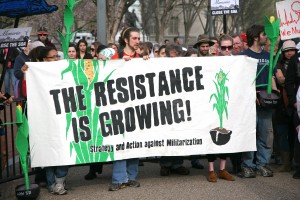
This year’s theme is From Peace in the Home to Peace in the World: Let’s Challenge Militarism and End Violence Against Women! In a roundabout way Feminist Activism will deal with militarizism by exploring masculinity. Over the next 15 days I will be posting pieces from guest authors, men who volunteered to write and share their thoughts on gender-based violence.

Authors come from France, Germany, Iran, Turkey, the UK and the US so please keep in mind that many authors are not native English speakers and the ideas expressed may not coincide with my own. Check back starting tomorrow to read some very insightful and varied opinions from some thoughtful and feminist men, or subscribe so the newest posts automatically land in your inbox!

If you’re inspired to participate in the 16 Days Campaign you can check out the United Nation’s UNiTE Say No to Violence suggestions of 16 actions for 16 days, or read and share UN Women Executive Director Michelle Bachelete’s 16 Steps Policy Agenda to end violence against women and girls. And wear a white ribbon!

Also, good thoughts and wishes of quick healing are with Mona Eltahawy, an American-Egyptian journalist who was recently brutalized and sexually assaulted by riot police in Cairo. The dangers of being a woman are compounded by the dangers of journalism, and vice versa, so let’s take the time to advocate for everyone’s human rights! See you back here tomorrow.


Love Your Body Day

October 19 is Love Your Body Day, something I’ve been celebrating since I was introduced to the concept in college at San Diego State University by the courageous members of the National Organization for Women. Erin Matson, NOW’s Action VP had this to say about body image and loving yourself. And while I very much appreciate Meghan McCain’s courage in posing for the NOH8 Campaign and openly discussing body image issues, the photo chosen by Hollywood NOW to showcase their Celebrity Host could not possibly fit any tighter into the media box of what women in America are supposed to look like. Welcome to the 2011 Love Your Body Day Blog Carnival.

Many issues arise when talking about body image, especially for women; and for all we (especially feminists) talk about personality and intelligence and inner-strength being more important than outer-beauty… the truth is, in every society, women are judged on outward appearance.

From men in America and the UK navigating body image standards set up by advertising and the porn industry to transsexuals in Iran fighting stigmas of “abnormality” to young girls in Cameroon being subjected to breast ironing to the more than 100 million girls and women worldwide suffering the effects of Female Genital Mutilation (FGM), unfortunately our bodies are battlegrounds.

Eating disorders affect more than 10 million people a year in the US alone, so think twice before you praise someone for loosing weight. Eating disorders affect women, girls, boys and men around the world, with silverchair’s frontman Australia-native Daniel Johns being one of the most recognized male celebrities suffering from anorexia anywhere. Because of the incredibly unhealthy body images fed to us by the media cosmetics is a multi-BILLION dollar industry and rates of plastic surgery to “beautify” everything from earlobes to vaginal labia are skyrocketing.

So, as always, I want to give suggestions for you to improve the world around you. How can we fight the Ariel complex of altering our bodies and loosing our voices to be attractive?What can you do to promote realistic body images of real people? Speak up! Learn to accept that hundreds of body types exist and are natural; don’t give in to media standards fueled by capitalist greed designed to make you spend money; demand that stores carry your size clothes and shoes whether you’re a naturally tiny size 0 or a naturally curvy size 20; look up to real people around you for inspiration, your teachers, parents, and mentors, not airbrushed and nip/tucked celebrities; if someone tells you you’re ugly/fat/unloveable/don’t-fit-neatly-into-the-claustrophobic-boxes-built-by-the-media, tell them to fuck off; and send sexist ads into Ms. Magazine’s No Comment section. Understand that differences, especially body differences like sex, (dis)ability and race, are beautiful!

Finally, what’s the most important thing you can do? Love your body! “The moment we choose to love, we begin to move against domination, against oppression. The moment we choose to love, we begin to move toward freedom, to act in ways that liberate ourselves and others.”- bell hooks


Domestic Violence Awareness Month

October is Domestic Violence Awareness month. If you need to raise your awareness levels you can re-read any of the Feminist Activism blogs from the third week of March (like Day 21- Violence Against Women in the US or Day 20- RAINN & NDVH or Day 15- The Clothesline Project). Also check out Ethiopian Feminist to learn about DV and a particularly gruesome case there, and A Hmong Woman for some insight into DV in America’s Hmong community and to enter a discussion on the effects of patriarchy and gender roles on DV survivors. You can then see the trailer for Education sans Excision about Female Genital Cutting/Mutilation (FGM/FGC) featuring Senegalese rapper Sister Fa. And watch the trailer for Crime After Crime, about a woman’s attempt to get justice after being imprisoned for her connection to her abuser’s murder.

You can also participate in the UNiTE Campaign to End Violence Against Women by voting on T-shirt designs to spread the message that it’s time to stop the violence. For an interesting art piece exploring masculinity see Man of the House. I also highly encourage readers to check out Man Up, a campaign directed towards men who want to stop violence against women. And don’t forget that all year-round your local DV shelters need donations of money, supplies and time. Volunteer! And make the world a better place.

As some of you may know between November 25 (the International Day for the Elimination of Violence Against Women) and December 10 (International Human Rights Day) is the international campaign 16 Days of Activism Against Gender Violence. For me everyday is a day to take action against gender violence but for those of you who have other jobs, this is a call to action.

I am opening up the floor, to my male readers in particular, for readers to share their perspectives on gender-based violence, and will offer my blog as the platform. I would love to have enough guest posts for each day of the 16 Days campaign. Ideally the post would be 500-750 words (although more or less is fine too) and would feature your perspective on VAW and what can/should be done about it. I will spell/grammar check it for you before it’s published. ;)You are welcome to look at it from any angle you like and I encourage you to think about how race, class, (dis)ability, sexual orientation, gender identity, age, education, nationality, religion, location, language and education change the situation. Whether you are interested in the laws in your country and how they punish (or not) perpetrators or you’d rather delve into the creation of masculinities in your culture that leads some men to violence, or any other side of the story, is totally up to you. Because I have a good group of amazing feminist men in my life this project is already well underway but if you would like to participate (and I don’t already know it) leave a comment and I’ll contact you about it. The deadline is October 31 so you have plenty of time to think and write and revise. Thank you in advance!


Am I just paranoid, or…

Just because you’re paranoid don’t mean they’re not after you. – Kurt Cobain

I think that many of my female readers share my feelings of paranoia but if not please let me know I’m just crazy. With this post it is my male readers I hope to speak to. The purpose of this post is in no way to blame all men for the immoral and illegal choices of some men, rather, the aim of this post is to put more fire in the bellies of male allies in the fight for women’s equality. I also in no way mean to diminish or minimize the experiences of men, boys and transgender individuals who have been sexually assaulted or raped. Their traumas are just as real as any woman’s and certainly are not given the weight in our society that they should be. With this post I want you to know specifically what my grievances are, how I feel as a woman on a daily basis, and, most importantly, what you can do to help. With everything in the news lately and all the statistics available surrounding the heinous rates of violence against women and sexual assault and rape around the world, it’s easy for me to feel like women, and our rights, are under attack.

For most of my life I have felt vulnerable simply because I am female, to the point that I’ve taken self defense classes. I’m sure some of this fear comes from having been repeatedly sexually assaulted by male relatives as a girl, but even now, as an adult woman, I find my mind shift to dark thoughts quite often when I am in the company of strangers. To live in constant fear of violence is absurd and ultimately will make you crazy, and I hate that I buy into the rape culture myth that violence against women, especially sexual violence, happens at night when a stranger jumps out from around a corner and tackles you.

Most rapes are committed by someone the victim knows and 50% of all rape/sexual assaults occur within 1 mile of the victim’s home! The Service Women’s Action Network also explains how prevalent rape and sexual assault against members of the US military is in this publication. See previous posts on violence against women including Violence Against Women in the US, The Clothesline Project, Take Back the Night, the V-Day MovementRAINN and NDVH, and others for more information on the situation of women in the US.

Women in other parts of the world are in even more frightening situations. Today Al-Jazeera posted this article explaining why Afghanistan, the Democratic Republic of Congo, Pakistan, India and Somalia are the top five most dangerous places in the world to be a woman. Reasons ranging from the feminization of poverty, rape as a weapon of war, and harmful religious and cultural practices, to female infanticide and female genital mutilation affect the safety and livelihoods of women in these places.

Back in the US, Republicans are taking their misogyny global by trying to defund Planned Parenthood at home and abroad, using “states’ rights” rhetoric to make abortion unattainable for the most vulnerable women in their districts, and trying to reinstate the Global Gag Rule, which really does just make me want to gag. But women and men are standing up for equality and human rights, including the 373 people who sent in pictures of themselves to NARAL Pro-Choice’s Stop the War on Women video to the US Senate, the fierce founders and participants of the Hollaback! movement to stop street harassment, and the thousands (millions?) of people who have participated in SlutWalks around the world to protest a culture of victim-blaming surrounding sexual assault. SlutWalk deserves its very own post, despite the massive amount of press it’s already received, so look out for that.

I think our biggest issue in victim-blaming comes from our rape culture myth that what women wear or do or say affects their chances of being raped: it doesn’t. Women should not have to protect themselves or change the way they want to appear for fear of rape: People should not rape. Period. Women have been objectified by American society for quite some time and while reinforcing that women are objects to be seen is not ideal, women should be allowed to be seen however they want, and should be able to have sex with whomever they want, without any individual thinking that anything other than clear and sober consent means yes to sex. And in the spirit of Hollaback! what I choose to wear does not give you permission to yell at me either.

So, with all this in mind, am I just paranoid or

-do you wonder whenever you’re in the shower or using a public restroom or having sex with someone for the first time if a webcam is broadcasting your nakedness all over the internet?
-do you also check your backseat whenever you get in your car to make sure a stranger or stalker isn’t waiting to rape and/or kill you?
-do you get nervous when you step into a full elevator, worried that someone might touch you in an unwanted and sexual way?
-do you think twice before going somewhere you are unfamiliar with, in case there are dark corners for bad people to hide in?
-do you feel like you’re being watched in a disgusting, lustful way by men of all ages all the time?
-do you remind yourself that yelling “fire” is more likely to garner help than yelling “rape” when you feel like someone is following you?
-do you carry your keys in your hands, extended between your fingers as you make a fist when you walk home after dark?
-do you avoid making eye contact with strangers for fear that they will misread your friendliness for a sexual advance and then rape you?
-do you wonder, whenever you’re in a group, how many of the people with you have raped someone, or have been raped?
-do you have any idea what it’s like to feel like you’re the constant target of society’s violent sexual urges and need to control?

Ladies? Gentlemen?

But cheer up, there are lots of ways you can help!

-Don’t rape anyone: passed out, drunk, wearing next-to-nothing, came onto you before, had sex with you before, started a sexual encounter and then changed her/his mind, is underage… just don’t.
-If that isn’t clear, read this.
-If you still don’t get it, watch this.
-Don’t tell rape jokes.
-Don’t use the word rape to complain about the way your school, bank, job, or government is treating you.
-Don’t let your friends get away with telling rape jokes. Explain to them why it is hurtful, wrong and dangerous.
-Don’t let your friends get away with using rape to complain about institutions.
-If you hear someone bragging about a sexual assault or rape, call the police.
-If you’re in public and you hear/see someone harassing/assaulting someone else, call the police.
-If you hear/see domestic violence taking place, call the police.
-March in rallies for human rights, healthcare, immigration rights, economic freedom and marriage equality.
-Call or email your lawmakers and tell them to end the backlog of untested rape kits in your local police departments.
-Call or email your lawmakers and tell them to support the International Violence Against Women Act.
-Sign this petition to demand that the FBI change the definition of rape from “The carnal knowledge of a female forcibly and against her will” to something that includes date rape, oral, anal and statutory rape, rape with an object, finger or fist and rape of men.
-And share this post, and the many others out there like it written by feminist who are tired of being afraid, with anyone who can and will read it. Thanks for your support!


The Damning Effects of Militarization

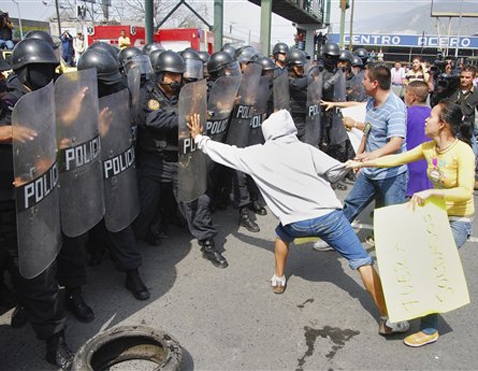
Militarization is the process of making society believe that violence, especially war, is an effective way to solve conflict to the point that any nonviolent attempt to solve conflict is snidely dismissed as ineffective, liberal, feminine, sissy or a whole host of other derogatorily used terms. The global problem of militarization takes different forms in every country, and even within each community. In Israel and Palestine troops attack women protesting the occupation. In Colombia women are participants and victims of violence perpetrated at every level of society. In Uganda those participating in the Walk to Work protest have been met with tear gas and bullets by the government’s security forces. I should be upfront here and say flat-out that I am very far left in my ideas of effective government: I don’t believe in borders or states. Imagine if the $553 billion defense bill just approved by the House was money spent on education, or healthcare, or ending violence….

Militarization is a gender issue. A gender issue is anything that disproportionately affects men, women, boys, girls and/or intersex or transgender adults or youth. Therefore, because militarization has a hugely disproportionate effect on men, men’s violences, and masculinities, it is a gender issue. It is also a gender issue in that anything defined as masculine can only be defined in opposition to that which is feminine, and because militarization of a given society negatively impacts men’s attitudes towards and treatment of women.

Many right-wing misogynists claim that feminists hate men, or that gender issues are only women’s issues, but militarization is a prime example of the genuine concern for well-being that many feminists around the world have for men who are part of the military. In graduate school one of my most influential professors, Dr. Sara Sharratt, opened my eyes to a reality that is often denied: killing people is not natural for anyone, male or female; men must be trained to kill. And as her work as a psychologist working with soldiers returning from war taught her, many men react negatively to having killed someone. The stress, trauma and horror that soldiers endure in battle is much too high a price for the false promise of “protecting freedom.”

Here in Turkey males are required by law to serve in the military, reinforcing the idea that there is honor in using violence. The belief in the effectiveness of violence is so strong in Turkey that even liberal, feminist groups condone the use of violence in protests and do not see the need or efficacy of strategic nonviolent action. Very few groups speak out against militarization here. One effect of this belief is that, according to a new report by Human Rights Watch, 47% of women in Turkey experience some kind of physical or sexual intimate partner violence within their lifetimes, regardless of education, class, religion, or region and much too few women’s shelters to accommodate the need. Violence between a couple is seen by police, the government, and society, to be a personal problem and victims are constantly told that they cannot expect their partners to be nonviolent.

In the United States there is better enforcement of laws against domestic violence and yet 1 in 4 women and 1 in 9 men in the US are victims of intimate violence at some point in their lives. Militarization in America is slightly more subtle than in Turkey, but commercials to “Go Navy,” be “Army Strong,” and join “The Few, the Proud, the Marines” constantly inundate television viewers. At the same time military recruiters are present on junior high, high school and college campuses to convince children that the military is their best route out of their hometown. Militarization is therefore a compounded heap of inequalities: class, race, gender, education, location, language, ability, and age.

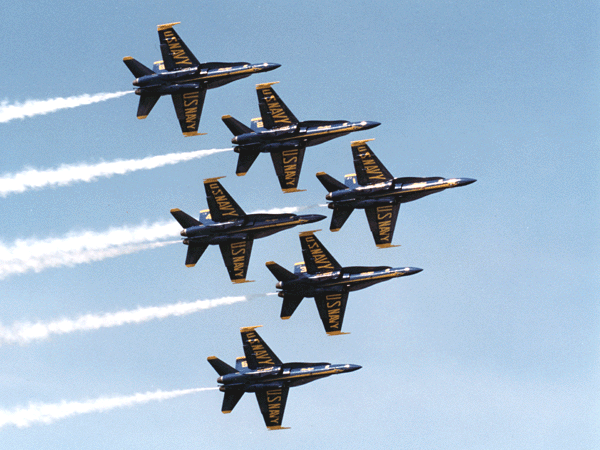
Militarization in the US is forced on Americans at a very young age, when children at sporting events see the poorly named Blue Angels fly overhead with a roar as a giant American flag is unfurled across the playing field. The idealization of being a servant of war as a good, honorable thing is fed to Americans to serve the greed of the corporate world. We are taught from the time we can talk that America is the best place in the world, the most just, the most equal, the fairest. We have been lied to. We are told these things so that when our Commander-in-Chief calls on us to “protect freedom and liberty” and “stand up to injustice” our first response is to join the military killing machine so we can “serve our great nation.” This idea that the best thing a person can do for his country, the most masculine act possible, is serve in the military totally discounts the experiences of a great number of people in America including disabled men, transgender or intersex men, openly gay or bisexual men, men who believe in nonviolence, and women.

Unfortunately it is only after the damage of war has been done that many of the wide-eyed military recruits become hardened advocates for peace. The brave men and women who understand the error of the US’s ways in using violence and force to fill corporate pockets have formed a number of anti-war groups. Founded in 1985, Veterans for Peace, is seeking signatures for a petition to bring the troops home from Afghanistan. One of the newer organizations, Iraq Veterans Against the War, seeks an end to the occupations of Iraq and Afghanistan, and is pressuring the military to provide better care for returning vets. Vietnam Veterans Against the War states “We believe that service to our country and communities did not end when we were discharged. We remain committed to the struggle for peace and for social and economic justice for all people. We will continue to oppose senseless military adventures and to teach the real lessons of the Vietnam War. We will do all we can to prevent another generation from being put through a similar tragedy and we will continue to demand dignity and respect for veterans of all eras. This is real patriotism and we remain true to our mission.”

Cynthia Enloe renowned author and feminist, is one of the voices at the forefront of the anti-militarization effort. This piece nicely summarizes Enloe’s main arguments against militarization and its effects on women. Even non-governmental organizations, international organizations and peacekeeping missions are fraught with problems because of militarization, as Enloe and my professor Nadine Puechguirbal explain in a talk here on Haiti. For me, the most compelling argument against militarization is that violence does not work. It is ineffective! Nonviolent action, especially when used strategically, is an extremely effective tool for change and one that I hope more people will begin to utilize once they understand its efficacy. I will forever be indebted to Dr. Mary King for teaching me the strategy of nonviolence. In the future I will write a post summarizing the ideas behind SNVA.

If you want to do something to help end the militarization that is damaging the world here are a few ideas: teach girls to be strong, both physically and emotionally; teach boys they have a right to feel emotions and express them; teach all children the importance of respectful problem solving and dialogue; teach young people that there are many ways they can serve their country other than military service, including the Peace CorpsAmeriCorps, Job Corps, the Medical Reserve Corps, Citizen Corps, the Civilian Response Corps, and Serve Corps, as well as through thousands of non-governmental and non-profit groups; learn about strategic nonviolent action and then share what you know; and most importantly, practice strategic nonviolent action to bring an end to injustices around the world!


Day 31- Connecting the Dots

As Women’s History Month wraps up today I want to express my deep gratitude for all of the support I have felt from readers over the past 31 days. I hope that you have enjoyed the discussions and have learned something. I also hope that you can see how interconnected every individual’s struggle for justice is with everyone else’s. I welcomed you all to Feminist Activism with this quote by Rev. Dr. Martin Luther King Jr. “Injustice anywhere is a threat to justice everywhere.” As I conclude my personal goal of writing everyday, I want to focus on the overarching ideas of justice and equality.

In the web of humanity everyone’s fate is intertwined with everyone else’s, so even if we personally are not facing injustice or persecution, we must stand up for those who are. Fighting to secure basic rights and freedoms for everyone will someday protect you, or someone you love. This statement by Pastor Martin Niemöller comes to mind.

Human rights covers a huge range of things, from women’s rights to access to education to the rights of the disabled to access to health care, etc. Merely fighting for each individual human being to have equal access and opportunity will not fix what is wrong with our world though. Environmental issues and the rights of other species to not only exist but to thrive need to be priorities as well, for even the most equal of societies will fall if the planet cannot sustain it.

A look into one individual’s life will clearly illustrate how dependent all living beings are on each other. Let’s look at an average white American woman: 30s-40s, two teenagers and a shelter rescue dog, one expensive abortion, Christian with no time for church, divorced because her alcoholic ex-husband broke too many of her ribs, high school graduate, working class–living paycheck to paycheck, no retirement fund to speak of, paying a mortgage, lives in the suburbs downwind from her job, tries to help take care of her disabled mother who lives in a run-down nursing home, health insurance only covers cervical cancer screenings every two years instead of the recommended annual screenings, her gay brother lives with her because he was forced out of his home when his partner passed away and their home was automatically given to the legal “next of kin,” her mid-90s car has tons of miles on it and is just as hard on her wallet as it is on the environment, and her best friend is the Mexican woman with whom she can barely communicate who is charged with her mother’s care. This story of “middle America” could go on and on.

Every aspect of an individual’s life–sex, race, sexual orientation, gender identity, education, class, religion, ability, language, environment, legal status, criminal record, and age–affects her/his reality. Each of these factors individually can be cause for discrimination but when more than one factor is “abnormal” the individual can feel hopeless. The norm for American society is male, white, straight, man, some college, middle-upper class, Christian, nondisabled, English-speaking, suburban, US citizen, non-convict, 30s-40s. Imagine how harsh someone’s reality is if these are the facts: female, Latino, bisexual, transgender FTM, some high school, working class, atheist, disabled, Spanish-speaking, urban, undocumented, ex-convict, 60s. Obviously this is an extreme case of being at the bottom of the food chain but this man does exist, many times over!

Let’s go back to our “average” American woman. Her Christian upbringing lead her to get married at age 20 and have children by age 22. After her youngest child went to school she tried to get back into receptionist work but found she had been out of the game too long and no one would hire her. The family couldn’t survive on her husband’s paycheck alone so she took an entry-level job at a manufacturing plant where she was often sexually harassed for being a woman and doing a “man’s job.” Despite missing work for three weeks because her husband put her in the hospital, she worked her way up in the union and, since she left her husband, luckily makes enough money to get by every month. Her brother helps with some of the bills but his employers give him just enough hours to qualify for health insurance, out of pity, because they know if he ever lost his health insurance his HIV status would make him “uninsurable.” Her children, whom she would sacrifice anything for, are in high school, sexually active, average students, mildly involved in extra-curricular activities. She’s straight but sometimes wonders what it would be like to be with a woman. Her mother’s illnesses are taking a toll on her and the Mexican caretaker at the nursing home is the only person she feels comfortable being honest with, partly because she believes the caretaker can’t understand her. She’s been having some pains in her stomach lately which could be attributed to cervical cancer or could be a result of years of inhaling pollution, but she can’t afford to take the time off work to see a doctor during normal business hours, and couldn’t afford her co-payment anyway.

We must all fight each other’s battles. My only word of caution is not to fight for what we think someone else wants, but to fight for what she says she wants, otherwise we’re repeating colonialism all over again. If you are interested in fighting injustice in any (or all) of its many forms, get involved in your community. The old feminist adage to “think globally and act locally” is still true. Always consider what effect your actions will have on the global community and start to make changes in your life and at the local level. This explanation may help.

Some organizations with whom you can explore the birdcage of oppression include The Connect the Dots Movement focused on human, animal and environmental well-being, The Connect the Dots Network which teaches green/sustainable environmental practices to social justice non-profits, 100% Renewable Energy that explains the folly in ageist discrimination in relation to the environmental movement, Counter Quo which examines how a multitude of factors compound oppression and sexual violence, Advocates for Environmental Human Rights that is a legal service that understands how race and security issues affect environmental issues, and L.O.V.E. Living Opposed to Violence and Exploitation which explores the necessary links between veganism and feminism, and on combating speciesism, racism, sexism and rape culture.

Tomorrow is April 1st and the start of Sexual Assault Awareness Month. I will not be writing everyday but hope to be able to post at least 2-3 times per week, so check back often for new discussions, or subscribe so you’ll automatically be notified when I post something new. As always, any ideas, links, information, etc. is more than welcome. Thanks y’all. Keep fighting the good fight!


Day 30- Indigenous Rights

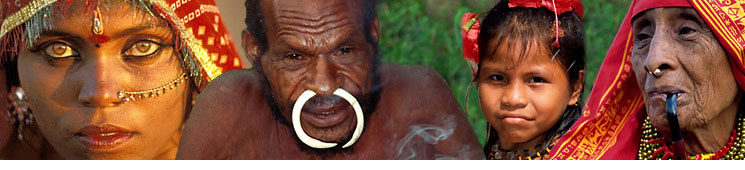
Indigenous women all over the world face discrimination on multiple levels on a daily basis and historically were systematically targeted for extinction through rape and slaughter. Indigenous women may utilize many labels to identify themselves such as Native, First Peoples, First Nations, Aboriginal, etc. but for continuity’s sake I will use the label Indigenous throughout this post. I was unaware that March 21 is celebrated as the International Day for the Elimination of Racial Discrimination, but it is, and was celebrated by Dialogue Between Nations, “an interactive global communications network and an educational forum….”

Earlier this month we have seen examples of Indigenous women’s activism in the US, Peru, and Oceania. While the challenges of each individual woman across the globe are specific to her life and circumstances, some issues almost universally affect Indigenous women. According to Wikipedia some 300-350 million Indigenous people, making up roughly 6% of the total population, inhabit more than 70 countries around the world and represent more than 5,000 distinct peoples. Climate change, gender-based violence, poverty, legal obstacles, and linguistic discrimination are the most common issues affecting Indigenous women worldwide.

Linguistic discrimination: As a linguist the rate of extinction of Indigenous languages physically pains me; as a humanitarian the loss of the worldviews associated with these languages is traumatizing. Many, if not most Indigenous peoples are denied their right to speak their native languages, and this fact plays a role in all other forms of discrimination against Indigenous women from housing and education to health care and democratic representation. The amazing group Cultural Survival is one of many that focuses on linguistic justice, among other issues, in the fight for Indigenous rights.

Climate change and environmental issues: This 1995 declaration by Indigenous women at the UN Fourth World Conference on Women in Beijing explores the effects of biocolonialism on Indigenous women. There is a long history of discrimination against the Igorot peoples of Cordillera in the Philippines, especially with regard to land rights, unsustainable farming, and soil erosion. This article discusses the potential impact of REDD+ on Indigenous women. United Nations Radio has aired this piece about deforestation and property rights of Indigenous women. In honor of the 100th anniversary of International Women’s Day the Asian Indigenous Women’s Network issued this statement underscoring the needs of Indigenous women in relation to the environment.

Gender-based violence: For all its positive traits, Canada’s dirty little secret are the disappearances of Indigenous women that are chronicled by Amnesty International and many other organizations. The ongoing saga of the murder of Native American activist Anna Mae Aquash is chronicled by Indigenous Women for JusticeWomen’s Campaign International explains the violence that Arhuaco and other indigenous women of Colombia face due to internal conflict here. Amnesty International also speaks out against sexualized violence against Indigenous women in the US.

Poverty: Also in 1995, in Guatemala, this Agreement on the Identity and Rights of Indigenous Peoples was drawn up. The New York-based Indigenous Women’s Fund of the International Indigenous Women’s Forum has a concise and thoughtful plan of action for helping Indigenous women from around the world overcome the poverty that has been imposed on them. International Funders for Indigenous Peoples is also an international funding organization working for Indigenous peoples’ rights. This concise article from genderaction.org highlights the problems Indigenous women face as a result of “gender-blind” approaches to finance from International Financial Institutes. From here you can download Indigenous & Tribal People’s Rights in Practice produced by the International Labor Organization.

Health issues: The UN Population Fund, UNFPA, has produced this report on empowering Indigenous women with regard to reproductive rights. Another group dealing with reproductive justice for Indigenous women is the Native American Women’s Health Education Resource Center. The Indigenous Portal is one group that recognizes the interconnection of Indigenous peoples’ land degradation and lack of reproductive justice.

Human Rights and legal obstacles: Native Planet is one of many NGOs working for the socio-political rights of all the world’s Indigenous peoples. The UN Permanent Forum on Indigenous Issues will hold its 10th session May 16-27 2011 in New York. From 2002, this paper highlights some of the issues faced by Indigenous women in Africa, and has recommendations for ways to improve Indigenous women’s rights. Here is a Guide to Indigenous Women’s Rights Under the International Convention on the Elimination of All Forms of Discrimination Against Women (CEDAW), published in 2004. A 2005 factsheet on the rights of Indigenous Canadian women on- and off-reservation can be found here. Many groups in Canada, including the Congress of Aboriginal Peoples, participated in the first National Aboriginal Women’s Summit NAWS I in 2007. The International Work Group for Indigenous Affairs recommends the now out-of-printIndigenous Women: The Right to a Voice edited by Diana Vinding. Here is a list of articles dealing with Indigenous women’s rights in Canada. This project of the UN Development Program addressed Indigenous women’s rights in Asia. Oxfam also works for the rights of Indigenous women, like Calel from Guatemala. The Aotearoa Indigenous Rights Trust works for the rights of Indigenous Maori people in New Zealand. The Indigenous Peoples of Africa Co-ordinating Committee works across the African continent for the rights of Indigenous peoples there. Finally, the Society for Threatened Peoples (Gesellschft für bedrohte Völker in the original German) tackles everything from political imprisonment and land rights to slavery and environmental degradation.