Category Archives: Race/Ethnicity and Activism

Day 3- Black Women’s Activism in the US

[Four African American women seated on steps o...

Image by The Library of Congress via Flickr

The descendants of black slaves in the United States were deprived of their histories from the moment they were kidnapped. Given white names and forbidden from using their own languages or practicing their own religions, slaves were also often forbidden from learning how to read or write English.

While black history on the American continent has been preserved through oral history to the effect that black women today do have black heroines with whom they can identify, the racism black people face is an ingrained part of much of American culture.

“Racial prejudice against African Americans becomes part of the Americanization process for immigrants, and prejudice against immigrants becomes part of the ongoing struggle for equity in employment and education for African Americans, especially when it appears that immigrants are exploiting black communities.”[1]

Prejudice against black Americans is the deepest and most persistent racism alive today in the United States. Although the situation for blacks in the U.S. has improved drastically over the course of American history, especially in the past forty years, black people are still systematically oppressed and targeted for failure by the racist patriarchal system of capitalism in the United States.

With highly disproportionate numbers of black men imprisoned, the situation black women face as a consequence is unique. The stereotype of the strong, outspoken black woman has emerged in part because black women have had to be strong and outspoken, as heads of household, so that they can care for their families. The other side to this stereotype is the black Mammy, caricatured prominently as The Black Woman in U.S. cinema and cartoons for decades.

Much of the critique of white, mainstream feminism during the Second Wave came from black women pointing out that they had been working outside the home, out of necessity, for centuries.

The failure of white, middle-class feminists to consider any other race or class and their assumption that their own reality was universal put a deep rift in the Women’s Liberation movement but “other activists–notably feminists and lesbians of color–[lead] socially marginalized lives [and] demanded rigor in analyzing political tactics. These women, initially separate from the more mainstream elements of nonviolent action and feminism, represented a pool of sophisticated but down-to-earth clarity into which other women activists eventually dipped.”[2]

Black women were fighting for their rights even before the United States declared independence. Jenny Slew and Elizabeth Freeman both sued for their freedom from slavery in the state of Massachusetts, in 1765 and 1780 respectively, and won, but “As the future would prove again and again, legal action could take the fight for freedom only so far.”[3]

Slavery would continue to thrive in the United States until the Civil War and black men would still not Constitutionally have the right to vote until 1870. Women would not have the right to vote until 1920.

Even with these legal rights finally added to the Constitution, racist legislation like poll taxes and Jim Crow laws made sure that black men and women were highly discouraged or prevented from voting until the late 20th century.

While “the Civil Rights Act of 1875… stated that there could be no discrimination in public places or on means of transportation within the United States,”[4] the Supreme Court disagreed and in 1913 ruled that this act was unconstitutional. From the 1896 case Plessy v. Ferguson until the 1954 case Brown v. Board of Education “separate but equal” was not only accepted but widely enforced.

Additionally, interracial marriage was illegal in some states until 1967.[5]
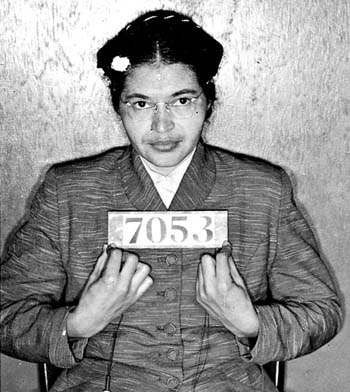
Despite America’s long history of bigotry, black women have always been a visible and vital force for equality. Sojourner Truth, Harriett TubmanIda B. Wells, Ella Baker, Rosa Parks, Toni Morrison, Audre Lorde, Alice Walker, bell hooks, Oprah Winfrey and Michelle Obama are black women whose fame and notoriety span the centuries of American history and who act as role models to inspire all young women to greatness today. From actively defying unjust slavery laws and participating in the abolitionist and suffragist movements, to writing, organizing and protesting for civil rights and feminism, to representing the United States on an international scale, these women have dedicated themselves to the fight for justice and equality.

In 1831 black women formed the Colored Females’ Free Produce Society and “There were strikes among black women field workers as early as 1862.” The purpose of the Society “was to encourage the boycotting of goods produced by slave labor. It was part of a larger Free Produce movement, and it provided the public with the opportunity to buy products, such as cotton and sugar, that had been produced entirely by nonslave workers.”[6]

From then on African American women fought not only for their own rights, but also for the principles of freedom and democracy.

“When the Fourteenth Amendment was passed, saying that no citizen could be denied the rights guaranteed by the Constitution, black and white suffragists challenged the unwritten assumption that all citizens were male.”[7]

After slavery was abolished and all American citizens earned the right to vote, black women continued to participate in organizations promoting gender equality and fair labor practices. In the early 20th century black women were active in the Harlem Renaissance and responsible for the popularity of the Blues.

The participation of black women in strategic nonviolent action blossomed though, with the Civil Rights movement of the 1950s and 60s. “For a number of reasons–including sexism, the need to protect their jobs, and deference to a long tradition of community leadership by black ministers–female leaders [were] less visible and rarely if ever served as speakers at mass meetings or press conferences.”[8]

While few women represented the Civil Rights movement to the public, the strides that were made towards equality would not have been possible without the widespread participation of black women. The Montgomery Bus Boycott, publicly lead by the Rev. Dr. Martin Luther King Jr., owed its success to the “several thousand working-class women who, in the face of intimidation and threats, rode in the car pools or walked as far as twelve miles a day, even in the rain.”[9] In fact, if it were not for Jo Ann Robinson’s stellar organization and community outreach techniques, the boycott probably would not have had the impact it did on the economy of Montgomery.[10]

After the success of the Civil Rights movement black women recognized the backseat their needs had taken to those of men and joined in the Second Wave of the Women’s Movement even though black publications in the early seventies “would trivialize” the feminist movement.

“Black men did not want to lose Black women as allies. And the white power structure did not want to see all women bond across racial lines because they knew that would be an unstoppable combination.”[11]

Today, black women are an integral part of the economy of the entire nation and participate in all kinds of organizations fighting for equality from the National Organization for Women (NOW) to the Human Rights Campaign to Not Dead Yet and Disabled Veterans of America.

Other organizations that are more specifically focused on advancing black women include the National Organization for African-American Women (NOAW), the National Council of Negro Women, Inc. (NCNW), The National Association of Colored Women’s Clubs, Black Career Women (BCW) and the Association of Black Women Historians (ABWH).

The names of these organizations alone show the painful history of black self-identification in the United States; Negro, Colored, Black, or African American, women who identify as descendants of African slaves still have to fight for recognition of their identities, both as black, and as women.


[1] Karim, 2009.

[2] Protest, Power, and Change: An Encyclopedia of Nonviolent Action from ACT-UP to Women’s Sufferage Eds. Roger S. Powers and William B. Vogele. Garland Publishing, Inc. New York. 1997.

[3] Encyclopedia of Black Women in America: Social Activism Ed. Darlene Clark Hine Facts on File, Inc. New York. 1997.

[4] Facts on File Encyclopedia of Black Women in America: Social Activism Ed. Darlene Clark Hine Facts on File, Inc. New York. 1997.

[5] See Supreme Court Case Loving v. Virginia

[6] Facts on File Encyclopedia of Black Women in America: Social Activism Ed. Darlene Clark Hine Facts on File, Inc. New York. 1997.

[7] Ibid.

[8] Ibid.

[9] Hine, 1997.

[10] King, Mary Elizabeth. Lecture.

[11] Smith, Barbara. “Across the Kitchen Table A Sister-to-Sister Dialogue,” in Moraga and Anzaldúa, 1981.


Day 2- Asian American Women’s Activism in the US

Description unavailable

Image by karmacamilleeon via Flickr

At some point in American history every racial minority group has faced discrimination similar to what Middle Eastern women are now being subjected to and Asian women are no exception. In fact, “Japanese Americans spoke out against the proposal to intern Arab Americans during the Persian Gulf War.”[1]

This is not to say that racism against other minorities in the U.S. has ended, rather, it has evolved into a subtle systematic oppression where it was once a glaringly obvious hatred.

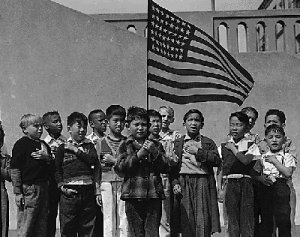
The United States has a long, varied and unpleasant history of blatantly racist legislation restricting not only immigration from the Asian continent, but also the freedoms granted to Asians already in the country. The forced internment of Japanese American citizens during World War II is one of the biggest blemishes on American history, and America’s sordid actions in the Philippines and Vietnam have created tense and complex relationships with immigrants from both nations.


Yet white Americans seem to think Asian Americans have not been affected by their racism. Author Emily Woo Yamasaki explains, “Asians in the U.S. are portrayed as especially adept at ‘making it.’ Vilified as cunning and dangerous on one hand, they are gushed over as the ‘model minority’ on the other.”[2]

Now “Asian immigration laws have changed such that the new Asian immigrant is not educated and professional but working-class or poor. Trade agreements such as NAFTA and GATT have broken down protections for workers and the environment in order to secure a free-wheeling capitalist global economy, and Asian workers, especially women, are suffering the worst of it — laboring under worse working conditions and being forced to compete for the most degraded, worst-paying jobs.”[3]

Much like how the laborious toil of individual Chinese immigrant men built the railroads, today the work of Asian immigrant women singlehandedly keeps the U.S. garment industry afloat.

“Activists have responded to these new changes with a renewed labor movement that cross borders and industries. Asian women organizers have been at the forefront of these campaigns.”[4]

Springing out of Asian American movement of the 1960s that was inspired by the civil rights movement and the anti-war movement, the “first wave of Asian women’s organizing” formed because “Leftist Asian women in Yellow Power and other Asian American groups often found themselves left out of the decision-making process and their ideas and concerns relegated to ‘women’s auxiliary’ groups that were marginal to the larger projects at hand.”[5]

Asian American women remain active in the fight against patriarchy and domestic violence with groups like Korean American Women in Need (KAN-WIN)[6] and by participating in all facets of American feminism from writing to conferences to protests.

In the past, interned Japanese American citizens protested their treatment and fought for their rights even from within the walls of American concentration camps. Later, Asian Americans were instrumental working alongside Chicanos to organize the United Farm Workers Union and labor strikes demanding fair pay. They were also vital to the fight for Affirmative Action and Ethnic Studies programs.[7]

Today groups like the Asian Immigrant Women Advocates (AIWA),[8] the National Asian Women’s Health Organization (NAWHO),[9] the National Association of Professional Asian American Women (NAPAW),[10] the South Asian Women’s Network (SAWNET)[11] and the Asian American Women Artist Association (AAWAA)[12] all serve the diversity of women who make up Asian American communities across the country.

Asian American women of all sexualities marched alongside their sisters of all colors to protest the grotesque treatment of Rodney King in the early 1990s[13] and continue their nonviolent activism today within organizations like the Women of Color Network (WOCN)[14] that works to stop violence against women. Asian American women are also prominent in ACT UP, an organization committed to solving the AIDS epidemic by utilizing civil disobedience,[15] and various LGBTQAI organizations as well.

Like their Arab American sisters, Asian American women are often invisible to the public eye–left out of all forms of media and racialized when they are seen.

Even though the Asian continent spans from Japan and Malaysia in the East all the way to Turkey in the West and includes nations full of Caucasians like Russia, Azerbaijan and Latvia, Asians in the United States are generally assumed to be Chinese or Japanese. Recognition of people as Filipina, Indonesian, Korean, Laotian, Thai, Vietnamese, Cambodian, Burmese, Hmong, Indian, Tibetan, or any other national or ethnic distinction, is not something most white or black Americans could do.

That most Americans cannot differentiate between the various Asian nationalities has long been true. In King of the Hill, white Texan and main character Hank Hill asks his new neighbor about his ethnicity:

“So are you Chinese or Japanese?”

To which Kahn Souphanousinphone replies,

“I live in California for last twenty years but first come from Laos.”

Seeing Hank and his other white Texan friends’ confusion he explains where Laos is geographically and gives some facts about it such as the population.

Still not understanding, Hank again asks, “So are you Chinese or Japanese?”[16]

White Americans are so ignorant of Asian cultures that they assume, as stated yesterday, that all Muslims are Arab; Southeast Asian immigrants, and black American converts to Islam, form the largest portion of the Muslim population in the United States and all of the nations with Muslim populations exceeding 100,000,000–Indonesia, Pakistan, India, and Bangladesh–are in Asia.

Bisexual Korean American actress and comedian Margaret Cho fights for Asian American women’s visibility in the media as an outspoken advocate for the LGBTQAI and Asian communities throughout the U.S. She was also the first Asian American actress to star in a television sitcom.

Far from the stereotypes of Asian women as docile and submissive (geisha girl) or evil and plotting (dragon lady), Cho allows her audiences to see the humor in everything from politics to fat. Some of her jokes revolve around people confusing her for Lucy Liu, the Chinese American actress famous for Charlie’s Angels, or Sandra Oh, the Korean Canadian star of Grey’s Anatomy, and in this way combat typical American ignorance of the differences within the Asian American community.

While anthologies of black, Hispanic and Native American women can easily be found in the public library it is difficult, if not impossible, to find the same kind of documentation of the lives of individual Asian or Arab American women. Literature compilations by Asian and Arab women are available but biographies of women important to those groups’ fights for equality are not yet in America’s public libraries.

Compilations of feminist essays by women of color are careful to include Middle Eastern and Asian women but their voices are still too far and few between. Women must have access to their own histories and be able to draw upon the strengths of others in their communities to be able to learn and grow from past actions; Asian American women are no exception.


[1] Alaniz, Yolanda and Nellie Wong, eds. 1999. Voices of Color. Red Letter Press: Seattle, Washington.

[2] Alaniz, Yolanda and Nellie Wong, eds. 1999. Voices of Color. Red Letter Press: Seattle, Washington.

[3] Shah, Sonia. 1997. “Women and Gender Issues” Asian-Nation: The Landscape of Asian America. June 15, 2010 http://www.asian-nation.org/gender.shtml

[4] Ibid.

[5] Ibid.

[6] Incite! Women of Color Against Violence. 2006. Color of Violence: The Incite! Anthology. South End Press: Cambridge, Massachusetts.

[7] Alaniz and Wong, 1999.

[13] Alaniz and Wong, 1999.

[16] “Westie Side Story.” King of the Hill. Fox. 2 May 2006.


Women’s History Month 2011: Day 1- Arab/Middle Eastern American Women’s Activism in the US

Western and Saudi Arabian women.

Image via Wikipedia

Happy Women’s History Month and Women of Color Day all! Today marks the first of 31 days of blogging about women’s participation in strategic nonviolent activism. Tune in tomorrow for a look at how Asian American women are exercising their choices to change the political landscape of America.

After 9/11 Arab and Middle Eastern people in the United States faced the most overt racism the country had seen in forty years. “The FBI created the first ever Arab American Advisory Committee [on March 28, 2003] following an increase of 1700 percent in reported hate and bias crimes against Arabs, Muslims and those perceived to be Arab or Muslim since the events of September 11, 2001.”[1] People whose ethnic identities were nowhere near Middle Eastern–Mexican, Indian, Native American–were physically attacked because of their skin color; they were supposedly mistaken for being Arab or Muslim (as if the attackers would have been pardoned had the victims been Muslim).

Let’s be honest: most Americans are ignorant of the other people and places in the world.

American society confuses the “categories ‘Arab,’ ‘Middle Easterner,’ and ‘Muslim’ as if there are no differences among them. This conflation can be seen in the U.S. news media, TV shows, and Hollywood films about the Arab world.”[2] Even the term “Middle East” shows the Anglo-centric view that white, “mainstream” Americans have adopted from their European ancestors.

Geographically, the Middle East is difficult to pinpoint but generally alludes to majority Muslim countries in Southwest/Central Asia and North Africa. The Middle East has a long and complex history of religion, custom, travel, and change. From Morocco to Pakistan Islam is the religion of many people but it is certainly not the only religion practiced in the region. Judaism and Christianity, among other smaller religions, are widely practiced in the “Middle East” as well. Ethnically there are many Arabs in the Middle East but there are also Persians, Turks, Kurds, Azeris, Assyrians, Bedouins, the list goes on and on. Linguistically–although many people in the region speak Arabic–Farsi, Turkish, Kurdish, and Hebrew are widely spoken, as are a vast number of other languages.

But, Americans see “brown people” who are not Latino and assume they are Arab Muslims… “Americans see them as foreign, not because they look neither white nor black, but because they look Muslim.”[3] The media does not help, it “exaggerates and often focuses on the victimization or violence of Arab women, in order to racialize Arabs as backwards, violent and uncivilized.”[4] Racist propaganda has long been a part of the American political machine and also reinforces the patriarchal hierarchy.

“Within mainstream U.S. media, the ‘nameless veiled woman’ is either crying and screaming or passively accepting her oppression. These images mark Arab and Muslim women as either ‘out of control’ or ‘having no control’—there is no space in between for them to assert their identities or power as agents of social change.”[5]

For these reasons and many others it is imperative that Arab and Middle Eastern women, Muslim or not, are fully included in the fight for equality in the United States. Especially with the recent uprisings in North Africa and the Gulf States, Arab women have asserted that they are powerful agents of social change. There are an estimated 3.5 million Arabs[6] in the United States, yet “most Americans seem to ignore the fact that the term ‘Arab’ does not refer to a race and even less to a religion, but rather to a language and a culture. An ‘Arab’ is a person who partakes in the history of the Arab world.”

In fact, more than 60 percent of Arab Americans are Christian.[7] Yes, you read that correctly, more than 60 percent.

Despite sharing a common religion white Americans have long had a tenuous relationship with their Middle Eastern countrymen. From the Gulf Wars to 9/11, stereotypes of Middle Eastern women as either submissive harem girls or burqa-wearing terrorists still linger in the American consciousness and “a lack of credible information about Arab peoples and their struggles contributes to Arab-American women’s invisibility within progressive and feminist circles in the U.S.”[8]

Most Americans believe that women are included in the United States Constitution: they are not. One of the biggest surprises for Americans who gave their moral blessing for the wars in Iraq and Afghanistan to ensure women’s equality is that the U.S. has spent trillions of dollars and millions of lives fighting for the inclusion of women in the constitutions of those countries when women stateside are not yet afforded those same rights.

Much of the activism Arab American women undertake is to re-educate Americans about what it means for them to be Arab and to make themselves visible. Have you ever noticed how it’s usually white men and women arguing over whether or not Muslim women should have the right to wear whatever clothing they deem to be religiously appropriate?

Undoing the damage the media has done is not easy but outspoken Egyptian American writer, academic and activist Mona Eltahawy sure makes it look easy. Also in the media, last year an Arab American woman, Rima Fakih, a Lebanese-born American immigrant and advocate for breast and ovarian cancer awareness and birth control, won the title of Miss USA.[9]

Women are actively involved in membership and leadership of the Arab-American Anti-Discrimination Committee (ADC)across the country and have been since its inception 30 years ago. Groups like the Arab Women’s Solidarity Association (ASWA) United are also internationally active in women’s issues and are not afraid to stand up to white mainstream feminists to expose their racism.

“Those who are active in the U.S. feminist movement agree that Zionist racism reinforces the myth that Arab and Arab-American women are extremely oppressed and therefore need to be saved and/or spoken for by their Western feminist ‘sisters.’ Those who speak about Palestinian rights agree that they are excluded, silenced, censored, and/or erased….”[10]

White feminists must respect every individual’s right to speak for herself and choose her own battles. Allowing racist preconceptions to cloud their judgment is unacceptable and completely counterproductive. Feminists must listen to what all women say they want and need and then work with those women to achieve their goals. Consent is an issue in fighting for human rights too.

Members of ASWA United have vocally spoken out against US-Israeli policies of discrimination and violence towards Palestinians but found that “the voices of Arab American women activists are regularly policed and silenced.”[11]

Despite this, Islamic feminists have been active in carving out space for women in mosques, conferences on Islam, and multi-faith committees across the country. Arab American women activists “have developed feminist critiques for challenging sexism within their communities, nations and the neo-colonial societies that seek to racialize them….”[12]


[2] Naber, Nadine, Eman Desouky and Lina Baroudi. “The Forgotten ‘ism:’ An Arab American Women’s Perspective on Zionism, Racism and Sexism. Arab Women’s Solidarity Association San Francisco Chapter: Berkeley, CA. 2001

[3] Karim, 2009.

[4] Naber, et al. 2001.

[5] Ibid.

[7] Habib, Gabriel. 17 March 2004 “And What About Arab Christians?” Presentation at Al-Hewar Center: Vienna, Virginia

[8] Naber, et al. 2001.

[9] Hutchinson, Bill. 20 May 2010. “Rima FAkih, Miss USA 2010 winner: Lebanon-born Miss Michigan is first Arab-American to take crown.” Daily News. 10 June 2010.  http://www.nydailynews.com/entertainment/2010/05/16/2010-05-16_miss_michigan_rima_fakih_becomes_first_arabamerican_to_win_miss_usa_pageant.html

[10] Naber, et al. 2001.

[11] Ibid.

[12] Ibid.